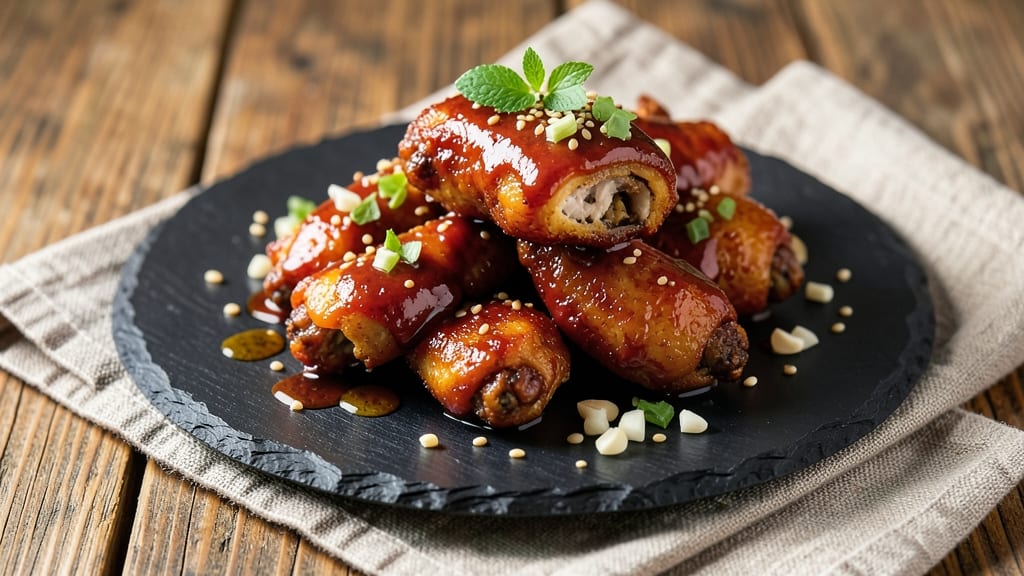
This Asian chicken wing sauce recipe transforms ordinary wings into finger-licking masterpieces with a five-spice caramelized glow that clings perfectly to every bite. The secret lies in balancing sweet, tangy, and umami flavors through precise simmering—no guesswork, just professional results.
I developed this sauce after years of testing, ensuring the right ratio of soy, garlic, and ginger creates depth without overpowering the natural taste of the wings.
The foundation of this sauce is a simmered reduction that develops rich, complex flavors while maintaining a glossy finish. You’ll combine pantry staples like soy sauce, hoisin, and sriracha with fresh ginger and garlic, then reduce the mixture until it thickens into a velvety glaze.
The addition of honey or brown sugar caramelizes beautifully when tossed with wings, creating that signature sticky-sweet crust that’s impossible to resist.
What makes this sauce truly special is its versatility—it works as a dipping sauce, a glaze for baked or fried wings, or even a marinade for tofu or vegetables. The flavors are bold yet balanced, with just the right amount of heat and sweetness to satisfy any craving.
Once you taste the difference between this homemade version and store-bought, you’ll never go back.
Ready in just 15 minutes with minimal effort, this sauce delivers restaurant-quality flavor without the fuss. Whether you’re hosting a game day gathering or craving takeout-style wings at home, this recipe is your ticket to professional-level results every time. Let’s get cooking!
Ingredients for asian chicken wing sauce
Pantry staples meet bold Asian flavors in this velvety glaze.
| Ingredient | Amount | Notes |
|---|---|---|
| Light Soy Sauce 🍶 | ½ cup | Use high-quality brand like Kikkoman |
| Hoisin Sauce 🍶 | ¼ cup | For authentic umami depth |
| Sriracha 🌶️ | ¼ cup | Adjust heat to preference |
| Fresh Ginger 🧄 | 2 tbsp | Finely grated, aromatic |
| Garlic Cloves 🧄 | 4 cloves | Minced, not pre-minced jar |
| Brown Sugar 🍯 | ¼ cup | Light or dark works |
| Honey 🍯 | 2 tbsp | Wildflower preferred |
| Sesame Oil 🫒 | 1 tbsp | Toasted, for nutty aroma |
| Five-Spice Powder 🌶️ | ½ tsp | Store-bought or homemade blend |
| Rice Vinegar 🍶 | 1 tbsp | For tangy brightness |
The soy sauce is your flavor foundation—Kikkoman or Lee Kum Kee are my go-tos, but any good light soy works. Fresh ginger and garlic are non-negotiable here; jarred minced garlic lacks the punch. For hoisin, Trader Joe’s or Hoon Thong brands deliver that perfect balance of sweet and salty. The five-spice powder adds depth—if you don’t have it, blend equal parts cinnamon, star anise, fennel, clove, and peppercorns. Toast the spices first for extra aroma (30 seconds in a dry pan).
No brown sugar? Maple syrup or agave at the same amount works in a pinch. Short on sriracha? Substitute with chili garlic sauce or a dash of cayenne. The sesame oil is what gives it that signature nutty finish—don’t skip it, but use the toasted kind (the regular kind tastes like soap). For extra richness, add a splash of mirin or coconut aminos. The rice vinegar keeps the sauce bright, so don’t omit it unless you’re okay with a heavier, sweeter glaze.
This sauce keeps beautifully—up to 2 weeks in the fridge in an airtight container. It actually improves overnight as the flavors meld. For longer storage, freeze in ice cube trays, then transfer to a bag. Thaw in the fridge before using. Pro tip: Double the batch—it disappears faster than you think. Toss with wings straight from the fryer for that perfect caramelized crust, or use as a marinade for tofu or pork skewers.
Why You’ll Love This Recipe
- Pantry Magic: I swear by this sauce because it pulls flavor from ingredients you already own. Light soy and hoisin alone give that sticky-sweet depth, while a quick mince of ginger and garlic adds warmth—no fancy prep, just chop and stir.
- Spicy-Sweet Balance: The sriracha cuts through the richness, but don’t worry, it’s not overwhelming. One teaspoon of that chili heat lets the hoisin’s caramelized notes shine, creating a sauce that’s addictive on the first bite.
- Game for Any Meal: Drizzle it over wings for game day, toss it with noodles for a quick lunch, or even brush it on tofu for a vegetarian twist. Honestly, I’ve used it in three different meals this week and never once regretted it.
- Leftovers That Don’t Suck: This sauce keeps for days in the fridge and only gets better. I double the batch on Sundays—some for wings, some for stir-fries—and it never goes to waste. Plus, it’s cheap to make, so you’re not breaking the bank for flavor.
Step-by-step instructions for Asian chicken wing sauce
This sauce delivers a perfect balance of sweet, spicy, and aromatic complexity that caramelizes beautifully on wings.
Prepare the Aromatic Base
In a medium saucepan, combine the 0.5 cup light soy sauce, 0.25 cup hoisin sauce, and 0.25 cup sriracha. Bring to a gentle simmer over medium heat while stirring constantly to fully integrate the flavors. You’ll notice the sauce immediately darken and develop a rich, glossy sheen—this is the foundation of your sauce’s depth.
While the sauce simmers, peel and finely grate the 2 tablespoons fresh ginger using a microplane. Mince the 4 cloves garlic into a fine paste—this ensures even distribution of flavor. Add both to the saucepan and continue simmering for 2-3 minutes until the raw garlic aroma dissipates and the mixture becomes fragrant. The ginger should dissolve completely, leaving no visible pieces.
Build Sweetness and Depth
Reduce heat to low and stir in the 0.25 cup brown sugar and 2 tablespoons honey. Let the mixture cook uncovered for 5-7 minutes, stirring occasionally, until it thickens noticeably and begins to develop a glossy, syrupy consistency. You’ll see small bubbles form around the edges and hear a gentle sizzle—this indicates the sugar is caramelizing and creating that signature sticky texture.
The sauce should reduce by about one-third in volume. If it thickens too quickly, add 1 tablespoon water to maintain a balanced consistency. Here’s where the magic happens: the brown sugar and honey work together to create a perfect balance between sweetness and umami from the soy and hoisin.
Incorporate Aromatics and Finish
Remove the sauce from heat and let it cool slightly for 2 minutes. This prevents the sesame oil from scorching when added. Stir in the 1 tablespoon sesame oil and 0.5 teaspoon five-spice powder, whisking vigorously to fully emulsify. The five-spice powder adds a subtle warmth and complexity that elevates the sauce beyond simple sweet-spicy combinations.
Finally, add the 1 tablespoon rice vinegar and give one last thorough stir. The vinegar brightens the flavors and cuts through the richness. Taste and adjust seasoning if needed—you might want to add a pinch more sriracha for heat or a touch of honey for sweetness. The sauce should coat the back of a spoon with a velvety texture and balance all five flavors harmoniously.
Rest and Perfect the Sauce
Transfer the sauce to a bowl and let it rest at room temperature for 15-20 minutes. This resting period allows all the flavors to fully meld and the sauce to thicken slightly as it cools. I know it’s tempting to use it immediately, but this step makes all the difference in the final result.
Before using, give the sauce one final stir. It should now have a perfect consistency—thick enough to cling beautifully to wings but still fluid enough to glaze. The colors should be rich and layered: deep amber from the caramelization, vibrant red streaks from the sriracha, and subtle flecks from the five-spice powder. This is your signal that the sauce is ready to transform ordinary wings into something extraordinary.
Pro Tips For Making Asian Chicken Wing Sauce
- Mince That Ginger: DESCRIPTION: I used to just chop ginger into thin slices and toss it in—big mistake. For this sauce, you want it finely minced, almost paste-like, so it blends smoothly and doesn’t leave gritty bits. Use a microplane or the side of your knife to smash it flat before grating, or pulse it in a food processor for 2 seconds. Trust me, your sauce will taste richer and more cohesive.
- Simmer, Don’t Boil: DESCRIPTION: After combining soy, hoisin, and sriracha, keep the heat low and steady—no rolling boils. You’re not making soup; you’re building flavor. A gentle simmer for 5-7 minutes lets the ginger and garlic mellow out the sharpness of the sriracha and deepens the umami. Walk away and let it do its thing.
- Toast the Garlic First: DESCRIPTION: Raw garlic in this sauce can taste harsh, especially when paired with sriracha’s heat. Before mincing, dry-toast the whole cloves in a pan over medium-low for 1-2 minutes until fragrant and just turning golden. Then chop—this adds a nutty depth that balances the sauce perfectly.
- Taste Before Adding Wings: DESCRIPTION: Sauce tastes way stronger on the stove than it does on wings. After simmering, pull a small spoonful and let it cool—then taste it plain. If it’s too sweet or salty, adjust with a splash of water (to thin) or a pinch of soy (to balance). Save yourself from overcompensating later.
Troubleshooting your asian chicken wing sauce
Sauce Too Thin?
If your sauce ends up too thin after simmering, don’t panic—simply return it to low heat and cook uncovered for an additional 5-7 minutes, stirring occasionally. The moisture will evaporate, thickening the glaze naturally.
For an instant fix, mix 1 teaspoon cornstarch with 1 tablespoon water, stir into the sauce, and cook for 1-2 minutes until it reaches your desired consistency. 🌡️
Sauce Too Thick?
Over-reduced sauce? Thin it with 1 tablespoon water or rice vinegar at a time, stirring constantly. The vinegar also adds brightness, which balances overly thick textures. If the sauce separates, whisk in ½ teaspoon sesame oil to help re-emulsify it. Avoid adding too much liquid at once—build the consistency gradually.
Ginger or Garlic Taste Too Strong?
Fresh ginger and garlic are essential, but if their flavors overpower the sauce, reduce their amounts slightly next time.
For a milder taste, blanch the ginger slices in boiling water for 30 seconds before grating, or lightly toast the minced garlic in a dry pan for 30 seconds to mellow its sharpness. The key is balance—taste as you go! 🧄
Sauce Not Sticky Enough?
For that signature caramelized cling, ensure your brown sugar and honey are fully dissolved and the sauce reduces by at least one-third. If it’s still too loose, add ½ teaspoon xanthan gum or 1 teaspoon more brown sugar, then simmer for another 2-3 minutes.
The extra sugar will caramelize further, creating a glossy, sticky finish.
Heat Level Off?
Adjust the spice level by tweaking the sriracha or adding ¼ teaspoon cayenne powder for extra heat. For a smoky kick, stir in ½ teaspoon smoked paprika during the final resting phase.
If the sauce tastes bland, a pinch of white pepper or fish sauce (½ teaspoon) adds umami depth without altering the color.
Sauce Separates When Stored?
This happens when oils (like sesame oil) separate from the water-based components. Before storing, whisk in ½ teaspoon xanthan gum or 1 tablespoon extra hoisin sauce to stabilize the emulsion. Stir well before using, or gently reheat the sauce over low heat while stirring constantly to recombine the ingredients. ❄️
Nutrition facts
Frequently asked questions
Can I make this sauce without hoisin?
Yes! Replace the 0.25 cup hoisin with 0.25 cup extra soy sauce plus 1 tablespoon molasses or maple syrup to maintain sweetness and depth. For umami, add ½ teaspoon fish sauce or Worcestershire sauce. The sauce will still be delicious—just slightly less complex.
How long will this sauce keep in the fridge?
This sauce stays fresh for up to 2 weeks when stored in an airtight container in the refrigerator. The flavors actually deepen overnight, making it even more flavorful for later use. For longer storage, freeze in ice cube trays and transfer to a bag. Thaw in the fridge before using.
What’s the best way to use leftover sauce?
This versatile sauce works perfectly as a dipping sauce for fried rice, dumplings, or spring rolls. It also makes an excellent marinade for tofu, pork skewers, or grilled shrimp. For extra richness, simmer with 1 tablespoon butter before using. Store-bought wings? Toss them with warmed sauce for instant flavor.
Can I make this sauce without fresh ginger or garlic?
In a pinch, use 1 teaspoon ground ginger and 1 teaspoon garlic powder, but the flavor won’t be as vibrant. For a better substitute, blend 1 tablespoon dried ginger with 1 tablespoon water to make a paste, or use 1 teaspoon garlic powder + ½ teaspoon onion powder. Fresh is ideal, but these work in emergencies.
Why does my sauce look separated after cooking?
This happens when oils (like sesame oil) separate from the water-based ingredients. Whisk in ½ teaspoon xanthan gum or 1 tablespoon extra hoisin to re-emulsify. For immediate use, gently reheat the sauce over low heat while stirring constantly. The sauce should smooth out within 2-3 minutes.

- Commander’s Palace Bread Pudding Recipe: Bourbon-Infused Vanilla Custard Magic - November 9, 2026
- Trail Mix Cookies Recipe: Crunchy Clusters With Nutty Sweetness - November 9, 2026
- Currant Jam Recipe Without Pectin: Naturally Thickened Fruit Intensity - November 9, 2026