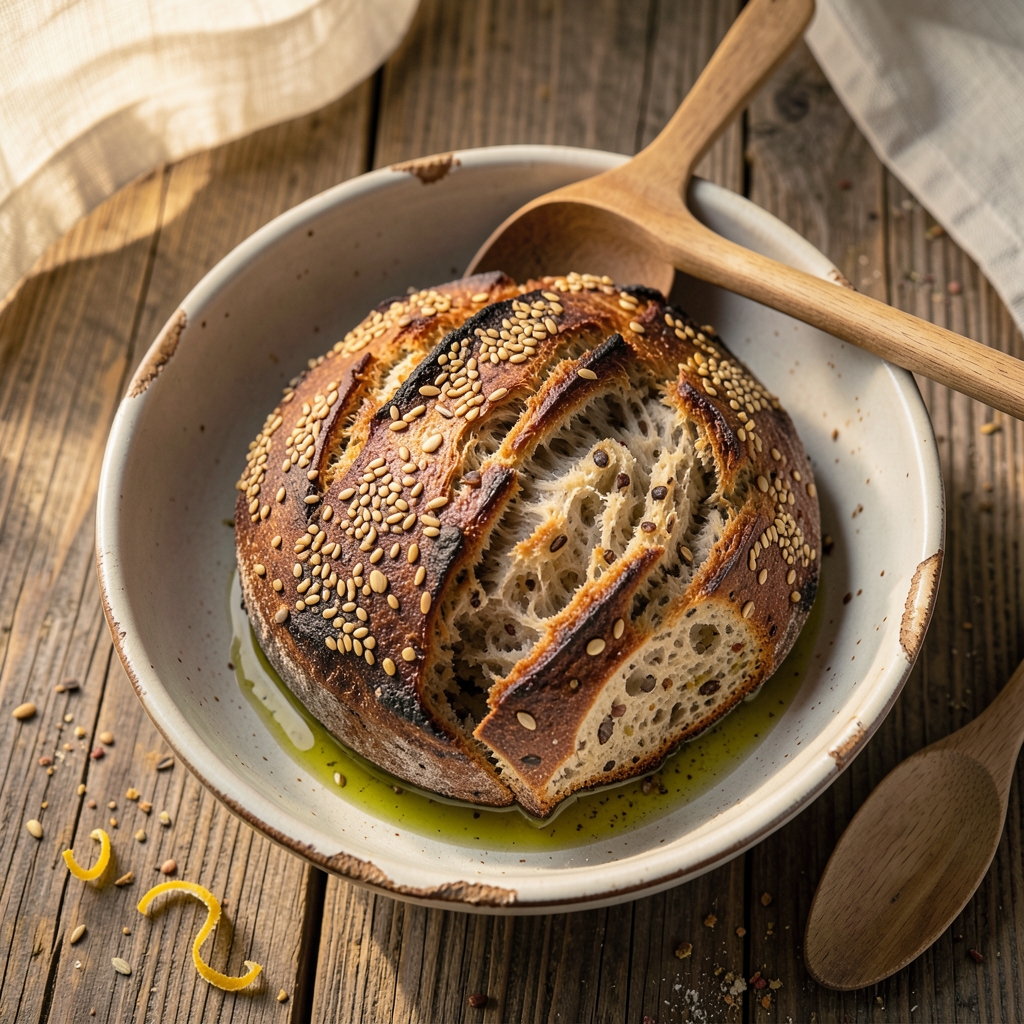
This artisan seed bread recipe delivers the perfect balance of crusty crunch and nutty depth—no fancy equipment or years of experience required. The secret lies in a simple yet precise method that transforms basic ingredients into a rustic loaf with a golden crust and satisfying texture.
I developed this recipe after testing countless variations, and the result is a vegan-friendly loaf packed with flax, sesame, and sunflower seeds that add both nutrition and flavor. Every bite delivers that satisfying crunch you crave, paired with a soft, airy interior.
The beauty of this recipe is its foolproof approach—no-knead technique means less effort, and the dough proofing happens overnight, allowing flavors to develop naturally. You’ll work with just five core ingredients (plus seeds) and a few simple steps, yet the outcome feels like a bakery masterpiece.
The seeds not only enhance texture but also provide a subtle earthy flavor that pairs beautifully with soups, salads, or as a side to any meal. This bread is designed to be versatile, whether you’re serving it warm from the oven or toasted the next morning.
By the time you pull this loaf from the oven, you’ll have a golden-brown crust with deep crack lines and a satisfying crunch, while the interior remains tender and lightly chewy. The seeds distribute evenly throughout, offering bursts of texture with every bite.
What makes this recipe stand out is how it combines traditional baking techniques with modern convenience—no sourdough starter needed, yet the flavor is rich and complex. It’s the kind of bread that makes you feel like a baker without the complexity.
Perfect for meal prep or gifting, this artisan seed bread keeps well for 3-4 days at room temperature or can be frozen for up to 3 months.
Pair it with your favorite spreads, soups, or simply enjoy it on its own. Let’s get started on creating your own restaurant-quality loaf at home.
Ingredients for artisan seed bread
Five core ingredients plus seeds transform into a rustic, vegan loaf with satisfying crunch.
| Ingredient | Amount | Notes |
|---|---|---|
| All-Purpose Flour 🌾 | 3 ½ cups | Unbleached preferred for better texture |
| Whole Wheat Flour 🌾 | 1 ½ cups | Adds heartiness and nuttiness |
| Active Dry Yeast 🍞 | ¼ oz | Or 2.25 tsp, fresh yeast preferred |
| Granulated Sugar 🍚 | 1 tbsp | Feeds yeast for better rise |
| Salt 🧂 | 1 ½ tsp | Kosher or sea salt preferred |
| Extra-Virgin Olive Oil 🫒 | ½ cup | For crusty exterior and richness |
| Warm Water 💧 | 1 ¼ cups | 110°F for optimal yeast activation |
| Flaxseeds 🌱 | ½ cup | Whole or ground for texture |
| Sesame Seeds 🌿 | ¼ cup | Toasted for enhanced flavor |
| Sunflower Seeds 🌻 | ¼ cup | Dry roasted for best crunch |
| Ground Flaxseed 🌱 | 1 tbsp | Replaces eggs for binding |
| Cold Water 💧 | ½ cup | For final dough consistency |
| Cornmeal 🌽 | ¼ cup | For dusting and crispy bottom |
| Sesame Oil 🫒 | 1 tsp | For brushing golden crust |
The flours do the heavy lifting here. King Arthur or Bob’s Red Mill flours work best—they absorb moisture evenly. For the seeds, Whole Foods bulk bins offer the freshest options, but any grocery store’s packaged seeds will do. Toast your sesame and sunflower seeds in a dry pan for 3-4 minutes until fragrant—that extra step makes all the difference. The ground flaxseed is your egg substitute, so make sure it’s freshly ground if you’re using whole seeds. I always buy mine pre-ground at Trader Joe’s for convenience.
No sesame oil? Olive oil or avocado oil works in a pinch, though it won’t give that signature toasted flavor. Swapping seeds? Pumpkin or chia seeds add different textures—just toast them first. Running low on flax? Chia seeds soaked in water work at the same ratio. The yeast needs to be fresh—if it’s older than a few months, double the amount. And that warm water? 110°F is ideal—too hot kills the yeast. Use a thermometer if you’re unsure. For the crust, cornmeal on the baking sheet prevents sticking and adds crunch.
This dough keeps in the fridge for 2 days if wrapped tightly in plastic. For longer storage, shape the dough, wrap it, and freeze for up to 3 months. Thaw overnight in the fridge before baking. The baked loaf stays fresh for 3-4 days at room temperature if stored in a bread bag. Slice it thin for toast or thick for sandwiches—it reheats beautifully. I always make two loaves: one for the week and one to freeze for lazy mornings.
Why You’ll Love This Recipe
- No-Knead Magic: I swear by this—just mix the dough (all-purpose and whole wheat flours, a pinch of yeast, and a spoonful of sugar) in the evening, let it rise overnight, and bake it the next morning. No energy spent, just pure golden crust waiting for you.
- Crunchy-Soft Contrast: That crispy, nutty seed crust with the tender crumb inside? It’s the whole wheat flour’s fiber playing nice with the yeast’s airy lift. Honestly, it’s the kind of texture that makes you pause mid-bite.
- Weeknight Workhorse: Toss it with butter for toast, slice it for sandwiches, or freeze the leftovers for quick toast later. Between us, I’ve had this bread last me five days—no waste, just satisfaction.
- Budget Baking Win: All-purpose flour stretches further here, and the whole wheat adds heartiness without breaking the bank. Plus, a single batch feeds four for days, so you’re not scrambling for groceries every other day.
Step-by-step instructions for artisan seed bread
This method delivers a perfectly crusty loaf with a nutty interior and crunchy seed topping every time.
Activate the Yeast and Mix the Dough Base
In a large mixing bowl, combine the 1.25 cups warm water (about 110°F) with the 0.25 oz active dry yeast and 1 tbsp granulated sugar. Let it sit for 5-10 minutes until frothy—this confirms the yeast is alive. If it doesn’t bubble, your bread won’t rise properly.
Add the 3.5 cups all-purpose flour, 1.5 cups whole wheat flour, and 1.5 tsp salt to the bowl. Mix with a wooden spoon until a rough dough forms. Then pour in the 0.5 cup extra-virgin olive oil and stir until everything comes together. The dough will be sticky, but that’s normal—this recipe uses enough hydration for a tender crumb.
Incorporate Seeds and Ground Flaxseed
In a separate small bowl, combine the 0.5 cup flaxseeds, 0.25 cup sesame seeds, 0.25 cup sunflower seeds, and 1 tbsp ground flaxseed. This mix will become your bread’s signature crunchy topping. Sprinkle half of this seed mixture into the dough and fold gently with a spatula. The seeds should be evenly distributed throughout.
Now add the 0.5 cup cold water and mix again until fully incorporated. The dough should be soft but manageable. If it feels too wet, add 1-2 tbsp more all-purpose flour until it holds together when pressed. Cover the bowl with a damp towel and let it rest for 30 minutes—this helps the gluten relax for easier shaping later.
Shape and Proof the Dough
Lightly dust a clean surface with 0.25 cup cornmeal and turn out the dough. Gently shape it into a 12-inch round by pressing and folding the edges toward the center. This creates surface tension that helps the bread hold its shape during baking. Place the shaped dough on a parchment-lined baking sheet, seam-side up.
Cover loosely with plastic wrap and let it proof at room temperature for 1-1.5 hours until nearly doubled in size. You’ll know it’s ready when you gently press a finger into the dough and it springs back slowly—this indicates proper fermentation. Preheat your oven to 375°F while the dough proofs, giving the oven time to reach the perfect temperature.
Top and Bake for Maximum Crunch
Brush the top of the dough with 1 tsp sesame oil for that golden crust. Sprinkle the remaining seed mixture evenly over the surface, pressing down lightly so it sticks. Bake for 35-40 minutes until the crust is deep golden brown and sounds hollow when tapped on the bottom.
For extra crustiness, I like to transfer the bread to a cooling rack immediately after baking—this prevents steam from softening the bottom. Let it cool for at least 20 minutes before slicing. The interior should be tender with a slight chew, while the crust remains shatteringly crisp even after cooling. This bread tastes best fresh but keeps well wrapped at room temperature for 2-3 days or frozen for up to 3 months.
Pro Tips For Making Artisan Seed Bread
- Bloom Yeast Warm: DESCRIPTION: Dump the yeast into the warm water first—before adding any flour—and let it sit for 5 minutes until it’s frothy. I used to skip this, and my bread always took longer to rise, especially with the whole wheat flour slowing things down. That extra step guarantees your yeast is active and ready to work.
- Mix Flours Separately: DESCRIPTION: Weigh the all-purpose and whole wheat flours in separate bowls before combining. Whole wheat absorbs more water, so mixing them first can leave your dough dry. Trust me, you’ll regret it if your dough feels like sandpaper instead of a smooth, stretchy mass.
- Skip the Sugar Shortcut: DESCRIPTION: Don’t halve the granulated sugar thinking it’s “healthier”—it’s not just sweetness at play. Sugar feeds the yeast, and cutting it too much can make your bread rise sluggishly, especially with the whole wheat’s natural density. Use the full amount unless you’re okay with a denser loaf.
- Proof Until Doubled: DESCRIPTION: Walk away and let the dough rise until it’s at least doubled in size—no peeking or poking. I learned this after my first batch collapsed because I rushed it. A toothpick test isn’t enough; the volume is the real tell. Patience here means a lighter, airier crumb.
Best sauces and condiments for this dish
Olive Oil Drizzle
Finish your artisan seed bread with a simple yet transformative drizzle of extra-virgin olive oil right after baking. Use a high-quality brand like Colavita or Bertolli—their fruity notes complement the seeds beautifully.
Brush 1-2 teaspoons of warm oil over the crust while it’s still hot. This not only enhances flavor but also keeps the bread moist for 2-3 extra days at room temperature. 🫒
Herb Butter Spread
For a rich, savory pairing, whip up a quick herb butter using ½ cup softened vegan butter (like Miyoko’s or Earth Balance), 2 tablespoons chopped fresh rosemary, 1 tablespoon lemon zest, and a pinch of sea salt.
Spread a thin layer on warm bread slices for a luxurious touch that pairs perfectly with soups or salads. Store leftovers in an airtight container for up to 5 days.
Spiced Nut Butter
Elevate your bread with a smear of spiced nut butter—mix ½ cup almond or cashew butter (like Justin’s) with ½ teaspoon cinnamon, ¼ teaspoon cayenne, and a dash of maple syrup.
This sweet-spicy combo works wonders with the bread’s nutty seeds. For extra flair, toast the seeds in a dry pan for 2-3 minutes before sprinkling them on top of the butter.
Garlic-Herb Compote
Create a vibrant garlic-herb compote by sautéing 3 minced garlic cloves in 2 tablespoons olive oil until golden, then adding ¼ cup chopped basil, 2 tablespoons capers, and 1 tablespoon lemon juice.
Let it cool slightly before spreading on toasted bread. This tangy, herby topping balances the bread’s earthy flavors beautifully. Store in the fridge for up to 1 week.
Sweet Almond Cream
For a dessert-like twist, blend ½ cup almond milk, 2 tablespoons almond butter, 1 tablespoon maple syrup, and ½ teaspoon vanilla extract until smooth. Drizzle over sliced bread and top with toasted coconut flakes or chopped dried fruit.
This creamy, sweet pairing is perfect for breakfast or afternoon snacks. Keep the mixture refrigerated for up to 5 days.
Smoky Chipotle Aioli
Add a smoky kick with a vegan chipotle aioli—mix ½ cup vegan mayo (like Hellmann’s Vegan), 1 teaspoon adobo sauce from a can of chipotles, 1 teaspoon lime juice, and ½ teaspoon smoked paprika.
Spread on toasted bread and top with avocado slices or pickled onions for a bold, flavorful bite. This condiment keeps well in the fridge for 1 week.
Nutrition facts
Frequently asked questions
Can I substitute seeds in this artisan seed bread?
Swap seeds based on texture and flavor preferences. Try pumpkin seeds for a sweeter note or chia seeds for extra omega-3s. Toast seeds first for 2-3 minutes in a dry pan to enhance flavor. Just maintain the total 1.25 cups of seeds to keep the recipe balanced.
Why did my bread turn out dense instead of crusty?
Dense bread usually means underproofed dough or incorrect yeast activation. Ensure your yeast is fresh and the water is 110°F—too hot kills yeast. Let the dough proof until it nearly doubles in size (about 1-1.5 hours) and springs back slowly when pressed. Also, preheat your oven to 375°F for a proper bake.
How long can I keep this bread fresh?
Store wrapped at room temperature for 3-4 days in a bread bag or airtight container. For longer storage, freeze the baked loaf for up to 3 months. Toast from frozen for best texture. The seeds stay crunchy when frozen, but the crust softens slightly after thawing.
Is this recipe truly vegan?
Yes! This artisan seed bread uses ground flaxseed as an egg substitute and olive oil instead of butter. The seeds provide protein and texture without animal products. Double-check labels on yeast and seeds to ensure they’re plant-based.
Can I make this bread without a stand mixer?
No problem! This recipe is designed for hand mixing. Use a wooden spoon or your hands to combine ingredients. The dough is sticky but manageable—wet your hands slightly when shaping. The no-knead method means less effort, so no mixer is needed for perfect results.

- Calamari in Tomato Sauce Recipe: Crispy Squid with Bright, Acid-Balanced Flavors - November 9, 2026
- Restaurant Style Home Fries Recipe: Crispy Potato Wedges With Herb-Infused Oil - November 9, 2026
- Alligator Bread Recipe: Crunchy Herb-Crusted Bites with Creamy Center - November 9, 2026