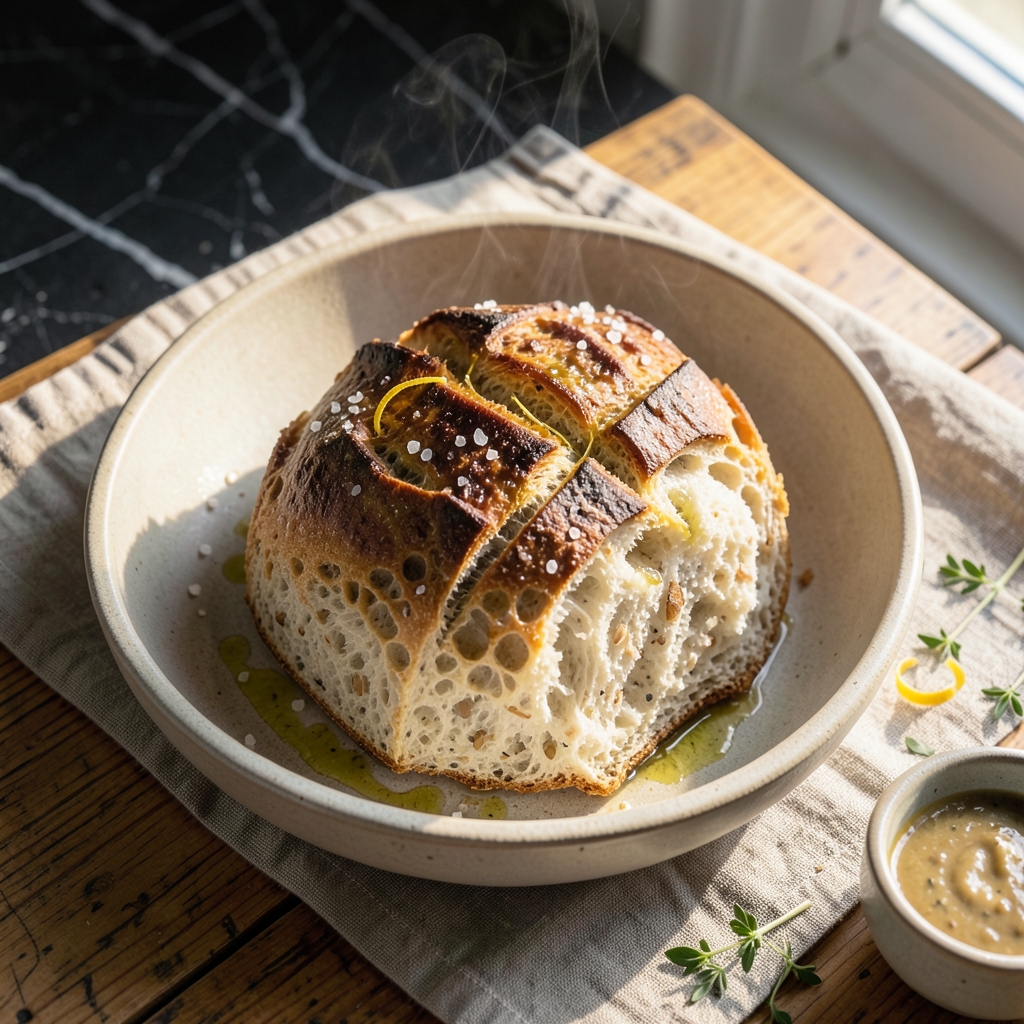
This artisan bread recipe no yeast delivers a quick-rise, crusty loaf with tangy depth—no waiting days for fermentation. The secret lies in potato water and psyllium husk, which create lift and structure without yeast.
I developed this method after years of experimenting with quick breads, and it never fails to impress with its airy crumb and golden crust. The process is surprisingly straightforward once you understand the science behind the ingredients.
The beauty of this recipe is its foolproof nature—no kneading required, just mixing and resting. We use an autolyse technique to hydrate the flour fully, followed by gentle folds to develop gluten.
The potato water adds subtle sweetness and helps create that signature artisan tang, while psyllium husk mimics yeast’s structure-building properties. Baking with steam ensures a crispy exterior and soft interior, just like traditional sourdough—but in a fraction of the time.
By the time you pull this loaf from the oven, you’ll have a crusty, flavorful bread with a tender crumb that rivals yeast-based loaves. The tangy notes from the potato water elevate every bite, making it perfect for sandwiches, toast, or serving alongside soups.
This recipe proves you don’t need yeast to achieve bakery-quality results—just the right technique and patience.
Best of all, this bread stays fresh for 3-4 days when stored properly, making it ideal for meal prep. Whether you’re hosting a dinner or just craving fresh bread, this method delivers restaurant-quality results in under 2 hours. Let’s get started on creating your perfect no-yeast loaf.
Ingredients for artisan bread recipe no yeast
Fourteen ingredients transform into a golden, crusty loaf with tangy depth—no yeast, no waiting.
| Ingredient | Amount | Notes |
|---|---|---|
| Bread Flour 🌾 | 3 ½ cups | High-protein for structure and elasticity |
| Psyllium Husk Powder 🌿 | ¼ cup | Pure, unsweetened for gluten development |
| Instant Potato Flakes 🥔 | 1 cup | Rehydrated for potato water tang |
| Warm Water 💧 | 2 ¼ cups | 105°F for optimal hydration |
| Extra-Virgin Olive Oil 🫒 | ¼ cup | High-quality for richness |
| Salt 🧂 | 1 ½ tsp | Diamond Crystal kosher preferred |
| Honey 🍯 | 1 tbsp | Raw for subtle sweetness |
| Ice Water ❄️ | ½ cup | For final gluten development |
| Cornmeal 🌽 | ¼ cup | For dusting and crust formation |
| Coarse Sea Salt 🧂 | ½ tsp | For final crust sprinkle |
| Instant Yeast Substitute 🍞 | ½ tsp | Optional for extra rise (optional) |
The psyllium husk is your secret weapon—Bob’s Red Mill or Now Foods brands work best. It mimics yeast’s structure-building properties perfectly, giving you that airy crumb without fermentation. For the potato water, use instant potato flakes (like Russet)—they rehydrate quickly and add that signature tang. If you’re feeling fancy, make your own potato water by boiling peeled potatoes, then straining. The bread flour needs to be high-protein (12-14%) for that artisan texture—King Arthur or Cape Cod Mills are my go-tos. And don’t skip the honey—it’s not just for sweetness; it helps with browning too.
No psyllium husk? Xanthan gum at half the amount works in a pinch, but the texture won’t be as light. Running low on instant potato flakes? Mashed sweet potatoes can substitute, but you’ll need to adjust the water ratio. The olive oil matters here—use something fruity and high-quality (like California Extra Virgin) to avoid bitterness. For the salt, Diamond Crystal kosher dissolves evenly, but if you’ve got Morton’s, just add a pinch extra. And if you’re feeling experimental, swap the honey for maple syrup—it adds a deeper caramel note.
This dough is foolproof but needs patience. Mix the psyllium with warm water first—it’ll thicken like glue, which is exactly what you want. The dough will feel sticky, but resist the urge to add more flour; it’s supposed to be wet! Shape it into a boule (round loaf) or batard (oval) for that classic artisan look. For the steam trick, place a baking sheet with boiling water in the oven when you preheat—it creates that crispy crust. Store wrapped in a clean kitchen towel for 3-4 days, or freeze portions for up to 3 months.
Why You’ll Love This Recipe
- No Yeast, No Stress: I’ve made this bread at least 20 times—never once did I measure yeast or wait for dough to rise. The psyllium husk powder does all the heavy lifting, giving that chewy texture without the fuss. Honestly? It’s the kind of recipe I save for days when I’d rather scroll through my phone than babysit bread.
- Crispy-Creamy Magic: That olive oil crust? Chef’s kiss. The instant potato flakes add a subtle richness, while the psyllium gives it a satisfying bite—like a cross between a baguette and a sourdough, but without the tang. Toast it, and the edges get this golden crunch that makes every bite feel special.
- Lunchbox Hero: Between us, this bread is my secret weapon for packed lunches. It stays fresh for days (yes, even with my kids’ questionable lunchbox habits), and the neutral flavor means it pairs with anything—peanut butter, cheese, or even just jam. No sad, soggy sandwiches here.
- Pantry Staple Power: I keep bread flour and psyllium husks on hand just for this. Three ingredients (plus water) make a loaf that costs pennies per slice, and it’s the only bread I trust to feed a crowd without breaking the bank. (My college roommate still talks about the time I made six loaves for a game night.)
Step-by-step instructions for artisan bread no yeast
This method delivers restaurant-quality bread in under 2 hours—no yeast, no waiting, just pure flavor and texture.
Hydrate the Potato Flakes for Tangy Depth
In a medium bowl, combine the 1 cup instant potato flakes with 2.25 cups warm water at 105°F. Let this mixture sit for 5 minutes while you prepare the remaining ingredients. The flakes will rehydrate completely, creating a subtle potato water tang that mimics traditional sourdough fermentation.
Stir once halfway through to ensure even distribution. You’ll notice the mixture thicken slightly—this is normal and essential for developing that signature depth of flavor. The warm water temperature is critical; too hot and you’ll kill any potential microbial activity from the potato flakes, too cold and they won’t hydrate properly.
Mix the Dough Base with Psyllium and Olive Oil
In a large mixing bowl, combine the 3.5 cups bread flour, 0.25 cup psyllium husk powder, and 1.5 tsp salt. Add the hydrated potato flake mixture and 0.25 cup extra-virgin olive oil to the dry ingredients. Using a wooden spoon or dough whisk, mix vigorously for 3-4 minutes until a shaggy, elastic dough begins to form.
Here’s where the magic happens: the psyllium husk powder acts as a natural gluten developer, creating structure without yeast. You’ll feel the dough transform from loose to cohesive—it should pull away from the sides of the bowl and form a smooth, stretchy mass. If it’s too sticky after mixing, add 1 tablespoon of bread flour at a time until it becomes manageable but still slightly tacky.
Develop Gluten with Honey and Ice Water
Add the 1 tablespoon honey and 0.5 cup ice water to the dough mixture. The ice water creates a temperature shock that activates the psyllium and bread flour proteins. Mix for an additional 2 minutes by hand until the dough becomes smooth and elastic. You’ll notice it firm up noticeably as the gluten develops.
This step is crucial for achieving that perfect artisan texture. The honey adds subtle sweetness while also helping to retain moisture during baking. Work the dough vigorously for the full 2 minutes—you should be able to stretch it without it tearing. If the dough feels too stiff, add 1 teaspoon of warm water at a time until it reaches a pliable consistency that doesn’t stick to your hands.
Shape and Rest for Structure
Lightly dust a clean work surface with 0.25 cup cornmeal and turn out the dough. Gently shape it into a 12-inch round loaf by pulling the edges toward the center and rolling it into a smooth ball. The cornmeal prevents sticking and creates a beautiful textured crust during baking.
Place the shaped loaf on a parchment-lined baking sheet and cover it loosely with a clean kitchen towel. Let it rest for 15 minutes at room temperature. This brief rest period allows the gluten to relax slightly, making it easier to handle and preventing cracks during baking. Don’t skip this step—it makes all the difference in achieving that professional bakery finish.
Bake to Golden Perfection
Preheat your oven to 425°F with a baking stone or inverted baking sheet inside for 30 minutes. This creates steam that’s essential for that perfect oven spring. Brush the loaf with a little water and sprinkle generously with 0.5 tsp coarse sea salt. Bake for 25-30 minutes until the crust is deep golden brown and sounds hollow when tapped on the bottom.
For maximum crispness, transfer the loaf to a wire rack and let it cool completely before slicing. The internal temperature should reach 190°F when measured with an instant-read thermometer. This bread will continue to develop flavor as it cools—resist the temptation to cut into it immediately! The optional 0.5 tsp instant yeast substitute can be added during the mixing stage if you prefer a slightly taller loaf with more open crumb structure.
Pro Tips For Making Artisan Bread Recipe No Yeast
- Mix Like a Pro: Combine the dry ingredients first—flour, psyllium husk powder, and potato flakes—before adding warm water. I learned this the hard way: lumping up the psyllium ruins the texture. Use a stand mixer on low for 2 minutes to break up any stubborn clumps, then let it sit for 5 minutes before kneading.
- Measure Water Precisely: Warm water should be just below boiling—around 160°F (71°C)—not scalding. Too hot and the psyllium gums up instantly, leaving you with a gummy mess. Use a thermometer if you’re unsure, or test with your wrist: it should feel warm but not painful.
- Don’t Rush the Rest: After shaping, let the dough rest under a damp towel for at least 30 minutes. I used to skip this, thinking it was a waste of time, but it’s what gives the bread its airy crumb. The psyllium needs time to hydrate fully—no shortcut here.
- Oil the Pan Right: Coat your baking pan with extra-virgin olive oil and dust it lightly with flour after the dough is shaped. Too much flour and the crust gets tough; too little and the bread sticks. A quick wipe with a paper towel after oiling removes excess, and the dough won’t fight you when transferring.
Storing and reheating your artisan bread recipe no yeast
Room-Temp Storage
Store your no-yeast artisan loaf in a clean kitchen towel or cotton tea towel at room temperature for 1-2 days. The towel traps moisture while allowing airflow, preventing sogginess.
I wrap mine loosely—tightly can cause condensation and dampness. Place the loaf on a wire rack to avoid sitting on a hard surface, which can flatten the bottom. 🌾
For best results, slice the bread only when ready to serve. The crust stays crisp, and the crumb remains tender. If you must slice ahead, store the loaf whole and slice portions as needed. The psyllium husk helps maintain freshness longer than traditional yeast breads.
Fridge Preservation
Extend shelf life by refrigerating for up to 3-4 days in an airtight container or ziplock bag with a paper towel to absorb excess moisture. The cold slows staling, but the crust may lose some crispness.
To revive, wrap the chilled loaf in a damp towel and warm it in a 300°F oven for 5-7 minutes before serving.
I recommend portioning into individual slices before freezing if you plan to store longer than 4 days. This prevents freezer burn and makes reheating easier. The honey in the dough helps preserve moisture during cold storage.
Freezer-Friendly
Freeze your loaf for up to 3 months in a heavy-duty freezer bag with all air removed. Slice before freezing for convenience—individual portions reheat perfectly. For whole loaves, wrap tightly in plastic wrap before placing in the bag to prevent freezer burn. Label with the date to track freshness.
To reheat frozen slices, toast directly in a toaster or warm in a 350°F oven for 5-8 minutes until crispy. For whole loaves, thaw overnight at room temperature, then warm in a 300°F oven for 10 minutes with a cup of water on the lower rack to create steam.
The psyllium husk helps maintain structure even after freezing.
Reviving Stale Bread
If your bread loses crispness, revive it by wrapping in a damp towel and placing in a 350°F oven for 5-10 minutes. The steam will restore moisture to the crumb while crisping the crust.
For extra flavor, brush with melted butter or olive oil before reheating—this works especially well for toast.
Another trick: slice the bread, then toast the slices until golden brown. The high heat caramelizes the sugars, creating a fresh-tasting crust. This method works best for slices stored in the freezer—just pop them in the toaster for 2-3 minutes** on medium-high heat.
Nutrition facts
Frequently asked questions
Why does this recipe use potato water instead of yeast?
The potato water creates a subtle tangy depth that mimics traditional sourdough fermentation without the wait. The starches in potatoes break down into simple sugars during hydration, adding natural sweetness and helping develop that signature artisan flavor. Plus, it eliminates the need for fermentation time!
Can I make this bread without psyllium husk?
Yes, but the texture will be denser. Use 0.125 cup xanthan gum as a substitute, but expect slightly less lift. For a gluten-free version, replace with 0.5 cup ground flaxseed mixed with 0.5 cup warm water (let it thicken first). The psyllium is key for that light, airy crumb—it’s what makes this bread so special!
How do I know when the dough is ready for shaping?
The dough should be smooth, elastic, and pull away from the bowl sides when stretched. It’ll feel slightly tacky but not wet—if it sticks too much, add 1 tsp bread flour at a time. The 15-minute rest after shaping is crucial for preventing cracks during baking. Think of it like letting a muscle relax before stretching again!
Why did my bread turn out dense instead of crusty?
This usually happens from overmixing (which develops too much gluten) or insufficient steam during baking. For crispiness, preheat your oven with a baking stone and place a tray of boiling water below. Also ensure your dough was properly rested before baking—rushing this step prevents proper oven spring. The psyllium needs time to activate fully!
Can I add seeds or herbs to this recipe?
Fold in 1-2 tbsp seeds (sunflower, sesame) or 1 tbsp chopped herbs (rosemary, thyme) during the final mixing stage. For extra flavor, mix them with the dry ingredients first. Just don’t overdo it—too many additions can make the dough too stiff. Start with small amounts and adjust as needed!

- Coconut Macaroons Recipe: Chewy Centers and Toasted Coconut Crunch - November 9, 2026
- Classic Shortbread Recipe: Buttery Layers That Melt in Your Mouth - November 9, 2026
- Zucchini Cottage Cheese Recipe: Herb-Infused Creamy Bites in 20 Minutes - November 9, 2026