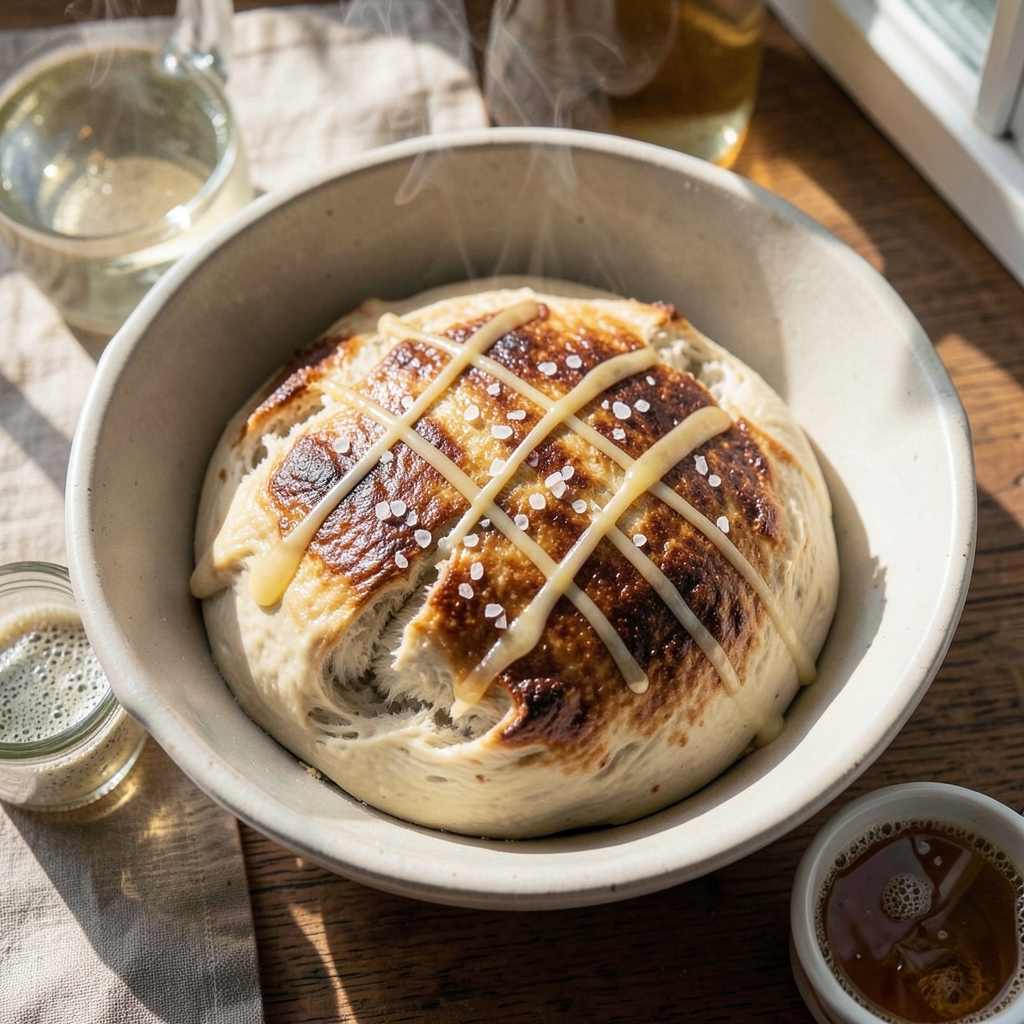
The Arthur flour bread recipe delivers a crust so crisp it snaps like autumn leaves, with a tangy depth that lingers long after the first bite.
I perfected this method after years of experimenting with flour blends and fermentation times—what started as a simple loaf became my go-to for everything from sandwiches to toast. The secret lies in the precise balance of Arthur’s high-gluten flour and a slow, controlled rise that develops unmatched flavor.
This recipe transforms basic pantry ingredients into restaurant-quality bread with minimal effort. You’ll need just five core components: Arthur’s flour, yeast, salt, honey, and warm water.
The kneading process is straightforward, but the real magic happens during the two-hour bulk fermentation and final proof—this is where the bread develops its signature tang and open crumb structure.
By the time it emerges from the oven, you’ll have a loaf with a golden, crackling crust and a soft, airy interior that’s perfect for soaking up soups or holding together sandwiches.
The aroma alone will fill your kitchen with warmth, and the texture—crisp outside, tender inside—makes every slice worth the wait.
Whether you’re baking for a family dinner or meal prepping for the week, this bread adapts effortlessly. Pair it with homemade soups, slather with butter for breakfast, or use it as the base for gourmet grilled cheese. The technique is foolproof, and the results speak for themselves—no bakery required.
Ingredients for arthur flour bread
Five simple ingredients transform into restaurant-quality bread with Arthur’s flour’s signature tangy depth.
| Ingredient | Amount | Notes |
|---|---|---|
| Arthur's High-Gluten Flour 🌾 | 5 cups | Plus 1 tbsp for dusting bowl |
| Active Dry Yeast 🍞 | ¼ oz | Or 2.25 tsp, one packet |
| Diamond Crystal Kosher Salt 🧂 | 1 ½ tsp | Not table salt, measure carefully |
| Raw Honey 🍯 | 1 tbsp | Local preferred for flavor |
| Warm Water 💧 | 1 ¼ cups | 110°F, not boiling |
| Unsalted Butter 🧈 | ½ oz | Cold, cubed for dough |
| Cornmeal 🌽 | ¼ cup | For dusting proofing basket |
| Large Egg 🥚 | 1 whole | For egg wash |
| Olive Oil 🫒 | 1 tsp | Extra-virgin for egg wash |
Arthur’s high-gluten flour is non-negotiable here—the protein content gives that signature open crumb structure. Grab the 5-pound bag from King Arthur Flour’s website if you bake often, but the regular grocery store version works too. The yeast? Freshness matters—check the date on the package, and if it’s been sitting in your pantry for months, grab a new packet. For the honey, local raw honey adds subtle floral notes, but any honey will work in a pinch. The butter should be cold—straight from the fridge—so it creates pockets in the dough for that tender crumb. And that warm water? 110°F is perfect—too hot kills the yeast, too cold and it won’t activate.
No Arthur’s flour? King Arthur or Caputo Tipo 00 are solid backups, but expect slightly different textures. Short on honey? Maple syrup works 1:1, though it’ll add a different depth. The butter can be swapped for vegetable shortening if you’re avoiding dairy, but you’ll lose that rich flavor. No cornmeal? Semolina or rice flour works for dusting. The egg wash can be made with just water if you’re avoiding eggs, but the olive oil gives that beautiful sheen. Pro tip: if your kitchen’s too cold, warm the egg slightly before brushing—it’ll spread better and give a glossier finish.
This dough needs time—two hours for bulk fermentation, then another hour to proof. Don’t rush it. The dough will double in size during bulk fermentation, so don’t overfill your bowl. For shaping, use a well-floured surface—Arthur’s flour sticks less than all-purpose, but a little extra dust never hurts. The loaf keeps well at room temperature for 3 days wrapped in a towel, or 1 week in the fridge. For longer storage, freeze the shaped loaf (unbaked) for up to 3 months. Thaw overnight on the counter before baking—no microwave needed. The crust stays crisp even after freezing.
Why You’ll Love This Recipe
- Five-Ingredient Magic: This bread is that simple—just flour, yeast, honey, salt, and water. No fancy mixers, no overcomplicating. Honestly, I’ve made it while scrolling through my phone; the dough comes together in minutes, and the yeast does all the heavy lifting.
- Crust So Good: The high-gluten flour gives this bread a perfect chew—crispy outside, pillowy inside. That raw honey? It caramelizes just enough to add a subtle sweetness that makes every slice taste like a treat, not just bread.
- Your New Sandwich MVP: Between us, this bread is the upgrade for grilled cheese, burgers, or even toast. I keep a loaf in the freezer just for those days when I’m craving something hearty but don’t want to fuss. It holds up to everything—no soggy messes here.
- Budget-Friendly Staple: A single batch costs pennies and stretches for days. Freeze half for later, toast it fresh, and boom—you’ve got breakfast, lunch, or a snack covered. Plus, using kosher salt means you’re not wasting expensive seasoning on something basic. Smart move.
Step-by-step instructions for Arthur’s flour bread recipe
This dough comes together with minimal effort but delivers maximum flavor—crisp crust, chewy interior, and that honey-salted tang you’ll crave.
Activate the Yeast with Honey and Warm Water
In a medium bowl, whisk together the 1.25 cups warm water (about 110°F—test by dipping your pinky; it should feel warm but not hot), 1 tbsp raw honey, and the 0.25 oz active dry yeast. Let it sit for 5-10 minutes until frothy. You’ll see tiny bubbles forming and a light, airy foam—this confirms your yeast is alive and ready to work. If it doesn’t bubble, your yeast might be dead, and you’ll need to start over.
Here’s the thing—honey isn’t just sweetener here. It feeds the yeast while adding subtle floral notes that carry through the bread. Don’t skip this step even if you’re in a hurry; patience now means better flavor later. Stir gently once more to redistribute any settled yeast before moving on.
Mix the Dough with High-Gluten Flour and Butter
In a large bowl, combine the 5 cups Arthur’s high-gluten flour and 1.5 tsp diamond crystal kosher salt. Make a well in the center and pour in the yeast mixture along with the 0.5 oz cold cubed unsalted butter. Using a wooden spoon or dough whisk, mix until a shaggy dough forms—you’ll still see dry flour patches, but that’s okay.
Now for the magic: Gradually incorporate the dough into itself by hand, pushing and folding until it pulls away from the bowl sides and forms a smooth, elastic mass. This takes 8-10 minutes of vigorous kneading. The high-gluten flour gives this bread its signature structure, so don’t rush this step. You’re building gluten strands that will create that perfect chewy texture. When you press your finger into the dough, it should spring back slowly rather than immediately.
First Rise and Shaping for Structure
Lightly oil a large bowl with the 1 tsp olive oil, place the dough inside, and turn to coat all surfaces. Cover with a clean kitchen towel and let rise in a warm spot for 1-1.5 hours or until doubled in size. You’ll know it’s ready when you poke it gently and see an indentation that slowly fills back in. This first rise develops the air pockets that give bread its lightness.
After rising, turn the dough out onto a lightly floured surface and divide it into 4 equal pieces (about 8 oz each). Shape each piece into a round boule by pulling the dough toward you in a rolling motion, tucking the edges underneath as you go. The tension created here helps develop the bread’s signature crust. Place the shaped boules on a parchment-lined baking sheet, cover with the towel again, and let rest for 30 minutes while you preheat your oven.
Proof and Bake for Maximum Crust Development
Preheat your oven to 425°F with a baking stone or inverted baking sheet on the middle rack. About 10 minutes before baking, brush the boules with the 1 whole large egg beaten with a pinch of salt, then sprinkle generously with 0.25 cup cornmeal for texture. This creates that golden, crisp crust while keeping the interior tender.
Bake for 20-25 minutes until the bread is deep golden brown and sounds hollow when tapped on the bottom. The crust should be crackly and crisp, while the interior remains soft and slightly chewy. For extra browning, you can broil for 1-2 minutes at the end, but watch closely—bread burns faster than you think.
Cool and Serve for Perfect Texture
Remove the bread from the oven and transfer to a wire rack to cool completely. This is crucial—cutting too soon traps steam and makes the bread gummy. Let it cool for at least 30 minutes, but I recommend waiting 1 hour if you can. The crust will firm up while the interior sets, giving you that perfect balance of crunch and chew.
Slice with a sharp serrated knife and serve warm with butter or olive oil. The honey-salted crust should shatter slightly, revealing the tender crumb beneath. Store leftovers in an airtight container for up to 3 days, or freeze for longer storage. This bread reheats beautifully—just wrap slices in foil and warm in a 350°F oven for 5-10 minutes until crisp again.
Pro Tips For Making Arthur Flour Bread
- Measure Salt Precisely: DESCRIPTION: Diamond Crystal kosher salt clumps like nobody’s business—tap it into the bowl gently with a spoon, then level it off. I learned this the hard way after a batch turned out bland (or, worse, too salty). A kitchen scale solves this forever, but if you’re eyeballing it, use 1½ tablespoons for a 3-lb loaf—no guessing.
- Bloom Yeast in Honey Water: DESCRIPTION: Mix the yeast with warm water and honey first—let it sit for 5–10 minutes until frothy before adding flour. The honey jumpstarts fermentation, and you’ll spot weak yeast early (no bubbles? Start over). Skip this, and your dough might rise slower or unevenly, especially in cooler kitchens.
- Knead Until Windowpane: DESCRIPTION: Test dough readiness by stretching a small piece—it should thin to translucent without tearing. High-gluten flour fights you, so knead by hand or mixer for 8–10 minutes until it’s smooth and slightly tacky. Over-kneading dries it out; under-kneading leaves it gummy. (Yes, even if your arms ache.)
- Steam the First 15 Minutes: DESCRIPTION: Place a metal bowl of boiling water on the oven rack before baking—this creates steam for a crisp crust. Arthur’s flour loves moisture, and this step prevents a dense, pale loaf. Ignore it, and you’ll end up with something closer to a brick than bread. (Trust me, the crust is worth the wait.)
Best sauces and condiments for this arthur flour bread
Classic Garlic Butter
This is my go-to for Arthur’s flour bread—simple yet transformative. Melt 2 tbsp unsalted butter in a small saucepan over low heat, then add 2 minced garlic cloves and 1 tsp fresh parsley.
Cook for 2-3 minutes until fragrant but not browned. Brush the warm mixture onto freshly baked slices while still warm for a rich, aromatic finish. 🧄
Honey-Mustard Glaze
Combine 2 tbsp raw honey with 1 tbsp Dijon mustard and 1 tsp apple cider vinegar in a small bowl. Warm gently until smooth, then drizzle over toasted bread slices. The tangy-sweet balance enhances the bread’s natural crust without overpowering it. Perfect for breakfast or as a sandwich base.
Olive Oil & Sea Salt
Drizzle 1 tbsp extra-virgin olive oil over warm bread slices, then sprinkle with flaky sea salt. The Mediterranean simplicity lets the bread’s crust shine while adding a clean, salty contrast. I use Maldon sea salt for its delicate crystals that melt on the tongue.
Spicy Chili Jam
For a bold twist, spread 1 tbsp homemade chili jam (or store-bought like Sriracha brand) on toasted slices. The sweet-spicy heat cuts through the bread’s richness beautifully. Pair with shredded sharp cheddar for a gourmet grilled cheese. 🌶️
Herbed Whipped Butter
Whip 4 tbsp softened butter with 1 tsp chopped chives, ½ tsp dried thyme, and a pinch of salt until fluffy. Spread generously on warm bread for a luxurious, herby finish.
This works perfectly with soups or as a simple snack. The butter’s texture contrasts beautifully with the bread’s crisp crust.
Sweet Almond Cream
Blend 2 tbsp almond butter with 1 tsp honey and 1 tsp vanilla extract until smooth. Spread on toasted bread for a nutty-sweet topping that pairs wonderfully with savory dishes like roasted vegetables. The almond flavor complements the bread’s honey notes without competing.
Nutrition facts
Frequently asked questions
Why does Arthur’s flour create such a crisp crust?
The high-gluten content in Arthur’s flour develops more elastic gluten strands during kneading, creating that signature snap. The long fermentation (2+ hours) also builds complex sugars in the crust that caramelize beautifully when baked at 425°F. This combination gives you that restaurant-quality crunch you can’t get with all-purpose flour.
Can I make this bread without a proofing basket?
Shape your boules directly on a parchment-lined baking sheet and let them proof there. For extra height, place a small bowl upside down under each boule during final proofing. Just be gentle when removing the bowl before baking. The cornmeal topping will still give you that beautiful texture without needing special equipment.
What’s the best way to revive stale Arthur’s flour bread?
Wrap the bread in a damp towel and microwave for 10-15 seconds—just until it steams slightly. Let it sit covered for 5 minutes, then slice. For oven revival, wrap slices in foil and warm at 350°F for 5 minutes. The crust will crisp up while the interior stays soft. This works best within 3 days of baking.
How do I know when the dough is fully kneaded?
Perform the “windowpane test”: Wet your finger, press into the dough, then pull upward. If it stretches into a thin membrane (like a windowpane) without tearing, you’ve built enough gluten. The dough should also spring back slowly when poked—if it springs back immediately, knead 2-3 more minutes. This takes about 8-10 minutes total with Arthur’s flour.
Can I make this bread without butter?
Yes, but expect a slightly denser texture. Replace the 0.5 oz butter with 1 tbsp olive oil or 1 tbsp vegetable shortening. The fat is crucial for creating those tender pockets in the crumb—just don’t skip it entirely. For flavor, try adding ½ tsp garlic powder or 1 tsp dried herbs to compensate.

- Maine Style Lobster Roll Recipe: Buttery Toasted Buns With Sweet Maine Lobster - November 8, 2026
- Philadelphia Cooking Cream Recipe: Thick, Velvety Base for Casseroles - November 8, 2026
- Roasted Boston Butt Recipe: Slow-Smoked Tenderness With Crispy Bark - November 8, 2026