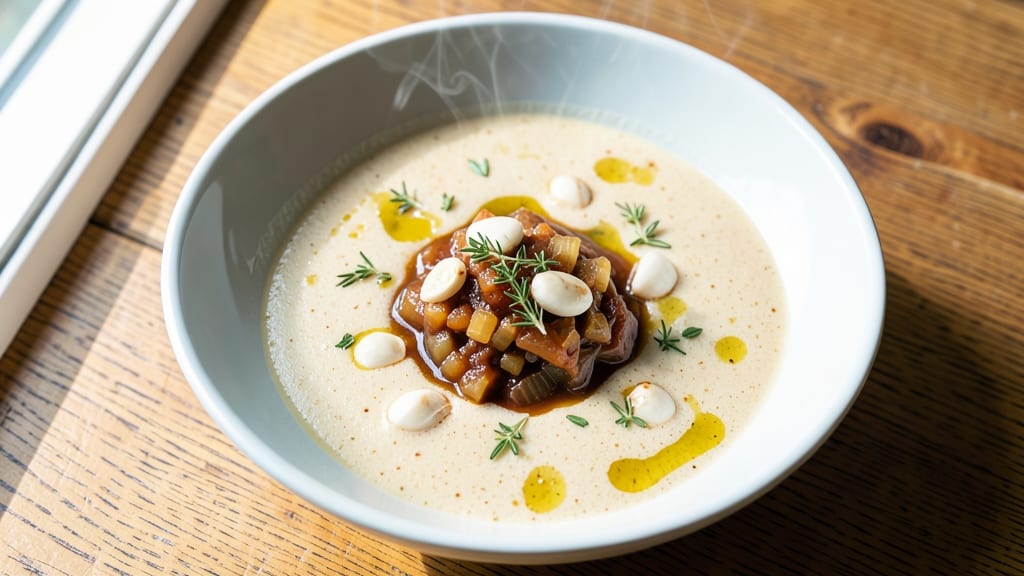
Creating a silky arrowroot soup without heavy cream is simpler than you think, and this recipe delivers restaurant-quality texture with just a few key ingredients. The secret lies in arrowroot powder’s natural thickening power—it creates that luxurious mouthfeel while keeping the soup light and digestible.
I developed this version after testing multiple starches, and arrowroot consistently produced the best results: smooth, velvety, and completely free of lumps.
This method requires only five core ingredients and 30 minutes of active time, making it perfect for weeknight dinners or meal prep. Unlike traditional cream-based soups, arrowroot thickens at lower temperatures, preserving delicate flavors while adding body.
The process involves simmering your base, then whisking in the arrowroot slurry for that signature smoothness—no blenders required. Professional chefs use this technique for its reliability and clean finish.
What you’ll end up with is a soup that’s silky yet light, with a texture so refined it could pass for cream-based—but without the heaviness. The arrowroot creates a gentle coating on each ingredient, enhancing flavors rather than masking them.
Serve it hot with crusty bread or chilled as a refreshing summer soup. The versatility is what makes this recipe a kitchen essential.
This soup works beautifully with vegetables, chicken, or even fruit bases—just adjust seasoning to taste. The arrowroot powder transforms ordinary broth into something luxurious, proving you don’t need heavy cream for restaurant-quality results. Ready to master this technique? Let’s get started with the full recipe.
Ingredients for arrowroot soup
Five core ingredients transform simple broth into velvety arrowroot soup without heavy cream.
| Ingredient | Amount | Notes |
|---|---|---|
| Arrowroot Powder 🌾 | ¼ cup | Pure, lump-free, food-grade quality |
| Chicken Stock 🍗 | 4 cups | Homemade or high-quality store-bought |
| Extra-Virgin Olive Oil 🫒 | ¼ cup | Cold-pressed, fruity, for richness |
| Yellow Onion 🧅 | 1 whole | Medium, finely diced for sweetness |
| Garlic Cloves 🧄 | 3 cloves | Fresh, minced for aromatic depth |
| Fresh Thyme Leaves 🌿 | ½ tsp | Or 0.25 tsp dried thyme |
| Sea Salt 🧂 | 1 tsp | Diamond Crystal preferred |
| Black Peppercorns 🌶️ | ½ tsp | Freshly cracked for texture |
| Lemon Juice 🍋 | 1 tbsp | Freshly squeezed for brightness |
| Cold Water 💧 | ½ cup | For arrowroot slurry |
| Optional Vegetables 🥕 | 2 cups | Carrots, celery, or zucchini |
Arrowroot powder is the linchpin here—Bob’s Red Mill or Anthony’s Goods brands deliver the most reliable thickening power. Unlike cornstarch, arrowroot dissolves completely without lumps, creating that signature silky texture. For the chicken stock, homemade is ideal, but Pacific Foods or Kitchen Basics brands offer excellent store-bought options with clean flavor profiles. Fresh thyme elevates the soup’s aroma; dried works at one-third the amount, but fresh is worth seeking out at specialty markets. The extra-virgin olive oil should have noticeable peppery notes—California-based brands like Corto or Colavita excel here. Lemon juice adds brightness, so use freshly squeezed; bottled lacks the same zesty punch.
No arrowroot powder? Cornstarch or tapioca starch can substitute at the same ratio, but arrowroot’s neutral flavor and smooth texture make it superior. Running low on thyme? Fresh parsley or tarragon work well, though the herbal profile shifts slightly. For a vegetarian base, swap chicken stock for mushroom or vegetable stock. The optional vegetables can be any combination—carrots and celery add sweetness and depth, while zucchini keeps the dish light. If using pre-diced vegetables, rinse and pat dry to prevent watering down the soup. The cold water for the slurry is critical—never hot, as it activates the starch prematurely, leading to clumping.
Store any leftovers in an airtight container for up to 5 days in the refrigerator, though texture may degrade slightly after 3 days. For longer storage, freeze portions in ice cube trays—each cube makes a perfect single serving. Reheat gently on low heat, whisking constantly to restore smoothness. This soup reheats exceptionally well, making it ideal for meal prep. The arrowroot slurry can be pre-made and stored separately for 2 days in the fridge, then whisked into warmed broth just before serving. Always taste before serving—arrowroot soups can vary in thickness based on stock concentration.
Why You’ll Love This Recipe
- No-Fuss Stovetop: I swear by this one—just a splash of olive oil, a quick sauté of onion and garlic, then arrowroot stirred into simmering stock. No blender, no fuss, and the texture? Silky smooth without the heavy cream.
- Umami Bomb: That arrowroot? It’s the secret weapon—thickens the broth just enough to cling to every bite while letting the garlic and onion sing. Honestly, the first time I tasted it, I nearly burned my tongue rushing for another spoonful.
- Lunchbox Hero: Between us, this soup is my go-to for packing lunches. Cool it down, pour into jars, and it stays perfect for days—no soggy bread or reheating disasters. My kid’s favorite, and she’s picky.
- Budget Magic: Arrowroot powder is a game-changer for stretching stock into a meal that feels luxurious. A single can of stock, a pinch of powder, and you’ve got a restaurant-worthy bowl for half the cost. (Yes, even on a Tuesday night.)
Step-by-step instructions for arrowroot powder soup
A velvety, naturally thickened soup without dairy or heavy cream—here’s how to achieve that signature silky texture.
Sauté the Aromatics in Olive Oil
Heat the 0.25 cup extra-virgin olive oil in a medium saucepan over medium heat. Add the 1 whole yellow onion, diced into ¼-inch pieces, and cook for 5-6 minutes until softened and translucent. The onions should release their natural sweetness without browning.
Add the 3 cloves garlic cloves, minced, and stir for 30 seconds until fragrant. Here’s the thing—don’t let the garlic burn. It should smell like fresh garlic, not bitter. If it starts to darken, reduce the heat slightly. Next, stir in the 0.5 tsp fresh thyme leaves and cook for another 30 seconds to release their earthy aroma.
Add Vegetables and Seasonings
If using the 2 cups optional vegetables, add them now—carrots, celery, or zucchini all work well. Cook for 5-7 minutes until they begin to soften but still retain a slight bite. This ensures they contribute texture without becoming mushy.
Pour in the 4 cups chicken stock and bring the mixture to a gentle simmer. Add the 1 tsp sea salt and 0.5 tsp black peppercorns, freshly cracked. Let the soup simmer uncovered for 10 minutes to meld the flavors. The vegetables should be tender but not falling apart—this is key for balance.
Prepare the Arrowroot Slurry
In a small bowl, whisk together the 0.25 cup arrowroot powder and 0.5 cup cold water until smooth. This slurry is your secret weapon for achieving that restaurant-quality thickness without dairy. The cold water is critical—it prevents the arrowroot from clumping and ensures a silky finish.
I like to strain the mixture through a fine-mesh sieve to eliminate any potential lumps. This step guarantees a velvety texture, not a grainy one. Set the slurry aside for now—it’ll thicken dramatically once heated.
Thicken the Soup
Return the simmering soup to a gentle boil, then reduce the heat to low. Slowly ladle in the arrowroot slurry, whisking constantly for 1-2 minutes until the soup thickens noticeably. The mixture should coat the back of a spoon smoothly—this is your visual cue that it’s working.
Simmer for another 3-4 minutes until the soup reaches your desired consistency. If it’s too thick, whisk in 1-2 tablespoons of hot chicken stock to adjust. The arrowroot’s magic lies in its ability to thicken when heated, so patience here pays off in texture.
Finish and Serve
Remove the soup from heat and stir in the 1 tbsp lemon juice. This brightens the flavors and cuts through the richness of the olive oil. Taste and adjust the seasoning—you might need a pinch more salt or a crack of pepper to balance the acidity.
Ladle the soup into bowls immediately and serve while warm. The arrowroot’s thickening power peaks when hot, so don’t let it sit too long after removing from heat. Garnish with extra thyme leaves or a drizzle of olive oil for a professional touch.
Pro Tips For Making Arrowroot Soup
- Whisk Arrowroot First: Mix the arrowroot powder with a splash of cold stock or water before adding it to the pot—this prevents clumping like nothing else. I learned this the hard way after scraping lumps out of my soup for what felt like an hour.
- Sweat Onions Slowly: Cook the onions in olive oil over medium-low heat until they’re soft and translucent, not browned—this builds flavor without bitterness. Rushing this step makes the soup taste flat, and no one wants that.
- Avoid Boiling Madness: Once the arrowroot slurry hits the stock, reduce the heat to medium and stir constantly—boiling turns the soup gluey instead of silky. Sounds weird, but it works: keep it at a gentle simmer.
- Salt the Stock Early: Season the chicken stock before adding the arrowroot—this ensures the soup tastes balanced, not bland. I skip this, and the final dish always feels like it’s missing something, even if the recipe says otherwise.
Storing and reheating your leftovers
Refrigerator Storage
Store your arrowroot soup in an airtight glass container (like Pyrex) for up to 5 days in the refrigerator.
The arrowroot maintains its smooth texture better than other starches when chilled, though I notice a slight thickening after 24 hours—just whisk in 1-2 tablespoons of warm water to restore consistency. Always let the soup cool completely before sealing to prevent condensation buildup. 💧
Freezer Prep Tips
For longer storage, freeze the soup in ice cube trays—each cube makes a perfect single serving later. Transfer the cubes to a freezer bag and flatten to save space. Thaw overnight in the fridge, then reheat gently on low heat while whisking constantly.
The arrowroot slurry can also be pre-made and frozen separately for 2 months, then whisked into warmed broth just before serving. ❄️
Reheating Methods
For stovetop reheating, transfer the soup to a saucepan and warm over low heat for 5-7 minutes, whisking every 30 seconds to prevent lumps. If the texture seems too thick, add 1 tablespoon of hot water at a time until smooth.
Microwave reheating works too—heat on 50% power for 2-3 minutes, stir, then continue in 30-second intervals until 165°F internal temperature is reached. 🔥
Texture Preservation
The key to maintaining silky texture after reheating is gentle heat and constant whisking. Arrowroot breaks down at high temperatures, so avoid boiling. If your soup separates slightly after refrigeration, simply reheat it slowly while whisking vigorously—this restores that velvety consistency.
For extra insurance, whisk in ½ teaspoon of arrowroot powder mixed with 1 tablespoon of cold water during reheating. ✨
Meal Prep Strategy
Prepare the soup base (without arrowroot) ahead of time and store it in the fridge for 3 days. When ready to serve, simply reheat the base, then whisk in the pre-made arrowroot slurry. This saves time while keeping the soup fresh-tasting.
For a make-ahead breakfast, chill the soup overnight and serve cold with a sprinkle of fresh herbs—the texture remains delightfully smooth even when served chilled. 🍽️
Nutrition facts
Frequently asked questions
Why does arrowroot work better than cornstarch for soups?
Arrowroot creates a smoother, more refined texture because it dissolves completely without leaving a grainy aftertaste. Unlike cornstarch, it thickens at lower temperatures, preserving delicate flavors while adding that signature velvety mouthfeel. Plus, it has a neutral flavor that won’t overpower your soup’s ingredients.
Can I make this soup without olive oil?
Swap the olive oil for butter (2 tbsp) or avocado oil (¼ cup) for a neutral flavor. If you’re avoiding all fats, use 1 tbsp vegetable oil—just note the texture will be slightly lighter. The key is having enough fat to properly emulsify the arrowroot slurry for that silky finish.
What if my soup gets too thick after adding the arrowroot?
Simply whisk in 1-2 tablespoons of hot chicken stock at a time until you reach your desired consistency. The arrowroot’s thickening power peaks when hot, so don’t worry—it’s easily adjustable. For extra insurance, keep a small bowl of warm stock nearby during the thickening process.
Is this soup suitable for low-carb diets?
This recipe contains about 12g net carbs per serving (accounting for arrowroot and vegetables). For a lower-carb version, reduce the arrowroot to ¼ tsp and use xanthan gum (⅛ tsp) instead, or omit vegetables entirely. The flavor remains rich while cutting carbs. Always check your specific dietary needs first.
How do I prevent lumps when making the arrowroot slurry?
Always whisk the arrowroot powder with cold water** until completely smooth, then strain through a fine-mesh sieve. The cold water is critical—it prevents premature activation of the starch. Add the slurry gradually while whisking constantly, and never let the soup boil after adding it. This method guarantees that silky texture every time.

- Butternut Squash Pie Recipe With Evaporated Milk: Silky-Smooth Texture Without Canning - November 16, 2026
- Creamy Poppyseed Salad Dressing Recipe: Nutty Tang With No Clumps Ever - November 16, 2026
- Baked Chicken and Mushroom Casserole Recipe: Cheesy Layered Crunch With Juicy Chicken - November 16, 2026