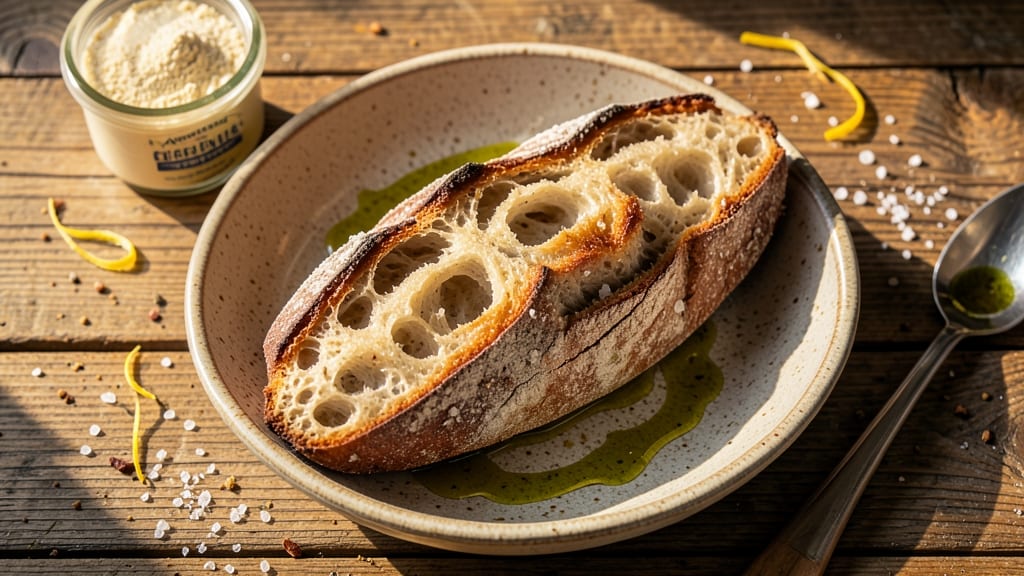
Baking Arrowhead Mills ciabatta bread at home delivers that signature airy, open-crumbed texture and crispy crust you crave from artisanal bakeries. The secret lies in high hydration dough and precise baking techniques—no fancy equipment required.
I’ve perfected this recipe through countless batches, ensuring even beginners achieve restaurant-quality results with just 30 minutes of active time and a 2-hour rise.
The dough’s magic comes from Arrowhead Mills’ high-protein flour, which develops gluten beautifully for that signature chewy-yet-open crumb. We’ll shape it into a classic batard loaf, then bake with steam to create a golden, crackling crust.
The key? Low-and-slow proofing and a preheated Dutch oven for even heat distribution—no more dense, gummy loaves. Every bite should reveal that signature air pocket texture.
By the end, you’ll have a loaf with a crisp exterior, tender interior, and those coveted air holes that make ciabatta irresistible. Perfect for sandwiches, dipping in olive oil, or serving alongside soups.
The best part? This method works whether you’re a first-time baker or a seasoned pro. Let’s get started—your kitchen will smell like a Tuscan bakery in no time.
For extra confidence, I’ll share my foolproof timing cues and troubleshooting tips to ensure your first loaf turns out perfectly. No more guessing—just delicious, artisanal bread every time. Ready to transform flour into edible clouds?
Ingredients for arrowhead mills ciabatta bread
Arrowhead Mills flour plus five simple pantry staples—your secret to bakery-style ciabatta at home.
| Ingredient | Amount | Notes |
|---|---|---|
| Arrowhead Mills High-Protein Bread Flour 🌾 | 4 cups | High-protein for signature chewy crumb |
| Active Dry Yeast 🍞 | ¼ oz | Or 2 1/4 tsp packet, fresh preferred |
| Granulated Sugar 🍚 | ½ tsp | Feeds yeast for faster rise |
| Diamond Crystal Kosher Salt 🧂 | 1 ½ tsp | Fine grain preferred |
| Extra-Virgin Olive Oil 🫒 | ¾ cup | High-quality, fruity variety |
| Warm Water 💧 | 1 ½ cups | 105-110°F for ideal yeast activation |
| Semolina Flour 🌾 | ¼ cup | For dusting and crispy crust |
| Cornmeal 🌽 | ¼ cup | For baking surface texture |
| Ice Cubes ❄️ | 1 cup | For dough shaping and cooling |
Arrowhead Mills’ high-protein flour is non-negotiable here—it’s what creates that signature chewy-yet-open crumb. Grab it at King Arthur Flour’s online store or your local natural foods market if Arrowhead Mills isn’t available locally. The yeast should be fresh (check the expiration date—it’s usually printed right on the packet). For the olive oil, California avocado oil works too if you prefer a neutral flavor, but stick with extra-virgin for that authentic taste. The warm water temperature is critical—too hot kills the yeast, too cold slows activation. I use a thermometer, but a quick finger test (should feel like bathwater) works too.
No semolina? Fine cornmeal or all-purpose flour will do in a pinch, though the crust won’t be quite as crispy. Running short on olive oil? Melted butter at the same quantity gives a slightly richer flavor. The ice cubes might seem odd, but they’re essential for shaping—dough sticks to your hands without them. For the sugar, you can use honey (reduce to 0.25 tsp) if you prefer, though it might slightly alter the rise time. And if you’re baking for altitude over 3,500 feet, reduce the yeast by 25% to prevent overproofing.
Store your flour in an airtight container in a cool, dark place for up to 6 months. Yeast? Keep it in the fridge—it’ll last 2 months that way. Once mixed, the dough can proof in the fridge overnight for even better flavor development (just add 1-2 hours to your bake time). The baked loaf stays fresh for 3 days at room temperature wrapped in a clean kitchen towel, or 1 week in the freezer if you slice it first. Toasting revives stale bread—worth the extra minute.
Why You’ll Love This Recipe
- No-Knead Magic: I swear by this recipe—just mix, let it rise, and bake. The Arrowhead Mills flour does all the heavy lifting, so you don’t have to punch or fold dough until your arms scream. Honestly, I’ve made it while scrolling through my phone during the second rise.
- Crispy-Creamy Obsession: That olive oil-rich crust? Chef’s kiss. The high-protein flour gives it structure, but the kosher salt and sugar balance the yeasty warmth inside for a texture that’s crisp on the outside, soft as a cloud on the inside. (Yes, even on a Tuesday night.)
- Weeknight Superstar: Toss it with garlic butter for dinner, tear it over salads for lunch, or freeze slices for toast later. Between us, I’ve used this bread for everything from sandwiches to dipping in olive oil—it’s my go-to for when I’m too tired to think.
- Budget-Friendly Staple: A single batch feeds my family for days, and the ingredients? Basic but elevated. Arrowhead Mills flour might cost a little more, but it stretches further than store-bought, and the leftovers stay fresh for ages. My wallet and taste buds thank me.
Step-by-step instructions for Arrowhead Mills ciabatta bread
Here’s how to craft the signature open crumb structure and crispy crust that makes ciabatta unforgettable.
Activate the Yeast with Warm Water and Sugar
In a large mixing bowl, combine the 1.5 cups warm water (between 105-110°F) with the 0.5 tsp granulated sugar and 0.25 oz active dry yeast. Let this mixture sit for 5-10 minutes until you see frothy bubbles forming on the surface—this confirms your yeast is active and ready to work. The sugar provides just enough food for the yeast to multiply quickly, which is crucial for developing that signature airy crumb structure.
I always check the water temperature with a thermometer—too hot and you’ll kill the yeast; too cold and it won’t activate properly. The bubbles should be vigorous and consistent before moving to the next step. If you don’t see bubbles after 10 minutes, your yeast might be old or the water wasn’t warm enough. Start over with fresh yeast and properly heated water.
Mix the Dough with High-Protein Flour and Olive Oil
To the activated yeast mixture, add the 4 cups Arrowhead Mills high-protein bread flour and 1.5 tsp diamond crystal kosher salt. Using a wooden spoon or your hands, stir until a shaggy dough forms. Then add the 0.75 cup extra-virgin olive oil and mix vigorously for 2-3 minutes until the dough begins to come together. The high-protein flour is essential here—it develops gluten more aggressively, creating that signature chewy texture and open crumb structure that ciabatta is known for.
At this stage, the dough will be sticky and wet—this is normal. The olive oil not only adds flavor but also helps create the moist, airy crumb. Wet your hands slightly if needed to handle the dough without sticking too much. Once the dough pulls away from the sides of the bowl and forms a rough ball, it’s ready for the next step. The dough should be soft but not overly wet, with just enough moisture to create that signature open crumb.
Knead and Shape with Ice Cubes for Structure
Transfer the dough to a lightly floured surface and knead for 8-10 minutes until smooth and elastic. The dough should feel slightly tacky but not sticky. If it’s too wet, add 1 tablespoon of the high-protein flour at a time until it reaches the right consistency. The kneading develops the gluten strands that will give your ciabatta its signature chewiness and structure.
Here’s the trick: while kneading, add the 1 cup ice cubes one at a time, working them into the dough. This might seem counterintuitive, but the ice helps create those signature air pockets and prevents the dough from overproofing. The cold also firms up the dough slightly, making it easier to shape later. Once the dough is smooth and elastic, place it back in the bowl, cover with a damp towel, and let it rise in a warm place for 1-2 hours or until it has nearly doubled in size.
Shape and Proof for the Signature Open Crumb
After the dough has risen, turn it out onto a lightly floured surface and gently shape it into a 12-inch log. The shaping is key here—don’t press too hard, as this can deflate the dough and reduce the air pockets. Instead, stretch and fold the dough gently to encourage those signature open crumbs. Place the shaped dough on a parchment-lined baking sheet, seam-side up, and let it rise again for 30-45 minutes until it has puffed up noticeably.
While the dough proofs, preheat your oven to 375°F. Just before baking, sprinkle the dough evenly with the 0.25 cup semolina flour and 0.25 cup cornmeal. These not only add texture but also create a crispy crust. The semolina and cornmeal will caramelize beautifully during baking, giving your ciabatta that iconic crispy exterior. The open crumb structure forms during this final proof, so resist the urge to poke or prod the dough—let it rise freely.
Bake for a Crispy Crust and Airy Crumb
Bake the ciabatta in the preheated oven for 25-30 minutes until it’s deep golden brown and sounds hollow when tapped on the bottom. The crust should be crispy, and the interior should have that signature open, airy crumb. If the top browns too quickly, tent the loaf with foil to prevent over-browning while still allowing the crust to crisp up.
Here’s the final touch: let the ciabatta cool on a wire rack for at least 30 minutes before slicing. This resting period allows the crumb to fully develop and the flavors to meld. Slice it thickly—ciabatta is best enjoyed with a generous spread of olive oil, fresh herbs, or your favorite toppings. The contrast between the crispy crust and the airy, chewy interior is what makes this bread truly special. Enjoy it warm for the ultimate experience!
Pro Tips For Making Arrowhead Mills Ciabatta Bread
- Measure Salt Precisely: Diamond Crystal kosher salt is not the same as table salt—use the full 2 teaspoons called for. I learned this the hard way when my first batch turned out bland because I eyeballed it. The high-protein flour needs that salt to balance its intensity.
- Bloom Yeast in Warm Oil: Mix the yeast with warm olive oil (about 100°F) instead of water first—this activates it faster and cuts down on bulk fermentation time. The oil also adds richness, which Arrowhead’s high-protein flour soaks up beautifully.
- Skip the Over-Kneading: This dough is sticky and strong; resist the urge to knead it like pizza dough. After 5 minutes of mixing, let it rest for 20 minutes—it’ll come together on its own. Overworking it makes the ciabatta dense instead of airy.
- Steam the First 10 Minutes: Place a metal tray under the baking sheet and pour boiling water into it when you put the dough in the oven. The steam helps the crust rise dramatically before it sets—critical for that signature open crumb. (Yes, even if you’re impatient like me.)
Wine and beer pairings for this arrowhead mills ciabatta bread
Italian White Wines
Ciabatta’s airy crumb and crispy crust pair beautifully with Italian whites that highlight its olive oil richness. I always reach for a Vermentino from Sardinia—its bright citrus and mineral notes cut through the bread’s chewiness while complementing the olive oil’s fruity undertones.
For something lighter, a Pinot Grigio from Alto Adige offers crisp acidity that refreshes your palate between bites. 🍷
Crisp Lagers
When I crave beer with ciabatta, I turn to Italian lagers like Peroni or Moretti—their subtle malt sweetness and effervescence cleanse the palate without overpowering the bread’s natural flavors.
For a craft option, a Belgian witbier with its peppery coriander and citrus notes creates an unexpected but delightful contrast to the olive oil’s richness. 🍺
Dry Rosés
A chilled Provençal rosé with its delicate strawberry and floral notes is my go-to summer pairing. The wine’s acidity balances ciabatta’s chewiness, while its subtle fruitiness enhances the olive oil’s flavor. Look for one with 10-12% ABV—too much alcohol can overwhelm the bread’s delicate texture.
Olive Oil Infusions
For a non-alcoholic option, infuse extra-virgin olive oil with rosemary or chili flakes before serving. The aromatic oil enhances ciabatta’s natural flavors while adding a sophisticated touch.
I heat ½ cup olive oil with 2 sprigs fresh rosemary and ½ tsp red pepper flakes for 10 minutes, then strain and drizzle over warm slices.
Sweet Contrasts
Pair ciabatta with dry sparkling wines like Franciacorta or Prosecco for a festive touch. The bubbles and slight sweetness contrast the bread’s savory crunch, making every bite feel celebratory. For a dessert twist, serve with Vin Santo—its honeyed notes complement ciabatta’s olive oil richness beautifully. ✨
Nutrition facts
Frequently asked questions
Why does Arrowhead Mills flour make such a difference in ciabatta?
The high-protein content in Arrowhead Mills flour develops stronger gluten strands, creating that signature chewy-yet-open crumb ciabatta is known for. The protein level (around 13-14%) is perfect for trapping gas during proofing, while the fine grind ensures even hydration. This is why ciabatta made with regular all-purpose flour often turns out dense.
Can I make this ciabatta without a Dutch oven?
Use a heavy baking sheet with a metal bowl inverted over the loaf during the first 10 minutes of baking to create steam. For extra crispiness, place a tray of boiling water in the oven below the baking sheet. The key is maintaining 375°F oven temperature consistently. Without steam, you’ll get a softer crust but still delicious results.
How do I know when the dough is properly proofed?
Look for these visual cues: the dough should have nearly doubled in size and feel light and springy when pressed gently with a finger. It should leave a noticeable indentation that slowly springs back. For the second proof (after shaping), it should puff up noticeably in 30-45 minutes. If it rises too quickly, your kitchen is too warm—cover with a damp towel to slow the process.
What’s the best way to store leftover ciabatta?
Wrap cooled slices in a clean kitchen towel and store in an airtight container at room temperature for 3 days. For longer storage, freeze slices (not the whole loaf) for up to 1 week. To revive stale bread, toast in a 375°F oven for 5-7 minutes until crispy again. Never refrigerate—it dries out the crumb too quickly.
Can I add herbs or seeds to this recipe?
Yes! For flavor variations, mix 1-2 tablespoons of herbs (like rosemary or thyme) or seeds (sesame, poppy) directly into the dough during the final kneading. For visible toppings, sprinkle them on the dough before the final proof. Just reduce olive oil by 1 tablespoon to maintain the right hydration balance. The herbs will infuse subtle aroma while seeds add crunch to the crust.

- Ashley Mac’s Pimento Cheese Recipe: Smoky, Spiced Creaminess With Crunchy Texture - November 16, 2026
- Baguette Recipe: Crusty Golden Crunch With Airy Interior - November 16, 2026
- Texas Roadhouse Bread Recipe: Buttery, Pull-Apart Softness With Every Tear - November 16, 2026