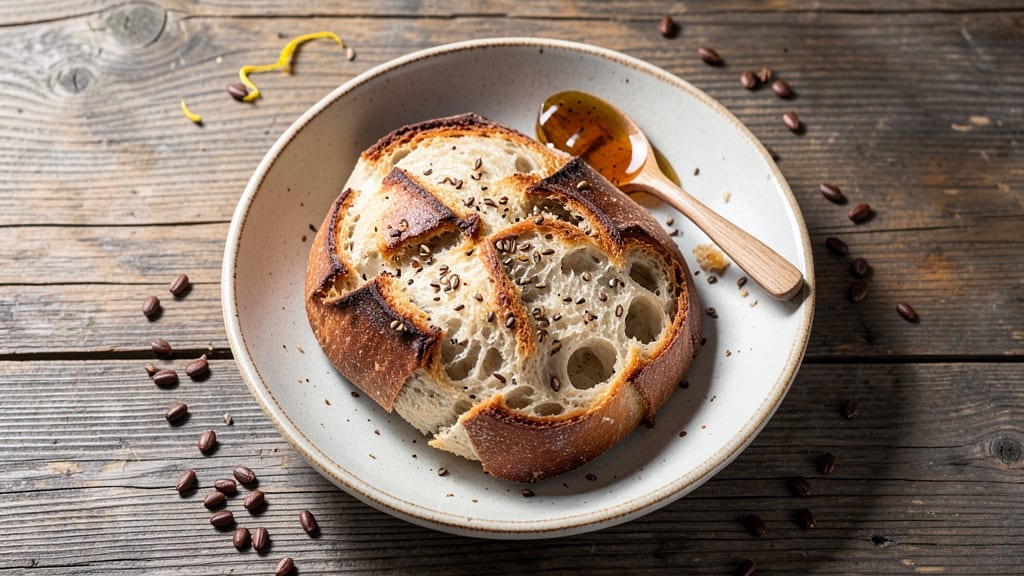
This Anglo-Saxon bread recipe brings ancient baking traditions to your modern kitchen with a rustic sourdough base and toasted rye crunch. The method recreates early medieval techniques using naturally fermented starters and open-hearth baking principles adapted for home ovens.
I’ve refined this over years of historical research to balance authenticity with practicality—no specialized equipment needed.
The bread features a dense, slightly tangy interior from traditional sourdough fermentation, while toasted rye grains on top add a satisfying crunch reminiscent of medieval hearth-baked loaves. This recipe requires just five core ingredients and a 24-hour fermentation period, making it surprisingly simple for its historical depth.
The result is a loaf with complex flavor layers that transport you to a medieval feast table.
What makes this bread truly special is its versatility—serve it fresh with butter and honey as an authentic side, or toast slices for a rustic breakfast. The open crumb structure holds up beautifully for days, making it perfect for sandwiches or as a base for traditional medieval-style soups.
Each bite delivers that perfect marriage of sourdough tang and nutty rye crunch.
For modern kitchens, we’ve adapted the traditional baking method to work with standard home ovens while maintaining the bread’s historical character. The recipe includes clear instructions for creating your own sourdough starter if you don’t have one, ensuring you can achieve authentic results without specialized equipment.
This is bread baking as it was meant to be—simple, nourishing, and deeply satisfying.
Ingredients for anglo saxon bread
Five core ingredients transform into bread that tastes like stepping into a medieval hall.
| Ingredient | Amount | Notes |
|---|---|---|
| Unbleached All-Purpose Flour 🌾 | 4 cups | Sifted for even texture |
| Toasted Rye Grains 🌾 | ½ cup | Lightly toasted in dry pan |
| Active Sourdough Starter 🍞 | 1 cup | 100% hydration, bubbly |
| Warm Water 💧 | 1 ½ cups | 105°F for ideal fermentation |
| Diamond Crystal Kosher Salt 🧂 | 1 ½ tsp | Fine grain preferred |
| Raw Honey 🍯 | 1 tbsp | Local if possible |
| Unsalted Butter 🧈 | 2 tbsp | Cold, cubed for topping |
| Whole Rye Flour 🌾 | ¼ cup | For nutty depth |
The sourdough starter is everything here—homemade is ideal, but store-bought works in a pinch (just feed it 24 hours ahead). For toasted rye grains, grab bulk rye berries from a health food store—they’re the whole, unprocessed kernels. Toast them in a dry skillet until golden (about 5 minutes), then let cool. The flour? King Arthur or Bob’s Red Mill are my go-tos—they bake consistently. If you’re feeling ambitious, swap half the all-purpose for whole rye flour for extra medieval authenticity.
No sourdough starter? Store-bought pizza dough in a pinch (use 1 cup of it, unfrozen), but you’ll miss that deep tang. Short on rye grains? Toasted sesame seeds or crushed almonds add crunch, though they won’t taste exactly medieval. The honey can be any variety, but buckwheat or clover add subtle complexity. For salt, Diamond Crystal kosher dissolves cleanly—Morton’s is fine too, but measure carefully. And yes, you can skip the butter if you’re dairy-free, but where’s the fun in that?
This dough is a beast—24 hours of fermentation at room temp, then another 12 in the fridge. The loaf keeps for 5-7 days wrapped in a linen towel (yes, like the Saxons used), or freeze slices for 3 months. To reheat, wrap in foil and warm at 300°F for 10 minutes. Pro tip: Brush warm slices with melted butter and sprinkle with flaky sea salt—instant medieval feast vibes.
Why You’ll Love This Recipe
- No-Knead Magic: I swear by this—just mix the flour, rye grains, and sourdough starter with warm water, let it rest, and bake. No stand mixer, no stress, just hands-off simplicity.
- Toasty Crunch Play: That crunch from the toasted rye grains? It’s like a little flavor bomb in every bite. The sourdough tang balances it perfectly—savory, hearty, and impossible to resist.
- Weeknight Workhorse: Slice it fresh for dinner, freeze the rest for toast later, or pack it for lunches. Honestly, I’ve used it for everything from sandwiches to breadcrumbs, and it never lets me down.
- Pantry Staple Power: Five ingredients, all of which I already have. The sourdough starter does the heavy lifting, and the kosher salt keeps it from being too sweet—budget-friendly and always reliable.
Instructions for Anglo-Saxon bread recipe: medieval sourdough with toasted rye crunch
Here’s how to craft this rustic sourdough with a satisfying crunch—just like our medieval ancestors might have enjoyed.
Mix the Dough with Precision
In a large mixing bowl, combine the 4 cups unbleached all-purpose flour, 0.25 cup whole rye flour, and 1.5 tsp diamond crystal kosher salt. Give it a quick stir to distribute the salt evenly through the flours. This creates a balanced foundation where the rye’s nutty depth won’t overpower the bread’s structure.
Make a well in the center and add the 1 cup active sourdough starter and 1.5 cups warm water. The starter should be bubbly and active—if it’s sluggish, let it sit at room temperature for another 30 minutes to wake it up. Pour in the 1 tbsp raw honey next, letting it slowly dissolve into the liquid. This sweetener feeds the yeast and adds subtle complexity to the flavor profile.
Using a wooden spoon or your hands, gradually incorporate the dry ingredients into the wet, mixing just until a shaggy dough forms. You’ll see pockets of flour still visible—this is normal and actually helps create that open crumb structure we’re after. The dough should be sticky but manageable, clinging slightly to your fingers. If it’s too dry, add 1 tablespoon warm water; if too wet, sprinkle in 1 tablespoon flour.
Develop the Dough Through Autolyse
Cover the bowl with a damp kitchen towel and let the dough rest for 30 minutes. This initial rest period, called autolyse, allows the flour to fully hydrate and the gluten to begin developing without any mechanical input from you. During this time, the dough will look like a thick batter—this is perfect.
After 30 minutes, perform your first set of stretches and folds. Wet your hands to prevent sticking, then grab one side of the dough and stretch it upward while folding it over itself. Rotate the bowl and repeat this motion four times total, working quickly but deliberately. This builds strength into the gluten structure, which is crucial for that satisfying chew we’re aiming for in this Anglo-Saxon style.
Return the dough to the bowl, cover it again, and let it rest for another 30 minutes. During this second rest, the gluten will relax slightly, making it easier to handle when we do our final shaping. I like to set a timer so I don’t forget—this resting period is where the magic of fermentation really begins to develop the bread’s complex flavors.
Incorporate the Toasted Rye Grains
After the second rest, it’s time to add the 0.5 cup toasted rye grains. First, give the dough one final set of stretches and folds to ensure it’s cohesive and elastic. Then, sprinkle the toasted rye grains evenly over the surface and gently press them into the top third of the dough. This positioning ensures they’ll create a beautiful crunchy crust while keeping the interior tender.
Shape the dough into a round boule by gathering it into the center of your work surface. Use a gentle but firm motion to pull the dough toward you while rotating the boule, creating surface tension that tightens the skin. The goal is to create a smooth, taut surface with no cracks or weak spots. If the dough resists too much, let it rest for 5 minutes covered while you work.
Place the shaped boule seam-side down in a lightly greased bowl, cover it with the damp towel, and let it proof at room temperature for 2-3 hours. You’re looking for about 50-75% increase in volume—the dough should look puffy and jiggly when gently pressed. The rye grains should be visible through the surface, promising that satisfying crunch in every bite.
Shape and Score for the Oven
Preheat your oven to 425°F with a Dutch oven inside for 45 minutes. This ensures the pot reaches the perfect temperature for baking. While the oven heats, turn the dough out onto a lightly floured surface and shape it into an oval loaf about 12 inches long. The oval shape is traditional for Anglo-Saxon breads and creates beautiful crust patterns.
Using a sharp razor blade or very sharp knife, score the dough deeply along the top in a herringbone pattern. This not only looks impressive but also prevents the bread from bursting open in the oven. The score should cut through to the dough underneath—press firmly but don’t tear the surface. Transfer the scored loaf to a piece of parchment paper for easy handling.
Carefully lift the hot Dutch oven and transfer the loaf onto the parchment paper inside. The steam from the pot will create that perfect oven spring. Bake covered for 30 minutes, then remove the lid and bake uncovered for another 15-20 minutes until the crust is deep golden brown and the internal temperature reaches 205°F. The bread should sound hollow when tapped on the bottom.
Finish with Butter and Rest
Remove the bread from the oven and immediately brush the top with melted 2 tbsp unsalted butter using a pastry brush. This step creates that irresistible crust that’s both crisp and tender. Let the bread cool on a wire rack for at least 1 hour before slicing—this resting period allows the crumb to fully develop and prevents a gummy texture.
When ready to serve, slice the bread with a serrated knife and enjoy the contrast of the crispy rye-topped crust with the soft, airy interior. The honey adds subtle sweetness that balances the bread’s rustic character, while the sourdough starter provides that tangy depth that makes this bread truly special. Store any leftovers wrapped in a cloth bag at room temperature for up to 3 days, or freeze for longer storage.
Pro Tips For Making Anglo Saxon Bread
- Toast Rye Properly: I learned this the hard way—those rye grains need to hit 350°F for 8–10 minutes until they’re deep amber and crunchy. Under-toast? They’ll turn to mush in the dough. Over-toast? Bitter, burnt notes ruin the bread. A dry skillet on medium-high works best—no oil needed.
- Feed Your Starter Right: Your sourdough starter should be at its peak—bubbly, doubled, and just collapsed when you use it. If it’s sluggish, give it a 1:1:1 feed (starter:flour:water) 4–6 hours before mixing. Cold starter? Let it sit at room temp until active—cold dough = weak structure.
- Hydrate the Flour First: Skip dumping dry flour into water—this recipe’s rye and sourdough need love. Mix the flour and salt first, then add water gradually while stirring with a fork until it looks like thick pancake batter. This guarantees even hydration and avoids gummy pockets.
- Shape Like a Pro: Anglo-Saxon bread was built to last, so handle the dough gently. After bulk fermentation, turn it out onto a lightly floured surface and fold the edges toward the center—no stretching. A loose, irregular shape mimics ancient loaves and bakes better than a tight boule.
Creative variations of this anglo saxon bread
Medieval Rye-Honey Variation
For a more authentic medieval flavor, replace the 1 tbsp raw honey with 1 tbsp wildflower or heather honey—these were common in Anglo-Saxon England. Add 1 tsp ground coriander seeds to the dry ingredients for an earthy note that historians believe was used in early bread recipes.
Toast the rye grains with ½ tsp fennel seeds for a licorice-like depth that was prized in medieval kitchens. 🌾
Herbed Sourdough Twist
Incorporate 1 tbsp finely chopped fresh rosemary or thyme leaves into the dough during the final stretch-and-fold. The herbs were commonly used in medieval breads for both flavor and preservation.
For extra authenticity, use dried herbs from a medieval herb blend (available at specialty spice shops) instead of fresh. The aroma alone transports you to a Saxon feast hall.
Whole Grain Crust Boost
Swap the 0.5 cup toasted rye grains for ½ cup crushed spelt berries (ancient wheat) and ½ cup toasted barley grains—both were staple crops in Anglo-Saxon England. Toast them together in a dry skillet until golden, then press into the dough’s surface.
This creates a heartier, more rustic crust with a nutty complexity that’s historically accurate and delicious.
Sweetened Fruit Version
Add ½ cup finely chopped dried apples or pears (soaked in warm water for 20 minutes first) to the dough during the final mixing. This sweet-tart variation was common in medieval breads, especially during harvest seasons.
The fruit adds natural sweetness that reduces the need for honey, while the texture becomes slightly denser and more moist. Perfect for serving with butter or cheese.
Seeded Crust Option
For a crunchy, seed-packed crust, mix 2 tbsp ground flaxseeds and 2 tbsp ground poppy seeds with the toasted rye grains before pressing them into the dough. These seeds were widely available in medieval Europe and added both nutritional value and texture.
The flaxseeds contribute a subtle earthiness, while poppy seeds provide a delicate sweetness that pairs beautifully with the sourdough tang.
Modern Adaptation: Quick Version
Short on time? Use 1 packet (2¼ tsp) active dry yeast instead of sourdough starter, and reduce fermentation to 8-10 hours at room temperature. For the rye crunch, sprinkle ¼ cup crushed cornflakes** on top before baking—they mimic the texture without requiring special ingredients.
While less authentic, this version delivers the same satisfying crunch in half the time. 💡
Nutrition facts
Frequently asked questions
What makes this Anglo-Saxon bread different from regular sourdough?
The key differences lie in the toasted rye grains for authentic crunch and the traditional sourdough fermentation (24+ hours) that mimics medieval baking methods. This recipe also uses whole rye flour and honey instead of commercial sweeteners, creating a more rustic flavor profile with nutty depth. The open crumb structure and dense texture reflect historical bread-making techniques.
Can I make this bread without a sourdough starter?
Yes! Use 1 packet (2¼ tsp) active dry yeast instead of the sourdough starter, but reduce fermentation to 8-10 hours at room temperature. For extra authenticity, let the dough cold-proof in the fridge overnight. The flavor won’t be identical, but you’ll still get a delicious rustic loaf with the rye crunch.
How do I know when the dough is properly fermented?
Look for 50-75% volume increase and a jiggly, puffy surface when gently pressed. The dough should also smell slightly tangy and sweet. If using a sourdough starter, it should have visible bubbles and rise noticeably in the bowl. For yeast-based doughs, check for a dome shape and air pockets on the surface.
Why does the recipe call for an oven with a Dutch oven?
The Dutch oven creates steam during baking, which mimics medieval open-hearth baking by trapping moisture and developing a crisp crust. Without one, bake the bread on a middle oven rack with a tray of boiling water below for similar steam effects. The 425°F temperature ensures proper oven spring and even browning.
Can I substitute the toasted rye grains with something else?
For crunch, try toasted sesame seeds, crushed almonds, or cornflakes. For historical accuracy, use toasted barley or spelt grains instead. The grains should be lightly toasted in a dry pan until golden to enhance flavor and texture. The amount should remain ½ cup total for proper crunch.

- Dilled Beans Recipe: Herbed Brightness in 20 Minutes - November 18, 2026
- Apple Cheddar Bread Recipe: Sweet-Savory Swirls in Every Slice - November 18, 2026
- BBQ Lamb Leg Recipe Grill: Smoky Char and Fall-Off-Bone Tenderness - November 18, 2026