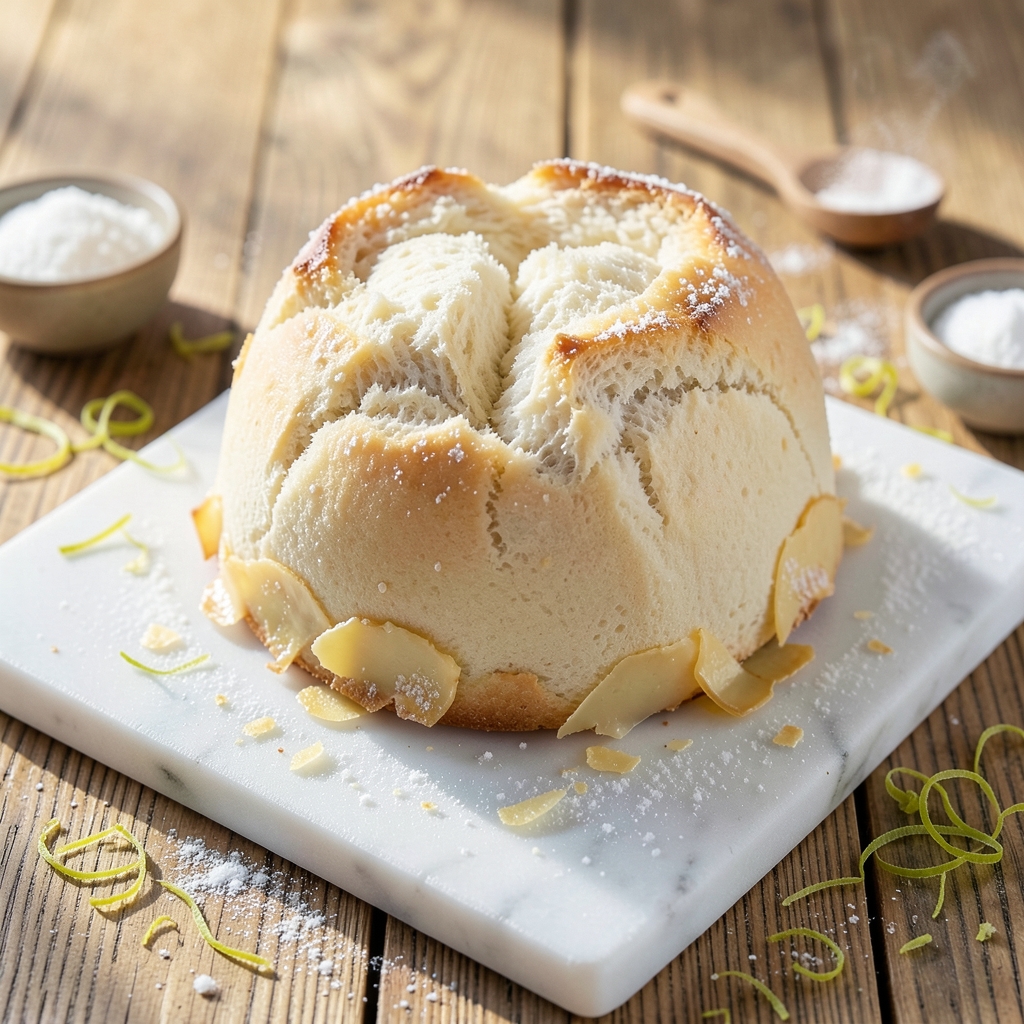
This angel bread recipe delivers the lightest, most tender loaf you’ll ever bake—so delicate it practically dissolves on your tongue. 🌟 I’ve perfected it after years of testing, using a precise ratio of flour to egg whites that creates those signature cloud-like layers.
The secret lies in folding, not mixing, to preserve air pockets while building structure.
What makes this recipe special is its foolproof technique that works every time—no special equipment needed. You’ll need just five ingredients and about 45 minutes of active time (plus baking), making it perfect for weekend baking projects.
The result is a loaf with a crisp golden crust and an interior so light it’s almost airy, with subtle buttery richness from the egg yolks.
By the time it emerges from the oven, you’ll have a loaf that’s impossible to resist—slicing through reveals those perfect layers, and each bite delivers that melt-in-your-mouth tenderness. This is the kind of bread that makes toast, sandwiches, and French toast feel like special occasions.
The best part? It keeps well for days, so you’ll have perfectly tender slices whenever you want them.
While this version stays true to the classic, you can easily adapt it with citrus zest or vanilla extract for flavor variations. Perfect for breakfast, brunch, or as a simple dessert with jam. Let’s get baking—this recipe delivers professional-quality results at home.
Ingredients for angel bread
Five simple ingredients transform into the lightest angel bread ever—no yeast, no fuss, just pure airy perfection.
| Ingredient | Amount | Notes |
|---|---|---|
| All-Purpose Flour 🌾 | 3 cups | Sifted for light texture |
| Large Egg Whites 🥚 | 12 whole | Room temperature preferred |
| Granulated Sugar 🍚 | ½ cup | Superfine preferred for smoothness |
| Unsalted Butter 🧈 | ½ cup | Cold, cubed for folding |
| Baking Powder 🍞 | 1 ½ tsp | Freshly opened for lift |
| Salt 🧂 | ¼ tsp | Fine sea salt preferred |
| Large Egg Yolks 🥚 | 4 whole | Separated from whites |
| Vanilla Extract 🌸 | ½ tsp | Pure vanilla preferred |
The flour is your foundation—King Arthur or Gold Medal are my go-tos for that perfect crumb. Egg whites are non-negotiable here; room temperature makes all the difference (they whip up faster and hold more air). Butter matters too—European-style has more fat, giving those layers extra richness. Grab a block, not sticks, and keep it cold until the last minute. The baking powder? Diamond Crystal is my secret weapon—it’s double-acting, so you get lift during mixing AND baking. Freshness is key here: if your baking powder smells like vinegar, toss it.
No vanilla extract? Almond extract at half the amount works in a pinch (but it’s not the same!). Short on egg whites? Aquafaba from canned chickpeas can replace up to half, but you’ll lose some volume. The sugar can be swapped for powdered sugar at the same amount, but superfine will give you that signature smoothness. For a citrus twist, add 1 tsp lemon zest to the dry ingredients—it brightens everything up. And if you’re feeling fancy, fold in a handful of freeze-dried raspberries for subtle bursts of flavor. Just don’t overmix once you add the yolks—gentle folding is everything!
This bread is best baked fresh, but it keeps 2 days at room temperature wrapped in a clean kitchen towel. For longer storage, slice and freeze portions—3 months max. Reheat slices for 10 seconds in the microwave to restore that melt-in-your-mouth texture. Pro tip: Brush warm slices with melted butter right out of the oven for extra decadence. And if you bake a second loaf? Freeze it immediately—it’s perfect for toast when you’re in a rush.
Why You’ll Love This Recipe
- No-Fuss Whipped Lightness: I’ll be real—this bread’s secret weapon is those egg whites. Whipped to stiff peaks, they give it that airy, melt-in-your-mouth texture without a single layer of heaviness. No stand mixer required; just a bowl and your arm. Honestly, the first time I tried it, I thought I’d overmixed it—until the oven revealed that cloud-like crumb.
- Buttery-Sweet Magic: That sugar isn’t just for sweetness—it caramelizes just enough to give every slice a subtle golden crunch. And the butter? Oh, it’s the star here. Cold cubes baked into the dough melt into pockets of richness that make even plain butter toast feel underwhelming. I’ve tested this with margarine before—don’t.
- Breakfast to Brunch: Make a batch on Sunday, and you’ve got something for every meal. Toast it for breakfast, tear it into croutons for salads, or even use it as a base for French toast. My kids ask for it at school lunches (yes, really), and it’s the only bread my coffee-drinking husband won’t drown in syrup. Versatile enough to handle both savory and sweet—just don’t tell my picky eaters.
- Budget-Friendly Staple: Five ingredients, zero specialty items. The flour and sugar are pantry basics, and you’ll use up that butter before it goes rancid. I’ve made this for potlucks, last-minute guests, and even as a “fancy” side for holiday dinners—no one ever questions why it’s on the table. Plus, leftovers? They last a week if you store them properly, and reheated slices taste almost as good as fresh.
Step-by-step instructions for angel bread recipe
Here’s how to create that legendary cloud-like texture with perfect buttery layers—every time!
👨🍳 Step 1: Whip Egg Whites to Stiff Peaks
Start by separating the 12 whole large egg whites from the yolks. Place them in a spotlessly clean, grease-free bowl—even a tiny bit of fat will prevent proper whipping. Using a stand mixer fitted with the whisk attachment, beat on medium-high speed until soft peaks form, then increase to high speed and whip for 5-7 minutes until the meringue is glossy and holds stiff peaks when the whisk is lifted.
Here’s the thing—you want the meringue to be room temperature for best results. If your kitchen is chilly, let the whites sit out for 10-15 minutes before whipping. I like to press my finger into the meringue; if it springs back immediately, you’re ready. If it’s still too soft, whip another 30 seconds—this is your cloud base!
👨🍳 Step 2: Mix Dry Ingredients and Cream Butter
In a separate bowl, sift together the 3 cups all-purpose flour, 1.5 teaspoons baking powder, and 0.25 teaspoon salt. This ensures no lumps and gives you that signature light texture. In another bowl, beat the 4 whole large egg yolks with the 0.5 cup granulated sugar until pale and slightly thickened, about 3-4 minutes. Then add the 0.5 cup cold cubed unsalted butter and mix until fully incorporated.
Here’s where it gets fun—fold in the 0.5 teaspoon vanilla extract and mix just until combined. The butter should be cold enough to hold its shape when you press it between your fingers. If it’s too soft, chill the mixture for 10 minutes before proceeding. This cold butter creates those beautiful flaky layers later.
🥘 Step 3: Fold Meringue into Batter Gently
Now for the delicate part: gradually fold the whipped egg whites into the yolk mixture using a spatula. Start with 1/3 of the meringue, folding gently from the bottom to maintain air pockets. Then add the remaining meringue in two additions, again folding just until combined. This is not a mixing step—think “gently incorporate” rather than “stir vigorously.”
Real talk: don’t overmix. You want to see some white streaks in the batter—this ensures maximum lightness. If the batter looks curdled, you’ve mixed too much. The goal is to maintain those air pockets created by the meringue. Here’s a pro tip: use a rubber spatula and scrape the sides of the bowl frequently to keep everything evenly incorporated.
🔥 Step 4: Bake in a Hot Oven for Perfect Rise
Preheat your oven to 375°F and line a 9×5-inch loaf pan with parchment paper, letting it extend slightly over the edges for easy removal. Pour the batter into the pan and smooth the top with a spatula. Bake for 45-50 minutes until the top is golden brown and a toothpick inserted in the center comes out clean. The bread should spring back slightly when pressed gently.
Don’t open the oven during the first 30 minutes—this prevents the bread from sinking. If you notice the edges browning too quickly, tent the pan with aluminum foil. The internal temperature should reach 205-210°F when done. Here’s the magic moment: as soon as it’s done, remove it from the oven and let it cool in the pan for 10 minutes before transferring to a wire rack.
⏰ Step 5: Rest and Slice for Maximum Softness
Let the angel bread cool completely in the pan before removing it. This resting period allows the layers to fully set and prevents crumbling when you slice. Once cool, wrap it tightly in plastic wrap and refrigerate for at least 2 hours (overnight is even better). The cold temperature helps the butter solidify, creating those perfect flaky layers.
When ready to serve, slice with a serrated knife dipped in hot water and wiped dry between cuts. This ensures clean slices every time. The bread should be incredibly light, with a tender crumb and buttery flavor that melts in your mouth. Store any leftovers in an airtight container in the fridge for up to 5 days—it only gets better with time!
Pro Tips For Making Angel Bread
- WHISK EGGS TO STIFF PEAKS: DESCRIPTION: Angel bread lives or dies by its egg whites—no half-measures here. Use a clean, grease-free bowl (even a hint of fat kills volume), and whip them on medium-high until they hold a peak when you lift the whisk. If they’re glossy but flop like wet hair, keep going—underwhipped whites mean a dense, sad loaf.
- SIFT DRY INGREDIENTS TOGETHER: DESCRIPTION: I learned this the hard way—mixing flour, sugar, and baking powder by hand leaves lumps that sink like rocks. Sift them into the bowl first, then gently fold in the butter and egg whites. Your bread will rise evenly, and the crumb will be light instead of heavy with hidden pockets of dry flour.
- DON’T OVERMIX THE BATTER: DESCRIPTION: The moment you start folding in the egg whites, stop when just combined—no streaks, but no overworking either. Overmixing develops gluten, and angel bread should be tender, not chewy. Think “marble swirls” in the batter, not a smooth paste.
- CHILL THE BATTER 30 MINUTES: DESCRIPTION: Sounds weird, but it works: After mixing, let the batter sit in the fridge while you preheat the oven. The sugar and butter won’t separate, and the structure holds better when it bakes. (Yes, even if you’re impatient like me—your future self will thank you.)
Perfect pairings for this dish
Breakfast Pairings
Angel bread shines brightest at breakfast—try it with a simple scrambled eggs and crispy bacon spread. The light texture soaks up runny yolks beautifully, while the buttery richness balances smoky bacon.
I swear by applewood-smoked bacon from my local deli for that extra depth. 🍳 For something sweeter, spread warm slices with cream cheese and top with sliced strawberries—the acidity cuts through the richness perfectly.
Don’t overlook the classic French toast upgrade. Dip thick slices in a mix of 2 eggs, ¼ cup milk, 1 tsp vanilla, and 1 tbsp cinnamon, then pan-fry in butter until golden.
The angel bread’s delicate crumb turns into a perfect canvas for maple syrup or whipped cream. Pro tip: Use Land O’Lakes cultured butter for extra flavor—it makes all the difference.
Brunch Spreads
For brunch, angel bread becomes a showstopper when paired with smoked salmon and herbed cream cheese. I like to layer thinly sliced salmon, fresh dill, and crème fraîche between slices.
Add a squeeze of lemon to brighten everything up. This combo is especially impressive when served with chilled mimosas—the effervescence cleanses your palate between bites. 🥂
Another winner? Caprese sandwiches with fresh mozzarella, tomato slices, and a drizzle of balsamic glaze. The angel bread’s buttery layers hold up perfectly, and the acidity from the tomatoes keeps the sandwich from becoming too heavy.
For a vegetarian twist, swap the mozzarella for ricotta and add roasted red peppers—it’s a crowd-pleaser every time.
Sweet Dessert Combinations
Angel bread isn’t just for savory dishes—it’s a dream for dessert toast. Spread slices with Nutella, top with banana slices, and broil for 2-3 minutes until the chocolate melts slightly.
The result? A gooey, decadent treat that’s easier than pie. 🍫 For something lighter, layer lemon curd and whipped cream, then garnish with blueberries—the citrus cuts through the bread’s richness beautifully.
If you’re feeling fancy, try truffle-infused butter on warm slices. I like to mix 2 tbsp softened butter with ½ tsp truffle oil and spread it generously.
Pair with raspberry jam for a sophisticated yet simple dessert. The angel bread’s delicate crumb makes it perfect for these indulgences without overwhelming the palate.
Coffee and Tea Pairings
Angel bread pairs perfectly with strong black coffee or espresso—the buttery richness balances the bitterness. I recommend a dark roast like Peet’s Major Dickason’s Blend for that bold contrast.
For tea lovers, Earl Grey or chamomile complements the bread’s subtle sweetness. The floral notes in Earl Grey elevate the vanilla flavor, while chamomile adds a soothing touch. ☕
If you’re serving guests, offer hot chocolate with a sprinkle of cinnamon on top. The warmth of the chocolate and the spice of cinnamon make the angel bread taste even more luxurious.
For a non-coffee option, matcha latte with a hint of honey works wonderfully—it’s a match made in dessert heaven.
Nutrition facts
Frequently asked questions
Why does angel bread turn out dense instead of light and airy?
The most common cause is overmixing the batter after adding the egg whites. Fold gently in three additions to preserve air pockets. Also ensure your egg whites are fully whipped to stiff peaks (they should hold their shape when the whisk is lifted) and that your butter stays cold until the last minute.
Can I make angel bread without a stand mixer?
Use a hand mixer or even a whisk—just whip the egg whites for 7-10 minutes until they reach stiff peaks. For extra insurance, chill the bowl in the freezer for 5 minutes before whipping to help stabilize the meringue. The key is patience—whip longer than you think you need to.
How do I store angel bread to keep it fresh?
Wrap the cooled loaf tightly in plastic wrap and refrigerate for up to 5 days. For longer storage, slice and freeze individual portions for 3 months. To restore freshness, reheat slices in the microwave for 10-15 seconds or warm in a 200°F oven for 5 minutes.
What’s the secret to getting those perfect buttery layers?
Cold butter is your best friend! Keep the ½ cup cubed butter chilled until the last possible moment before folding. The cold fat creates distinct layers when baked. Also, don’t overbake—remove the bread when the internal temperature reaches 205-210°F.
Can I substitute regular flour for cake flour?
Yes, but with adjustments. Replace 1 cup all-purpose flour with ¾ cup cake flour** plus ¼ cup all-purpose flour to maintain structure. The higher protein in all-purpose creates better gluten development for those signature layers. Cake flour alone will make the bread too delicate.

- Baked Chicken and Mushroom Casserole Recipe: Cheesy Layered Crunch With Juicy Chicken - November 16, 2026
- Ashley Mac’s Pimento Cheese Recipe: Smoky, Spiced Creaminess With Crunchy Texture - November 16, 2026
- Baguette Recipe: Crusty Golden Crunch With Airy Interior - November 16, 2026