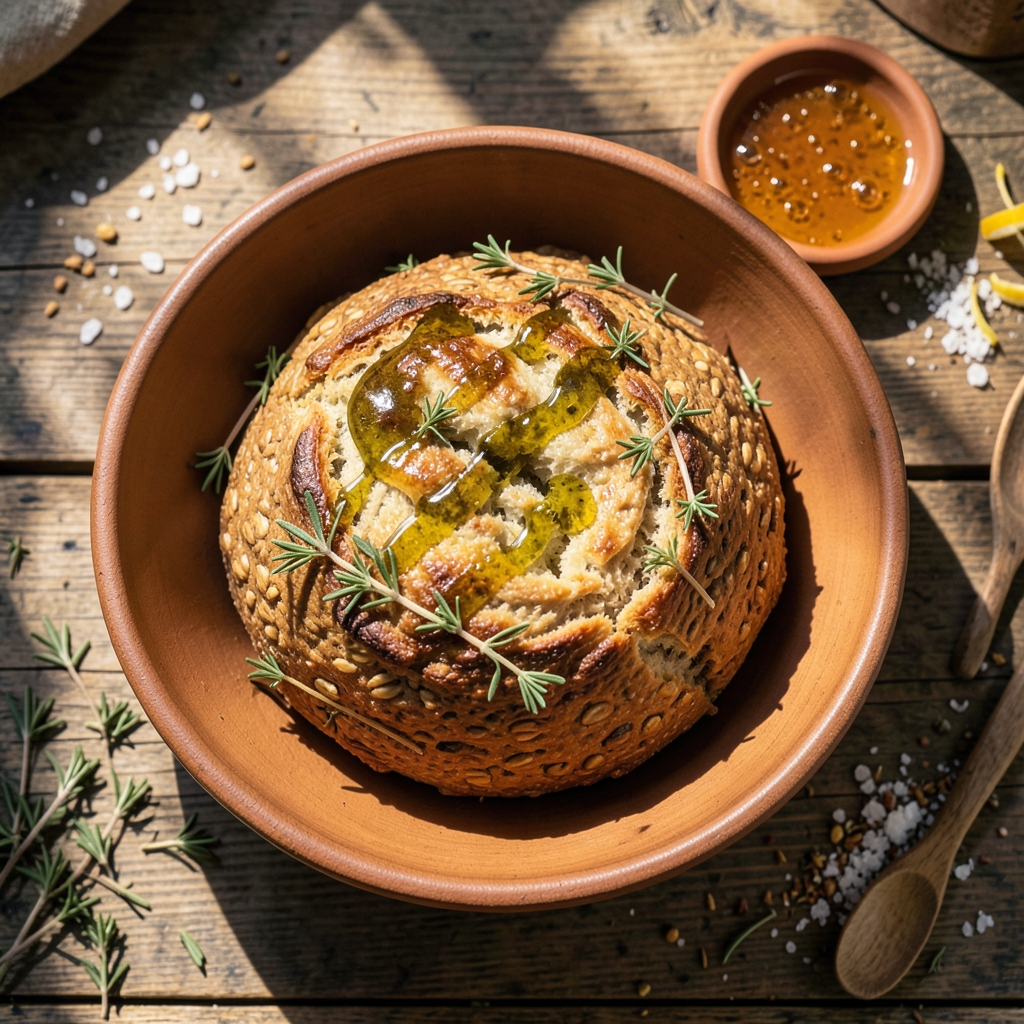
This ancient Greek barley bread recipe brings a taste of antiquity to your kitchen table, crafted with the same humble ingredients and techniques used over 2,500 years ago.
The nutty depth of barley flour and simple olive oil create a rustic loaf that was a dietary staple in ancient Greece, offering both sustenance and cultural authenticity.
I’ve refined the process to work in modern kitchens while staying true to its historical roots—no fancy equipment required, just patience and a hot oven.
The beauty of this bread lies in its simplicity: just barley flour, water, olive oil, and a pinch of salt. Unlike modern breads, this recipe relies on the natural flavors of these ingredients, allowing the barley’s earthy notes to shine.
The dough is shaped into a flat, round loaf—traditionally baked on hot stones or in clay pots—and baked until the crust develops a golden, crispy exterior while the interior remains tender and slightly chewy. This method ensures every bite carries the essence of ancient Greek baking.
What you’ll achieve is a loaf with a crusty exterior and a nutty, hearty interior, perfect for dipping in olive oil or pairing with Mediterranean dishes.
The aroma alone transports you to an ancient Greek hearth, where this bread was a cornerstone of meals for farmers, soldiers, and philosophers alike. Whether you’re recreating history or simply craving something authentic, this bread delivers both flavor and tradition.
Modern adaptations make it easy to bake at home—use a Dutch oven for that classic stone oven effect, or adapt to a regular oven with a baking sheet.
The result is a loaf that’s rustic yet satisfying, with a texture and taste that connects you to the past. Ready to bring ancient Greece to your kitchen?
Ingredients for ancient greek barley bread
Four key ingredients bring ancient Greece to your kitchen table.
| Ingredient | Amount | Notes |
|---|---|---|
| Barley Flour 🌾 | 4 cups | Fine grind for best texture |
| Extra-Virgin Olive Oil 🫒 | ½ cup | High quality, fruity flavor |
| Warm Water 💧 | 1 ½ cups | 105°F for ideal hydration |
| Sea Salt 🧂 | 1 ½ tsp | Fine grain preferred |
| Active Dry Yeast 🍞 | 1 tsp | Freshly opened for best rise |
| Honey 🍯 | 1 tbsp | For subtle sweetness |
| Sesame Seeds 🌰 | 1 tbsp | Optional for topping |
| Poppy Seeds 🌱 | 1 tbsp | Optional for topping |
Barley flour is the heart of this bread—look for 100% pure barley flour at health food stores or bulk bins. Bob’s Red Mill or King Arthur Flour carry excellent options. The finer the grind, the better the texture, so avoid coarse or cracked wheat flour. If you can’t find barley flour, spelt flour works in a pinch, but the flavor won’t be exactly the same. The olive oil should be extra-virgin—Colavita or Bertolli are reliable choices for that authentic Mediterranean taste. Warm the water to body temperature (105°F) to activate the yeast properly without killing it.
No yeast? Skip it entirely—this bread was often made without it in ancient times, just mix and bake. Running short on honey? Maple syrup at half the amount works just as well. The sesame and poppy seeds are purely decorative, but if you want to stay true to historical recipes, they were often sprinkled on top. For the yeast, make sure it’s active dry, not instant—it activates differently. If your yeast doesn’t foam after 5 minutes in warm water, it’s dead and needs replacing. The salt is crucial—Diamond Crystal is twice as salty as table salt, so adjust if using another brand.
This dough keeps for 24 hours in the fridge, covered. The bread itself stays fresh for 3-4 days at room temperature, wrapped in a cloth. For longer storage, freeze the baked loaf for up to 3 months. I like to slice it thin and toast it—the crust gets even crunchier when reheated. Ancient Greeks ate this bread fresh from the oven, but modern adaptations let you enjoy it anytime. Leftovers make great croutons or breadcrumbs for future recipes.
Why You’ll Love This Recipe
- Four-Ingredient Magic: The yeast, olive oil, and barley flour do all the heavy lifting—no eggs, no butter, no fuss. Honestly, I’ve made this while scrolling through emails, and it still turns out golden and tender.
- Earthy Olive Oil Love: That first bite? Rich, nutty barley meets the bright, fruity punch of extra-virgin olive oil—it’s like a hug for your taste buds. Between us, it’s the kind of flavor that makes you want to eat it straight from the pan.
- Lunchbox Hero: Slice it warm for breakfast, pack it cold for school lunches, or toss it in a wrap for dinner. My kids actually ask for it, and I’ve never seen that happen with store-bought bread.
- Budget Bread Wins: A loaf costs less than half of what I’d pay at the bakery, and it keeps for days without drying out. Plus, the leftovers? Perfect for croutons, toast crumbs, or even a quick bread pudding when I’m lazy.
Step-by-step instructions for ancient Greek barley bread
Here’s how to create a rustic, nutty loaf inspired by ancient Greek baking techniques.
Activate the Yeast with Warm Water and Honey
In a medium bowl, combine the 1.5 cups warm water (about 105°F) with the 1 tbsp honey and 1 tsp active dry yeast. Let it sit for 5-10 minutes until you see bubbles forming on the surface and a frothy foam develops. This tells you the yeast is alive and ready to work.
I always use a thermometer to check the water temperature—too hot and you’ll kill the yeast; too cold and it won’t activate properly. The honey not only feeds the yeast but also adds subtle sweetness that balances the earthy barley flavor. Stir gently once or twice during this time to help distribute the yeast evenly.
Mix the Dough with Barley Flour and Olive Oil
In a large bowl, whisk together the 4 cups barley flour and 1.5 tsp sea salt. Create a well in the center and pour in the yeast mixture along with the 0.5 cup extra-virgin olive oil. Using a wooden spoon or dough whisk, gradually incorporate the dry ingredients into the wet, mixing until a shaggy dough forms.
Once combined, turn the dough out onto a lightly floured surface and knead for about 8-10 minutes until smooth and elastic. Barley flour can be a bit heavier than wheat flour, so you might need to add a tablespoon or two more if the dough feels too sticky. The ideal dough should be slightly tacky but not wet, and it should spring back slowly when poked.
Let the Dough Rise Until Doubled in Size
Lightly oil a large bowl, place the dough inside, and cover with a damp kitchen towel or plastic wrap. Let it rise in a warm place (like near your oven with the light on) for about 1-2 hours, or until it has visibly doubled in size. You’ll know it’s ready when the dough feels light and springs back when gently pressed.
I like to give the dough a gentle shake test—if it jiggles like jelly, it’s ready. Don’t rush this step; proper rising time develops the bread’s flavor and texture. If your kitchen is cold, extend the rising time to 2-3 hours. The dough should puff up noticeably and have a slightly bubbly surface.
Shape and Second Rise for Crispy Crust
Punch down the risen dough to release any large air bubbles, then shape it into a round loaf or oval shape on a parchment-lined baking sheet. For extra flavor, sprinkle the 1 tbsp sesame seeds and 1 tbsp poppy seeds on top. Cover loosely with the towel again and let it rise for another 30-45 minutes while the oven preheats.
This second rise helps create that beautiful, crispy crust we’re after. I like to use my hands to gently press the seeds into the dough slightly so they stick better. Preheat your oven to 400°F during this final rise—you want the oven fully hot when the bread goes in for maximum browning.
Bake Until Golden Brown and Hollow-Sounding
Bake the bread for 30-35 minutes until it’s deeply golden brown and sounds hollow when tapped on the bottom. The bread should have a beautiful crust with those seeds toasted to perfection. For extra crispiness, you can also spray the oven walls with water during the first 10 minutes of baking to create steam.
When it’s done, transfer the bread to a wire rack to cool completely. The interior should be soft and slightly chewy with a subtle sweetness from the honey, while the crust remains crisp and nutty. This ancient grain bread makes a wonderful companion to olive oil and fresh vegetables—just like they enjoyed in ancient Greece.
Pro Tips For Making Ancient Greek Barley Bread
- Mix With Your Hands: Barley flour is dense—don’t rely on a whisk. After adding warm water, grab a spoon and fold vigorously for 2 minutes. You’re not making cake batter here; you’re breaking up those stubborn clumps so the dough behaves. I used to skip this, and my loaves turned out gummy. Trust me, the effort pays off.
- Proof Until It Jiggle: Ancient Greek bakers weren’t rushing this. Your yeasted barley dough should double in size and feel light enough to leave a faint imprint when you press a finger in—like pressing a thumb into a ripe peach. If it’s still sluggish after 2 hours, your kitchen’s too cold. Move it to a warmer spot (like near the oven with the light on) and give it another hour. Patience here means a loaf that rises, not collapses.
- Oil the Pan Twice: Barley bread sticks like glue to metal. Brush your baking dish with olive oil first, then wipe out the excess with a paper towel—this prevents a soggy bottom. After shaping the dough, give it another light coat. I learned this after my first batch emerged with a crusty top and a gummy, oil-slicked base. It’s annoying, but two coats solve it every time.
- Bake Low and Slow: Crank the oven to 375°F (190°C) for the first 20 minutes, then drop it to 350°F (175°C). Barley flour burns faster than wheat flour, and a hot oven will give you a dark, bitter crust before the center is done. I was skeptical—why lower the heat?—but now I swear by it. The crust gets golden without sacrificing the chewy interior.
Serving suggestions for this recipe
Olive Oil Dipping
Serve your ancient barley bread with a simple olive oil dipping bowl—just extra-virgin olive oil (like Colavita) warmed slightly and seasoned with a pinch of flaky sea salt and freshly cracked black pepper.
The nutty bread soaks up the oil beautifully, creating a flavor profile that mirrors ancient Greek dining. For extra authenticity, add a few drops of lemon juice to brighten the flavors. 🫒
Mediterranean Pairings
Pair this rustic bread with hummus or tzatziki for a classic Mediterranean spread. The creamy textures contrast perfectly with the bread’s crispy crust. I also recommend olives (like Kalata or Castelvetrano) and fresh figs—both were staples in ancient Greek feasts.
The sweetness of the figs balances the bread’s earthy barley notes beautifully. 🍈
Cheese Board Fusion
Create a modern Greek-inspired cheese board by pairing the bread with feta cheese, manouri, and aged halloumi. The salty, tangy cheeses cut through the bread’s nuttiness while adding richness.
Add dried apricots or walnuts for texture and sweetness—just like the balanced meals of ancient philosophers. Serve with red wine (like Agiorgitiko) for the full experience. 🧀
Breakfast Adaptation
Toast slices of the bread and top with Greek yogurt, honey, and a sprinkle of crushed pistachios for a hearty breakfast. The barley’s nutty flavor pairs wonderfully with the yogurt’s tang, while the honey adds a touch of sweetness.
This was a common morning meal in ancient Greece—simple, satisfying, and full of energy. 🍯
Meal Prep Strategy
Slice the bread and store it in an airtight container with a paper towel to keep it fresh for up to 3 days. Reheat slices in a toaster oven or skillet for 1-2 minutes until crispy.
Pack individual portions for lunches with olive tapenade or whipped feta—perfect for on-the-go ancient Greek vibes. The bread reheats beautifully without losing its rustic charm. ⏰
Dessert Twist
Drizzle the cooled bread with melted honey and sprinkle with crushed pistachios or cinnamon for a sweet treat. This was a common dessert in ancient Greece—simple yet indulgent. For a richer version, spread ricotta cheese on slices and top with sliced almonds and a drizzle of honey.
Serve with Greek coffee for a true taste of history. 🍯
Nutrition facts
Frequently asked questions
Why does ancient Greek barley bread use barley instead of wheat?
Barley was a staple grain in ancient Greece because it grew well in the Mediterranean climate and was more affordable than wheat. The nutty flavor and hearty texture made it perfect for rustic breads that provided sustained energy for laborers and soldiers. Modern recipes often blend barley with wheat flour, but traditional versions used 100% barley for an authentic taste.
Can I make this bread without yeast?
Ancient Greeks often baked barley bread without yeast, creating a denser, flatter loaf. Simply mix the dough and bake immediately at 425°F for 25-30 minutes until golden. For extra flavor, add 1 tbsp vinegar to the dough—this was a common ancient technique to improve texture and shelf life.
How do I get the perfect crust?
For that crispy ancient-style crust, bake the bread on a preheated stone or baking sheet at 400°F. Spray the oven walls with water during the first 10 minutes to create steam, then increase heat to 425°F for the final 15 minutes. Brush the baked loaf with olive oil while still warm for extra shine and flavor.
What’s the best way to store leftover barley bread?
Wrap cooled bread in a clean kitchen towel or store in an airtight container with a slice of apple to prevent drying. It stays fresh for 3-4 days at room temperature. For longer storage, freeze slices for upstrong>3 months—toast directly from frozen for crispy results.
Can I substitute spelt flour for barley flour?
Yes, but expect a slightly lighter flavor. Spelt has a milder taste and lighter texture than barley. For best results, use a 50/50 blend of spelt and whole wheat flour. If you must go 100% spelt, reduce baking time by 5 minutes—it browns faster than barley.

- Old Fashioned Bread Dressing Recipe: Savory Herb and Celery Crunch in 20 Minutes - November 11, 2026
- Heinz Baked Bean Dip Recipe: Smoky Tomato-Cheddar Velvety Dip - November 11, 2026
- Caramelized Onions Recipe: Sweet, Golden Layers for French Onion Soup - November 11, 2026