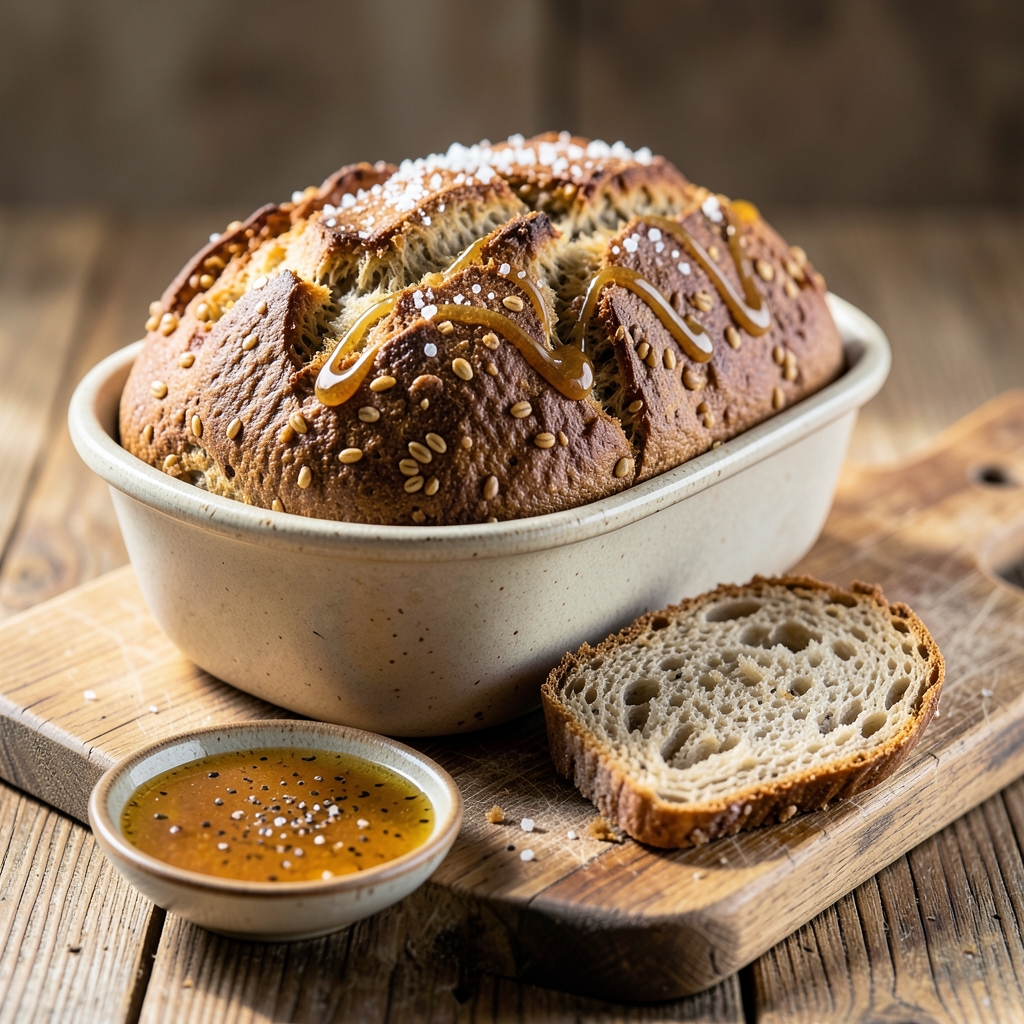
This ancient grain bread machine recipe transforms traditional whole grains like farro and spelt into a loaf with a nutty crust and light, airy crumb—perfect for those who crave texture and depth.
The bread machine handles the heavy lifting, but the right grain blend and hydration ratio make all the difference.
I developed this after years of experimenting with ancient grains in bread, and the results speak for themselves: a loaf that’s both rustic and refined, with a subtle earthiness that pairs beautifully with soups or as a side.
The magic lies in the grain selection and preparation. Farro adds chewiness, spelt contributes a mild nutty flavor, and einkorn brings an almost buttery richness—all while keeping the crumb tender. The bread machine’s kneading cycle ensures even gluten development, while a longer fermentation time deepens the flavor.
No special equipment is needed beyond your bread machine and a scale for precise measurements, making this accessible yet impressive. The crust develops a golden, crackly exterior that contrasts perfectly with the soft interior.
What you’ll end up with is a loaf that’s rich in flavor yet light enough to eat as a sandwich base or toast. The nutty notes from the grains shine through without overpowering, and the crumb stays moist for days.
This recipe is designed to be your go-to for hearty, wholesome bread—whether you’re serving it with a bowl of lentil soup or slathering it with homemade jam. The best part? It’s foolproof for the bread machine, so even if you’re new to baking with ancient grains, you’ll achieve professional results.
For added texture, consider topping the dough with seeds or herbs before baking—sunflower seeds or rosemary work beautifully. The recipe scales easily, so you can make a single loaf for daily use or double it for gifts.
Let’s get started on baking bread that tastes like it came from a rustic European bakery, right in your kitchen.
Ingredients for ancient grain bread machine
Four ancient grains, one bread machine, and a loaf with rustic texture and nutty flavor.
| Ingredient | Amount | Notes |
|---|---|---|
| Farro Grain 🌾 | ¾ cup | Uncooked, rinsed well |
| Spelt Grain 🌾 | ½ cup | Uncooked, rinsed well |
| Einkorn Grain 🌾 | ¼ cup | Uncooked, rinsed well |
| All-Purpose Flour 🌾 | 1 ½ cups | For structure and rise |
| Bread Machine Yeast 🍞 | 2 ¼ tsp | Active dry or instant |
| Honey 🍯 | ¼ cup | For natural sweetness |
| Extra-Virgin Olive Oil 🫒 | ¼ cup | For richness and moisture |
| Warm Water 💧 | 1 ¼ cups | 110°F for activation |
| Sea Salt 🧂 | 1 ½ tsp | Fine grain preferred |
| Sunflower Seeds 🥜 | ¼ cup | Optional topping |
| Fresh Rosemary 🌿 | ½ tsp | Chopped, optional garnish |
| Cornmeal 🌽 | 1 tbsp | For bread pan dusting |
The grains are the heart of this recipe, so don’t skimp. Bob’s Red Mill or King Arthur Flour carry excellent pre-rinsed farro and spelt—just check the package for any additives. Einkorn is trickier to find; local health food stores or online retailers like Amazon Fresh usually stock it. If you can’t find einkorn, swap in an extra 0.25 cup spelt—it’ll still taste amazing. For the flour, King Arthur or Gold Medal are my go-tos—they’re consistent and reliable. The grains need to be rinsed thoroughly before measuring to remove any dust or debris that could interfere with fermentation.
No sunflower seeds? Pumpkin seeds or sesame seeds work just as well for topping. Fresh rosemary is ideal, but dried rosemary at half the amount will do in a pinch—just crush it between your fingers to release the oils. The honey can be swapped for maple syrup or agave if you prefer, though honey adds a subtle depth. For the olive oil, avoid strong-flavored varieties like fruity Spanish oils—they can overpower the delicate grain flavors. If you’re short on time, pre-soak the grains overnight to cut down on bread machine time, but the recipe works fine without it too.
This dough is best baked fresh, but it keeps well for 3-4 days wrapped in a clean kitchen towel at room temperature. For longer storage, slice the loaf and freeze the slices between parchment paper—up to 3 months. The crust stays crisp for about a day, so I recommend toasting slices if you’re saving it longer. To revive stale bread, wrap it in foil and warm in a 200°F oven for 10 minutes. The grains soften over time, so this loaf tastes even better the next day as the flavors meld.
Why You’ll Love This Recipe
- No-Knead, No-Fuss Magic: I swear by the bread machine here—just toss in the prepped farro, spelt, and einkorn (no soaking required), add yeast, and let it do the work. My hands stay clean, my kitchen stays quiet, and I still get that rustic, artisanal crunch.
- Nutty, Earthy Crunch: Between us, the combo of farro’s chewy bite, spelt’s mild sweetness, and einkorn’s buttery warmth is ridiculously good. It’s the kind of bread that makes you pause mid-bite—like discovering a secret flavor you didn’t know you craved.
- Meal Prep MVP: This bread stays fresh for days (toast it, freeze slices, or pack it for lunches—no one judges). Honestly, I bake two loaves on Sunday and forget about it until Friday when I’m scrambling for something easy. It’s my go-to for sandwiches, dipping, or just eating straight from the bag.
- Budget-Friendly Grain Power: Ancient grains can be pricey, but this recipe stretches them with all-purpose flour, cutting costs without sacrificing texture. Plus, the leftovers? Perfect for croutons, breadcrumbs, or even a quick bread pudding. Waste not, want not.
Step-by-step instructions for ancient grain bread machine recipe
Here’s how to create a rustic, nutty loaf with a crisp crust and airy interior using your bread machine.
Prepare the Ancient Grains
Start by rinsing the 0.75 cup farro grain, 0.5 cup spelt grain, and 0.25 cup einkorn grain thoroughly under cold water in a fine-mesh strainer. This removes any bitterness and excess starch that could make your dough gummy. Spread the grains on a clean kitchen towel and let them air-dry for 5 minutes—this helps prevent clumping when mixed.
While the grains dry, lightly toast them in a dry skillet over medium heat for 2-3 minutes, stirring constantly until they release an aromatic nutty scent. This step deepens their flavor and ensures they contribute to that signature crusty texture. Let them cool completely before adding to the bread machine.
Mix the Wet and Dry Ingredients
In your bread machine pan, combine the cooled toasted grains with the 1.5 cups all-purpose flour, 2.25 teaspoons bread machine yeast, and 1.5 teaspoons sea salt. Give everything a quick stir with a wooden spoon to distribute the grains evenly.
Create a well in the center and pour in the 0.25 cup extra-virgin olive oil and 0.25 cup honey. The honey will help tenderize the dough while adding subtle sweetness. Slowly add the 1.25 cups warm water (about 110°F) to the well, mixing just until the ingredients come together into a shaggy dough. Avoid overmixing—you want some dry spots to help develop gluten during kneading.
Set the Bread Machine Program
Lightly dust the inside of your bread machine pan with 1 tablespoon cornmeal to prevent sticking. This creates a natural barrier that makes removing the finished loaf effortless. Add the dough to the pan and select the “Basic White Bread“ setting on your machine.
Start the cycle and let the machine do its work. The dough will go through several phases—kneading, rising, and baking—all automatically. You’ll know it’s ready when you hear the familiar “ding” and smell that fresh-baked bread aroma. The crust should be a rich golden brown, and the sides should pull away cleanly from the pan.
Add the Toppings and Cool
Immediately after the cycle completes, remove the loaf from the pan while it’s still warm. Place it on a wire rack and let it cool for 10 minutes—this prevents condensation from making the crust soggy. While it cools, mix together 0.25 cup sunflower seeds and 0.5 teaspoon chopped fresh rosemary in a small bowl.
Once the bread is cool enough to handle, use a sharp serrated knife to make a shallow slit down the center of the loaf. Sprinkle the sunflower seed-rosemary mixture generously over the top, pressing lightly so it adheres. The seeds will add crunch and nutrition, while the rosemary brings a fresh herbal note that pairs beautifully with the nutty grains.
Slice and Serve
Let the bread cool completely on the wire rack for at least 1 hour before slicing. This resting period allows the internal structure to set, making each slice hold its shape beautifully. The crust should be crisp with a satisfying crunch, while the interior reveals an open, airy crumb with visible flecks of toasted grains.
Slice the loaf into 4 even servings and serve warm with your favorite butter or olive oil. The combination of farro, spelt, and einkorn creates a complex nutty flavor that makes this bread perfect for sandwiches, toast, or simply enjoyed on its own with a spread of jam or honey.
Pro Tips For Making Ancient Grain Bread Machine
- Soak the Grains First: Ancient grains like farro and einkorn need a head start—soak them in warm water (about 3 cups) for at least 2 hours before mixing. I learned this the hard way: skipping it leaves the bread dense and gummy, no matter how long you knead. (Yes, even if you’re impatient like me.)
- Use Less Yeast: Ancient grains ferment slower, so cut the yeast by 25% (or even 50% if your machine’s temperature runs hot). I was skeptical until I tried it—my bread now rises properly without collapsing mid-cycle. Check your machine’s manual for the exact temp; most home models run warmer than you’d think.
- Skip the Pre-Knead: Bread machines handle the kneading, but ancient grains make dough sticky and tough. Add 1 extra tablespoon of water only if needed during the first 5 minutes of mixing—then let the machine do its thing. Resist the urge to intervene; the dough will come together, even if it looks messy at first.
- Toast the Einkorn: Lightly toast the einkorn (and spelt) in a dry pan for 3–4 minutes before grinding or adding to the mix. It deepens the nutty flavor and prevents the bread from tasting raw. Sounds weird, but it works—my loaves now have that professional bakery crunch without extra effort. (Pro tip: Use a fine-mesh sieve to sift it in, or you’ll regret it later.)
Serving suggestions for ancient grain bread machine
Crusty Bread Pairings
This ancient grain loaf shines with olive oil and sea salt—simply drizzle 1 tablespoon extra-virgin olive oil over warm slices and sprinkle with flaky sea salt right before serving. The nutty grains soak up the oil beautifully, enhancing their natural flavors.
For extra richness, try whipped ricotta or herbed goat cheese as a spread—both complement the bread’s earthy notes. 💛
Soup and Stew Companions
Serve slices alongside hearty soups like roasted butternut squash or lentil stew to create a satisfying meal. The bread’s sturdy texture holds up to brothy dishes, while the grains add a satisfying bite.
I love pairing it with tomato-based soups—the acidity cuts through the bread’s richness. For a rustic touch, toast slices and use them to scoop up the soup.
Cheese and Charcuterie Boards
This bread is a star on cheese boards—its nutty flavor pairs perfectly with aged cheddar, brie, or blue cheese. Add prosciutto, fig jam, and walnuts for a balanced spread.
The seeds on top add visual appeal and a satisfying crunch. For a sweet-savory combo, try honey and almond butter alongside the cheese.
Breakfast and Brunch
Toast slices and top with scrambled eggs, avocado, or smoked salmon for a nutritious breakfast. The bread’s sturdy texture holds up to toppings without getting soggy. For a sweet twist, spread with almond butter and sliced banana or drizzle with maple syrup and cinnamon.
The grains add a satisfying chew to morning meals. 🌟
Sandwich and Wrap Ideas
Use thick slices for gourmet sandwiches—the bread’s structure holds up to fillings like roasted turkey, hummus, and roasted vegetables. For a lighter option, try Mediterranean-style wraps with feta, olives, and cucumber.
The nutty flavor adds depth to any sandwich filling. Cut into triangles for easy handling and a rustic presentation.
Gift and Presentation Tips
Wrap cooled loaves in burlap or kraft paper tied with twine for a rustic gift. Add a small jar of olive oil or honey as a bonus. For a festive touch, sprinkle the seeds and rosemary on top before wrapping.
The bread’s natural beauty makes it a thoughtful homemade gift—perfect for holidays or housewarming presents. 💫
Nutrition facts
Frequently asked questions
Why does my ancient grain dough stick to the bread machine pan?
Ancient grains like farro and spelt absorb more moisture than all-purpose flour, making the dough stickier. Always dust the pan with 1 tablespoon cornmeal before adding dough—it creates a natural barrier. If it still sticks, try lightly greasing the pan with olive oil after adding cornmeal for extra insurance. Never skip this step with whole grains!
Can I substitute one ancient grain for another?
Yes, but adjust the texture expectations. Swap einkorn for extra spelt (1:1 ratio) for a slightly nuttier flavor, or replace farro with barley for chewier texture. Avoid using quinoa—it lacks gluten and won’t develop properly in a bread machine. Toasting all grains before baking enhances flavor consistency regardless of substitutions.
How do I know when the bread is fully baked?
The bread machine will ding when done, but check for golden-brown crust and internal temperature of 190°F (use an instant-read thermometer). Tap the bottom—the sound should be hollow, not dull. If the crust looks pale, cover loosely with foil for 5-10 minutes to finish baking while preventing over-browning.
Why does my ancient grain bread taste bitter?
Bitterness usually comes from unrinsed grains or over-toasting. Always rinse grains thoroughly before using, and toast them just until fragrant (2-3 minutes). If bitterness persists, reduce the einkorn (most bitter) or increase the honey slightly (0.375 cup) to balance flavors. Fresh yeast also prevents off-flavors.
Can I make this bread without a bread machine?
Mix ingredients as directed, then transfer to a lightly floured surface. Knead for 10 minutes (ancient grains need extra time). Let rise 1-2 hours until doubled, shape into a loaf, and bake at 375°F for 35-40 minutes in a Dutch oven for crispy crust. The texture will be slightly denser but equally flavorful.

- Rose Water Recipe: Floral-Infused Syrup for Cocktails and Desserts - November 9, 2026
- Old Fashioned Fried Cabbage Recipe: Crispy Layers and Smoky Bacon Bite - November 9, 2026
- Boiled Salad Recipe: Warm, Creamy Comfort With Crispy Croutons - November 8, 2026