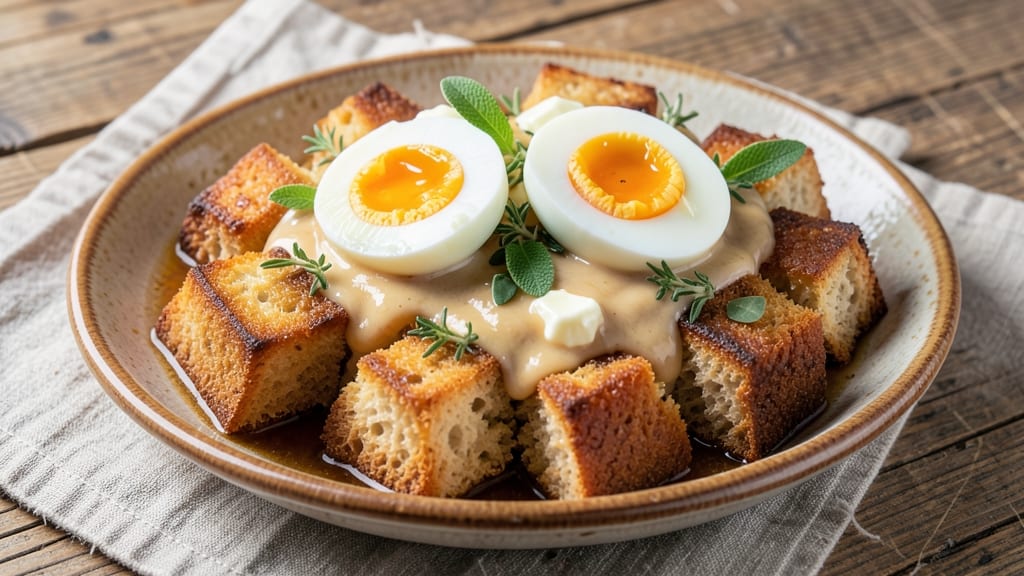
This Amish bread dressing recipe transforms simple ingredients into a rich, savory side that elevates any holiday meal. The secret lies in combining day-old bread with aromatic herbs, melted butter, and a touch of egg for binding—creating a texture that’s moist yet sturdy enough to hold its shape.
I’ve perfected this technique over years of Thanksgiving gatherings, where it disappears faster than the roasted turkey.
The beauty of this recipe is its versatility—it works as a standalone side or as a flavorful topping for roasted vegetables and meats.
Using 350°F for baking ensures a golden crust while keeping the interior tender, and letting it rest for 10 minutes after baking locks in all that buttery, herby goodness. The herbs—sage, thyme, and parsley—blend seamlessly into the bread, infusing every bite with homestyle warmth.
What makes this dressing truly special is how it transforms ordinary bread into something extraordinary. The butter and broth create a velvety, almost custard-like texture, while the herbs add depth that pairs perfectly with roasted chicken, pork, or even as a hearty sandwich filling.
It’s the kind of dish that feels like a hug on a plate—comforting, familiar, and impossible to resist.
Ready in just 45 minutes, this recipe is perfect for meal prep or last-minute holiday hosting. The leftovers reheat beautifully, making it a crowd-pleaser that keeps giving. Here’s how to make it—step by step—for restaurant-quality results at home.
Ingredients for amish bread dressing
Nine essential ingredients transform humble bread into a velvety, herb-infused masterpiece—perfect for holidays or weeknight meals.
| Ingredient | Amount | Notes |
|---|---|---|
| Day-Old Sourdough Bread 🍞 | 1 ½ lb | Cubed into 1-inch pieces |
| Unsalted Butter 🧈 | ¾ cup | Cold, cubed for even melting |
| Fresh Chicken Broth 🍲 | 1 ½ cups | Low-sodium preferred |
| Large Eggs 🥚 | 2 whole | Room temperature for binding |
| Fresh Sage Leaves 🌿 | ⅓ cup | Finely chopped, stems removed |
| Fresh Thyme Leaves 🌿 | ¼ cup | Finely chopped, stems removed |
| Fresh Flat-Leaf Parsley 🌿 | ¼ cup | Finely chopped, stems removed |
| Diamond Crystal Kosher Salt 🧂 | 1 ½ tsp | Adjust to taste |
| Freshly Ground Black Pepper 🌶️ | ½ tsp | Coarsely ground |
| Granulated Garlic 🧄 | 1 tsp | For subtle garlic flavor |
The bread is non-negotiable—day-old sourdough delivers the ideal texture, but crustless French bread or Italian bread work beautifully too. Whole Foods or local bakeries often carry perfect loaves for this purpose. For herbs, prioritize freshness: vibrant green leaves with no wilting. Costco sells pre-chopped herb blends, but freshly chopped sage, thyme, and parsley elevate the dish to restaurant quality. The butter should be high-quality, with at least 82% fat content for optimal richness—Plugrá or Land O’Lakes are reliable choices.
No fresh herbs? Dried herbs work at one-third the amount, but texture suffers. Substitute chicken broth with vegetable broth for vegetarian versions or turkey broth for deeper flavor. If sourdough isn’t available, brioche or challah add luxurious moisture. For gluten-free adaptations, gluten-free bread crumbs mixed with extra egg binder replace traditional bread. The granulated garlic adds subtle depth—skip it if you’re using fresh garlic cloves elsewhere in your meal.
This dressing maintains peak texture for 3 days refrigerated, though flavor deepens overnight. For long-term storage, freeze in airtight containers for up to 3 months. Reheat gently in a skillet with a splash of broth to restore moisture. The golden crust? Best achieved by broiling for 2-3 minutes** at the end—watch closely to avoid burning. Portion into individual ramekins for elegant serving, or use as a hearty sandwich filling.
Why You’ll Love This Recipe
- No-Waste Starter: I always use day-old sourdough—no crusts, no fuss. That stale bread soaks up the broth like a dream, turning scraps into something rich and satisfying.
- Sagey, Buttery Magic: The fresh sage leaves and melted butter create this earthy, golden finish that tastes like a hug from a farmhouse kitchen. Honestly, it’s the kind of flavor that makes you slow down and savor every bite.
- Holiday Table Hero: This dressing works for Thanksgiving, Christmas, or even a cozy Sunday dinner. The creamy texture and herby notes make it the star of any meal, no matter the occasion.
- Budget-Friendly Luxury: Uses pantry staples and stretches easily—perfect for feeding a crowd without breaking the bank. Leftovers reheat beautifully, so it’s basically free insurance for seconds.
Step-by-step instructions for Amish bread dressing
This method delivers a creamy, herb-infused dressing with perfect texture—fluffy yet sturdy enough to hold its shape. Every element must come together precisely for that signature Amish richness.
Prepare the Bread Base
Preheat your oven to 350°F and line a baking sheet with parchment paper. Arrange the 1.5 lb day-old sourdough bread (pre-cut into 1-inch cubes) in a single layer on the sheet. Spread the cubes evenly—they should touch but not overlap.
Bake for 15-18 minutes until the cubes are completely dry and golden at the edges. This step is critical: overcooked bread will absorb too much liquid and make your dressing gummy, while undercooked bread will never crisp properly. Rotate the pan halfway through for even drying.
Create the Herb-Butter Mixture
While the bread dries, combine the 0.75 cup unsalted butter (cubed and cold), 0.33 cup finely chopped fresh sage leaves, 0.25 cup finely chopped fresh thyme leaves, 0.25 cup finely chopped fresh flat-leaf parsley, 1.5 tsp diamond crystal kosher salt, 0.5 tsp freshly ground black pepper, and 1 tsp granulated garlic in a medium bowl.
Use a pastry cutter or your fingers to work the butter into the herbs until you achieve a coarse, pea-sized crumb texture. The butter should be softened but not melted—this ensures proper distribution throughout the dressing. If it feels too soft, chill the mixture for 10 minutes before proceeding.
Assemble the Dressing
Transfer the dried bread cubes to a large mixing bowl. Pour the 1.5 cups fresh chicken broth (low-sodium preferred) over the bread and let it sit for 5 minutes to begin absorbing. In a separate bowl, whisk together the 2 whole large eggs (room temperature) until just combined.
Add the herb-butter mixture to the bread and stir gently to distribute evenly. Pour the egg mixture over the bread and fold together using a wooden spoon. The dressing should be moist but not soupy—if it’s too loose, add 2-3 tablespoons more bread cubes. If it’s too thick, add 1 tablespoon of broth at a time until it reaches a consistency that holds its shape when spooned.
Bake to Golden Perfection
Transfer the dressing to a greased 9×13-inch baking dish and spread it into an even layer. Bake at 350°F for 35-40 minutes until the top is golden brown and the center reaches 160°F on an instant-read thermometer. The edges should pull away slightly from the dish, indicating proper doneness.
Here’s the thing—don’t overbake. The dressing will continue cooking slightly as it rests, and overcooking turns it dry. If the top browns too quickly, tent loosely with foil for the last 10 minutes of baking. Let it rest for 15 minutes before serving to allow the juices to redistribute.
Serve Warm with Herb Garnish
Before serving, sprinkle the top with an additional 1 tablespoon finely chopped fresh parsley and 1 teaspoon fresh thyme leaves for a pop of color and freshness. This dressing serves 4 people generously, making it ideal for holiday gatherings or family dinners.
For the best experience, serve immediately while still warm. The texture should be moist yet sturdy enough to hold its shape when sliced. If storing, cover tightly and refrigerate for up to 3 days. Reheat in a 350°F oven for 15-20 minutes or until warmed through, adding 1-2 tablespoons of broth if it appears dry.
Pro Tips For Making Amish Bread Dressing
- Cube Dry, Not Wet: Slice that day-old sourdough into ½-inch cubes—not tearing it. Wet bread sticks together like glue, and you’ll end up with a gummy mess instead of a light, airy dressing. Pat the cubes lightly with a paper towel if they’ve absorbed too much moisture from the fridge.
- Broth First, Butter Last: Start by toasting the bread cubes in butter over medium heat—but don’t add the broth until the bread is golden and crisping at the edges. Dumping cold broth too soon steams the bread instead of browning it, and you’ll miss that nutty, caramelized depth.
- Eggs Need Air: Whisk those eggs until they’re frothy, not just blended. The extra air lifts the dressing when it bakes, giving it that signature fluffy texture. I used to rush this step, and the result was dense—like a sad, soggy loaf instead of a golden crown.
- Sage Early, Sage Often: Tear the fresh sage leaves and scatter half into the pan with the bread, then save the rest to sprinkle on top before baking. The first batch infuses the butter and broth with flavor, while the top layer adds that aromatic finish. (Yes, even if you’re impatient like me.)
Common mistakes when making great amish bread dressing
Over-Drying the Bread
This is the #1 mistake I see—overbaking the bread cubes until they’re crispy and hard. When bread dries too much, it soaks up all the moisture from the broth and butter, resulting in a dense, gummy dressing instead of the light, fluffy texture you want.
The cubes should be dry to the touch but still pliable—think of them like toasted breadcrumbs, not crackers. 🌾
Skipping the Resting Time
Rushing to serve Amish bread dressing right out of the oven is a big no-no. The dressing needs that 15-minute rest** period to allow the juices to redistribute throughout. Skipping this step leaves you with a dry top layer and a soggy center.
I can’t tell you how many times I’ve seen this happen—especially when guests are already seated! Be patient; the dressing will firm up beautifully during this time.
Using Fresh Bread
Fresh bread contains too much moisture, which can turn your dressing into a mushy, unappetizing mess. The starches in fresh bread haven’t had time to dry out, so they absorb all the liquid instead of creating that perfect creamy texture.
Always use day-old bread—it’s the secret to achieving that signature Amish consistency. If you’re in a pinch, toast your bread first to remove excess moisture, but it won’t be quite the same.
Overmixing the Eggs
When you overmix the eggs, you risk creating a dense, rubbery texture in your dressing. The eggs should be whisked just until combined—no need to beat them into stiff peaks.
Overmixing incorporates too much air, which can lead to a dressing that collapses or becomes grainy. Think of it like folding in whipped cream: gentle, even strokes are key. 🥚
Incorrect Baking Temperature
Baking at too high a temperature—like 400°F—causes the dressing to brown too quickly on the outside while staying undercooked inside. This leads to a dry, crusty exterior and a raw center.
Stick to 350°F for even cooking and that perfect golden crust. If your oven runs hot, tent the dish with foil for the last 10 minutes to prevent over-browning.
Adding Liquid Improperly
Pouring all the broth at once can make the dressing too soupy, while adding it too late can leave it dry. The broth should be added gradually, allowing the bread to absorb it in stages.
If your mixture feels too loose, add more bread cubes; if it’s too thick, add broth 1 tablespoon at a time until you reach that ideal spoonable consistency. Balance is everything—just like in a good Amish community gathering! 💛
Nutrition facts
Frequently asked questions about homestyle herb-butter dressing
Can I make this dressing without eggs for a vegan version?
Yes! Replace the 2 eggs with a 2-tablespoon flaxseed meal + 6-tablespoon water mixture (let it thicken for 5 minutes). For extra binding, add 1 tablespoon cornstarch to the broth. The texture will be slightly denser but still delicious.
What’s the best bread to use if I don’t have sourdough?
Any crustless, sturdy bread works—try Italian bread, brioche, or even gluten-free bread crumbs mixed with extra egg binder. Avoid soft breads like brioche for the final product unless you reduce the broth by 2 tablespoons to compensate. The key is dry, crumbly texture before baking.
How can I make this dressing ahead of time?
Prepare the dressing up to 24 hours ahead and refrigerate in an airtight container. Reheat in a 350°F oven for 15-20 minutes, adding 1-2 tablespoons broth if it dries out. For make-ahead convenience, assemble the mixture without baking, refrigerate overnight, then bake fresh in the morning. The flavors deepen over time!
Why did my dressing turn out too dry?
Overbaking or using bread that was too dry are the most common causes. Always bake bread cubes until just dry (not crispy) and follow the 350°F temperature precisely. If it’s still dry after baking, sprinkle 1 tablespoon broth on top and cover with foil for 5 minutes to steam.
Can I use this dressing as a sandwich filling?
Let it cool completely, then slice into ½-inch thick portions. Toast the bread first for extra crispiness. It pairs perfectly with roasted turkey, ham, or even as a hearty breakfast sandwich with scrambled eggs. Store leftovers in the fridge for 3 days or freeze for 3 months.

- Alligator Bread Recipe: Crunchy Herb-Crusted Bites with Creamy Center - November 9, 2026
- Old Fashioned Hot Spiced Apple Cider Recipe: Cozy Spice Infusion for Winter Nights - November 9, 2026
- Tuna Steak Recipe: Seared Rare With Buttery Crisp Edges - November 9, 2026