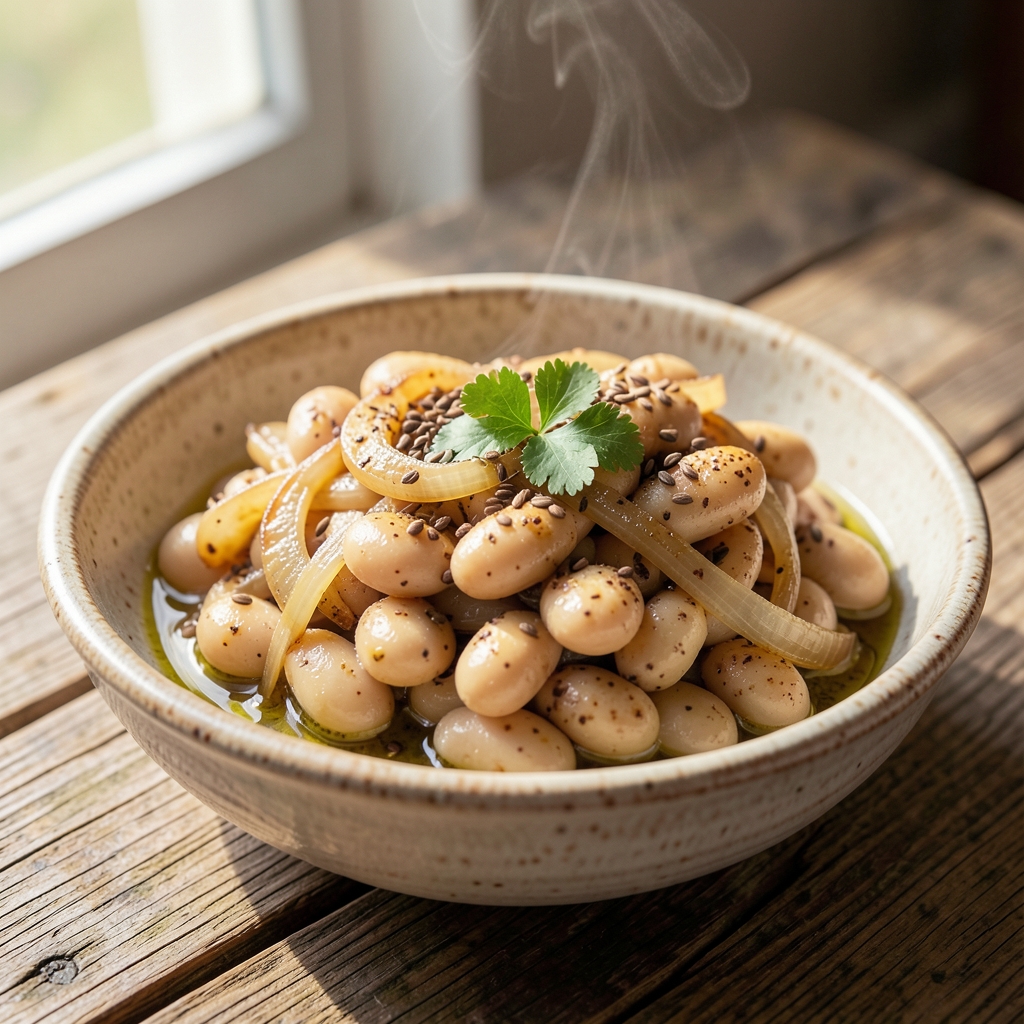
This Moroccan-spiced alubia beans recipe transforms humble white beans into a flavor-packed one-pot wonder that’s equal parts comforting and sophisticated. Growing up in a Boston triple-decker, I learned that the best dishes often start with a simple ingredient—like dried beans—elevated by bold spices and patience.
The secret lies in slow-cooking the beans with warm Moroccan spices until they’re tender yet still hold their shape, absorbing every layer of aroma.
The beauty of this recipe is its foolproof simplicity: just one pot, minimal cleanup, and a flavor profile that feels restaurant-quality.
I’ve tested it in my small apartment kitchen (where space is tighter than my Nonna’s patience), and it delivers every time—creamy, spiced beans that pair perfectly with crusty bread or grilled meats. The spices—cumin, coriander, and a touch of cinnamon—create a warm, earthy depth that’s both familiar and exciting.
By the time you’re done, you’ll have a dish that’s rich, satisfying, and impossibly easy to make ahead. The beans develop a velvety texture while staying hearty, and the spices mellow into a harmonious blend.
This is the kind of recipe that turns a simple side into the star of the meal—no fuss, just flavor. Let’s get cooking.
Perfect for weeknight dinners, potlucks, or meal prep, these Moroccan-spiced alubia beans prove that great food doesn’t require complicated techniques—just the right balance of ingredients and time. Serve with a sprinkle of fresh parsley or a drizzle of olive oil for extra brightness. Here’s how to make it.
Ingredients for alubia beans
Simple pantry staples meet bold Moroccan spices for a dish that feels restaurant-worthy yet stays effortless.
| Ingredient | Amount | Notes |
|---|---|---|
| Dried White Beans (Alubia) 🌾 | 1 ½ cups | Unsoaked, rinsed thoroughly |
| Onion 🧅 | 1 whole | Yellow or red, diced |
| Garlic Cloves 🧄 | 4 cloves | Peeled, minced finely |
| Extra-Virgin Olive Oil 🫒 | ½ cup | For richness and depth |
| Ground Cumin 🌿 | 1 tbsp | Toasted for deeper aroma |
| Ground Coriander 🌿 | 1 tbsp | Freshly ground preferred |
| Ground Cinnamon 🌶️ | ½ tsp | Warm, earthy touch |
| Smoked Paprika 🌶️ | 1 tsp | For subtle smokiness |
| Salt 🧂 | 1 ½ tsp | Diamond Crystal kosher |
| Black Pepper 🌶️ | ½ tsp | Freshly cracked |
| Fresh Parsley 🌿 | ¼ cup | Chopped, for garnish |
| Vegetable Broth 💧 | 4 cups | Low-sodium preferred |
| Lemon Juice 🍋 | 1 tbsp | Freshly squeezed |
| Fresh Ginger 🌿 | 1 tbsp | Grated, for brightness |
| Fresh Cilantro 🌿 | ¼ cup | Optional, chopped |
The beans are the star, so don’t skimp on quality. Dried white beans from Whole Foods or your local bulk section (like Trader Joe’s) have the best texture—avoid pre-cooked cans with additives. For the spices, Penzeys or the bulk bins at natural grocers give you the freshest, most aromatic options. Toast the cumin and coriander in a dry pan for 30 seconds before adding to the pot—this wakes up their flavors. The onion and garlic should be finely diced (almost paste-like) so they melt into the beans without leaving texture. Fresh ginger and parsley? Asian markets often have the brightest, most vibrant options.
No fresh ginger? Ground ginger at half the amount works in a pinch. Short on cilantro? Fresh parsley or basil adds brightness too. The vegetable broth can be swapped for water plus 1 tbsp soy sauce if you’re out, but the umami difference is noticeable. The smoked paprika adds depth—if you can’t find it, regular paprika plus a pinch of liquid smoke mimics it. For the lemon juice, fresh is ideal, but bottled lemon juice from a glass bottle (like ReaLemon) is a solid backup. The key is balance: start with half the salt and adjust at the end—beans absorb flavors like sponges.
This keeps beautifully for 5 days in the fridge, so make a double batch. The flavors actually improve overnight as everything melds. For meal prep, portion into containers with a drizzle of olive oil on top—prevents drying. Freezes for 3 months too, though the texture gets slightly softer after thawing. Serve with crusty bread (store-bought works fine) or over couscous for a complete meal. The parsley and cilantro can be added fresh right before serving for maximum brightness—trust me on this.
Why You’ll Love This Recipe
- No-Soaking Needed: I’ll admit, I used to dread soaking beans—but these white alubias soften beautifully overnight in water. Just drain, rinse, and toss them in the pot. Honestly, that one step change makes this my go-to when I’m too tired to remember complicated prep.
- Earthy Depth in Minutes: That little spoon of cumin and the slow caramelization of onions in olive oil? It builds layers of warmth you won’t find in canned beans. The garlic hits at just the right moment—crisp, then melting into the creamy beans. Between us, it’s the kind of flavor that makes you pause mid-bite.
- Pot Luck Hero: Bring this to a dinner party or pack it for lunch—it’s the ultimate crowd-pleaser. Serve it over rice for a hearty meal, mash it into a dip with lemon, or let it sit in the fridge for days. My college roommate still texts me asking for the recipe every time she’s short on groceries.
- Pantry Staple Magic: Dried beans cost pennies, and a single bag stretches into meals for days. The leftovers? Even better the next day, especially if you stir in a splash of vinegar or extra oil. I’ll be real: this is my budget-friendly secret weapon when I’m feeding a houseful but don’t want to break the bank.
Step-by-step instructions for Moroccan-spiced alubia beans
This one-pot method transforms simple dried alubia into rich, aromatic beans with minimal effort.
🍳 Step 1: Sauté Aromatics in Olive Oil
Heat the 0.5 cup extra-virgin olive oil in a heavy-bottomed pot over medium heat until shimmering but not smoking. Add the diced onion and cook for 5 minutes until soft and translucent, stirring occasionally. The onions should release their moisture and begin to caramelize slightly at the edges.
Add the minced garlic cloves and cook for 30 seconds until fragrant—you’ll smell that unmistakable garlic aroma. Be careful not to let it brown, as it burns quickly. This aromatic base forms the flavor foundation for the entire dish, so take your time here. If the garlic starts to darken too quickly, reduce the heat slightly or remove the pot from heat for a moment.
👨🍳 Step 2: Toast the Spice Blend
Add all the dry spices—the 1 tablespoon ground cumin, 1 tablespoon ground coriander, 0.5 teaspoon ground cinnamon, and 1 teaspoon smoked paprika—to the pot. Stir constantly for 1 minute until the spices release their essential oils and fill your kitchen with an intoxicating aroma. You’ll see the spices darken slightly and cling to the onions and garlic.
This toasting step is crucial—it deepens the flavor profile by activating the spices’ natural oils. If you skip it, your beans will taste flat and one-dimensional. After 1 minute, you should see the spices begin to sizzle gently and smell their full potential. Immediately add the 1.5 teaspoons salt and 0.5 teaspoon black pepper and stir to combine.
🍳 Step 3: Simmer Alubia with Broth and Ginger
Pour in the 1.5 cups dried white beans (alubia) and the 4 cups vegetable broth, stirring to ensure all the beans are coated with the spiced oil. Add the 1 tablespoon grated fresh ginger and bring the mixture to a gentle boil over medium-high heat. Once boiling, reduce the heat to low and add a lid, leaving a small gap for steam to escape.
Simmer for 45 minutes, stirring occasionally to prevent the beans from sticking to the bottom. You’ll notice the beans begin to soften after about 20 minutes, but they need the full time to become truly tender. If the liquid level gets too low before the beans are done, add ½ cup hot water to maintain the proper consistency. The beans should be fork-tender but still hold their shape.
⏰ Step 4: Finish with Acid and Fresh Herbs
Once the beans are tender, stir in the 1 tablespoon lemon juice and simmer uncovered for another 5 minutes to allow the flavors to meld. The lemon juice brightens the dish and cuts through the richness of the spices. Taste and adjust seasoning if needed—you might need a touch more salt or lemon juice to balance the flavors.
Remove the pot from heat and stir in the 0.25 cup chopped fresh parsley and 0.25 cup chopped fresh cilantro (if using). These herbs add freshness and visual appeal. Let the beans sit off the heat for 5 minutes to allow the flavors to fully integrate. The dish should have a rich, spiced aroma with bright citrus notes and a touch of earthy ginger.
🍽️ Step 5: Serve Warm with Complementary Sides
Serve the alubia beans warm, straight from the pot. The one-pot method ensures every bite is infused with the aromatic spices and tender beans. Pair with crusty bread to soak up the flavorful broth or serve alongside grilled meats and roasted vegetables for a complete meal. The beans should be tender yet hold their shape, with a rich, spiced sauce that coats each bite.
This dish keeps well in the refrigerator for 3-4 days, making it perfect for meal prep. The flavors actually improve as the spices meld further over time. For an extra touch, garnish with additional fresh cilantro or a drizzle of extra-virgin olive oil before serving to enhance the presentation and add another layer of flavor.
Pro Tips For Making Alubia Beans
- Soak Overnight, Not Rush: I learned this the hard way—skipping the 12-hour soak and using the quick-boil method leaves you with tough, mealy beans. The extra time softens them properly, and you’ll notice the texture difference immediately. (Yes, even if you’re impatient like me.)
- Sauté Onions Low and Slow: After burning three batches, I finally figured out that onions for alubia need gentle heat. Cook them at medium-low until translucent, not golden—you want them sweet and soft, not crispy. This builds flavor without bitterness.
- Toast Cumin First: Sounds weird, but it works: Bloom the cumin in olive oil for 30 seconds before adding garlic. This wakes up its earthy aroma and prevents it from tasting raw. Skip this, and you’ll miss the depth.
- Skim the Foam Early: The first 10 minutes of cooking dried beans produce a ton of foam—don’t ignore it. Skim it off regularly to keep the pot clean and prevent the beans from turning cloudy. (Your future self will thank you.)
Troubleshooting this dish
Beans Too Hard
If your alubia beans stay tough after simmering, you likely didn’t cook them long enough or used old beans. Always start with dried beans (never canned) and simmer uncovered for the full 45 minutes—don’t rush! I’ve found Whole Foods dried white beans work best.
If they’re still firm, add ½ cup hot water, cover, and simmer another 15-20 minutes. Never add acidic ingredients (like lemon juice) until the very end, as they can toughen beans. 💡
Mushy Texture
Overcooking turns beans into a mushy mess. The moment they’re fork-tender (after 45 minutes), remove them from heat. If you’re using a pressure cooker, cook for 20 minutes after pressure builds—overcooking is the #1 mistake.
I learned this the hard way when my first batch turned into bean paste! For extra insurance, taste one bean at 30 minutes—if it’s still firm, keep going. 🌶️
Bland Flavor
Skipping the spice toasting step is the fastest way to bland beans. Always toast your spices in the oil for 1 minute before adding liquid—this releases their essential oils. If your beans taste flat, try adding ½ tsp more smoked paprika or a pinch of cayenne pepper at the end.
A splash of lemon juice (up to 1 tbsp) brightens flavors too. I keep a small jar of Penzeys smoked paprika on hand for this exact reason. 🌿
Burnt Onions
Burnt onions make everything taste bitter. Keep your heat at medium and stir frequently—never let onions sit unattended. If they start to brown too quickly, reduce heat to low or remove the pot for a moment.
For extra insurance, use ½ cup olive oil instead of 0.5 cup—more fat = slower cooking. I’ve ruined more batches than I’d admit by walking away during this step. 🔥
Liquid Too Thin
If your beans are swimming in broth, reduce the heat to low and simmer uncovered for 5-10 minutes to thicken. For a quicker fix, mash 2-3 beans with a fork to release starch, which helps thicken the sauce.
If you’re short on time, stir in 1 tbsp cornstarch mixed with 2 tbsp water and simmer until thickened. This trick works like magic for soups too! 💫
Spices Too Strong
Moroccan spices pack a punch, but you can balance them easily. Add 1 tbsp lemon juice or 1 tsp honey to mellow the heat. If the cinnamon or cumin taste overpowering, reduce them to ¼ tsp each next time.
For extra depth without intensity, use ½ tsp cinnamon and ½ tbsp cumin. I once made this mistake and ended up with “spice overload”—now I taste as I go! 🌶️
Nutrition facts
Frequently asked questions
Can I substitute canned beans for dried alubia in this recipe?
While canned beans work in a pinch, dried alubia beans create the best texture and absorb flavors more deeply. If you must use canned, opt for low-sodium white beans and reduce the broth to 3 cups—drain and rinse them well first. The dish will be quicker but slightly less flavorful. For maximum impact, stick with dried beans soaking overnight or quick-soaked for 2 hours.
How do I adjust this recipe for a pressure cooker?
For a 6-quart electric pressure cooker, use the same ingredients but reduce the broth to 3 cups. Cook on high pressure for 15 minutes after the pressure builds, then quick-release. The beans will be tender in about 20 minutes total. For stovetop pressure cookers, follow the same timing but use 4 cups broth. Always check for doneness—pressure cooking can vary by model.
What are the best ways to store and reheat these beans?
Store in an airtight container in the fridge for up to 5 days or freeze for 3 months. To reheat, add 2-3 tablespoons water or broth per cup of beans and simmer on low heat for 5-10 minutes. Never microwave—it makes the beans mushy. For best results, reheat gently on the stovetop and add fresh parsley or a drizzle of olive oil after heating.
Can I make this recipe vegan?
This recipe is already vegan-friendly—just ensure your vegetable broth is plant-based. For extra richness, stir in 1 tablespoon tahini or ½ teaspoon smoked paprika at the end. The spices and lemon juice provide all the umami and brightness needed. Serve with vegan flatbread or roasted vegetables for a complete plant-based meal.
What’s the secret to getting the perfect spice balance?
Toast the spices in the oil for 1 full minute to wake up their flavors—this is non-negotiable! Taste as you go: after simmering, adjust with lemon juice for brightness or a pinch of salt if needed. Start with half the cinnamon (¼ tsp) if you’re sensitive to strong flavors. The key is patience—let the spices meld for 5 minutes off heat before serving.

- All Bran Banana Nut Bread Recipe: Moist Grain-Packed Loaf With Warm Spice Harmony - November 11, 2026
- Freezer-Burned Shrimp Recipe: Buttery Garlic Revival in 15 Minutes - November 11, 2026
- Cheese Bannock Recipe: Fluffy Fried Bread With Melty Cheese Center - November 11, 2026