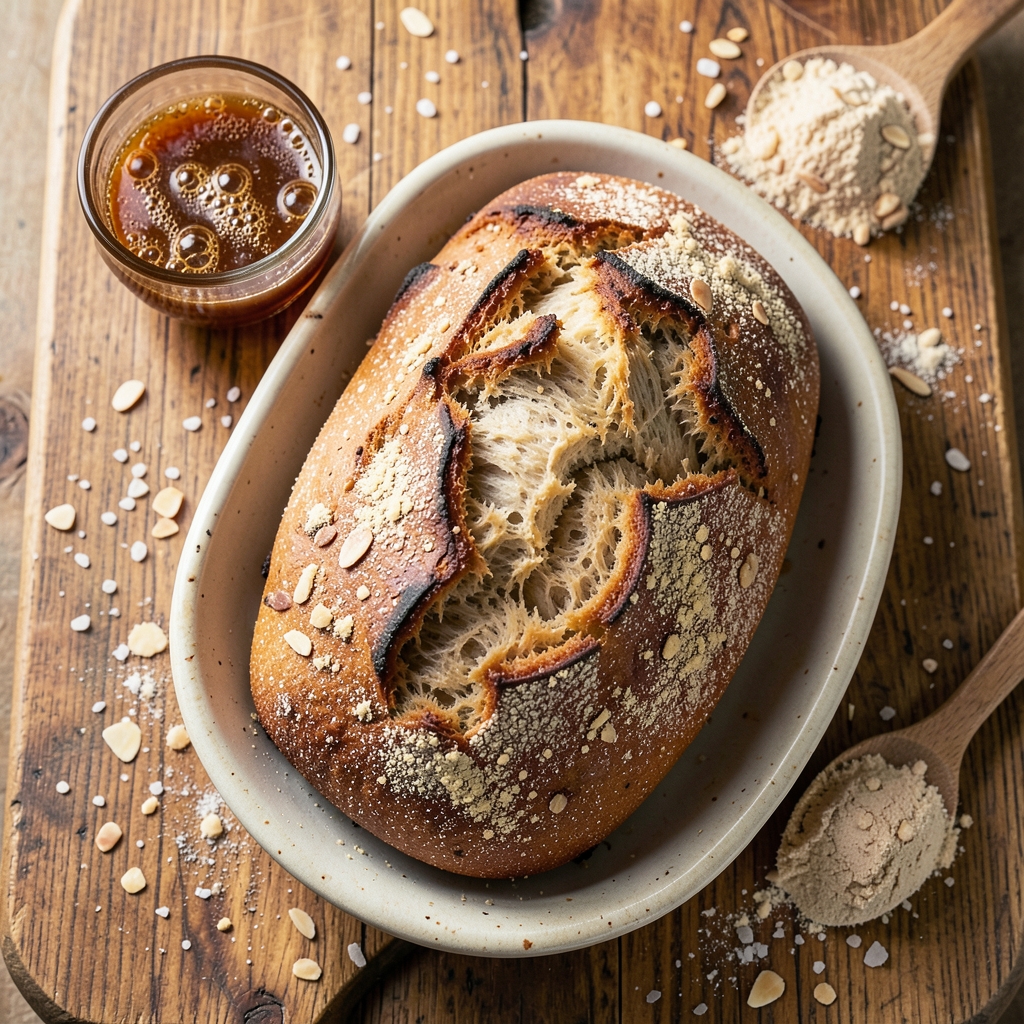
This almond sourdough bread recipe transforms your kitchen into a bakery with a nutty, aromatic crust and a tangy crumb that keeps you coming back for more.
The secret lies in blending toasted almond flour with traditional sourdough techniques, creating a loaf that’s both hearty and delicate—perfect for breakfast toast or sandwiches with restaurant-quality texture. I perfected this after years of experimenting with whole-grain sourdough, and the almonds add a satisfying crunch that elevates every slice.
The process starts with a robust sourdough starter, which develops the signature tang and airy structure. You’ll mix the dough by hand or with a stand mixer, then let it proof for hours until it nearly doubles in size—this slow fermentation builds flavor depth that store-bought bread can’t match.
The dough is shaped into a classic boules or batard, then baked at a precise 375°F until the crust achieves that golden, crackly perfection with a hint of caramelization.
What you’ll end up with is a loaf that’s crisp on the outside and tender on the inside, with pockets of almond flavor in every bite. The crust has a satisfying snap, while the crumb remains soft and slightly chewy—ideal for soaking up jam, butter, or pairing with soups.
This recipe delivers professional-quality results without requiring advanced baking skills, making it accessible yet impressive for any home baker.
For added versatility, consider swapping in flaxseed or sunflower seeds for extra texture, or brushing the baked loaf with honey for a touch of sweetness. The dough can also be adapted for vegan baking by using plant-based milk and butter substitutes.
Once you try this almond sourdough, your kitchen will never smell the same again.
Ingredients for almond sourdough bread
Toasted almond flour meets classic sourdough for a loaf with nutty crunch and tangy depth.
| Ingredient | Amount | Notes |
|---|---|---|
| Active Sourdough Starter 🍞 | ½ cup | Unfed, bubbly starter |
| All-Purpose Flour 🌾 | 3 cups | High-protein preferred |
| Almond Flour 🥜 | 1 ½ cups | Toasted for nutty depth |
| Granulated Sugar 🍚 | 1 tbsp | For crust caramelization |
| Instant Yeast 🍄 | ¼ tsp | Or 1 tsp active dry |
| Salt 🧂 | 1 ½ tsp | Fine sea salt preferred |
| Whole Milk 🥛 | 1 cup | Warm for activation |
| Unsalted Butter 🧈 | ½ cup | Cold, cubed |
| Eggs 🥚 | 1 whole | Room temperature |
| Honey 🍯 | 1 tbsp | For crust brushing |
| Coarse Cornmeal 🌽 | ¼ cup | For dusting |
| Water 💧 | ½ cup | Room temperature |
The almond flour is non-negotiable here—Bob’s Red Mill or King Arthur are my go-tos for consistency. Toast it first in a dry pan over medium heat for 5-7 minutes until golden and fragrant (that smell alone is worth it). The sourdough starter should be at its peak—fed 4-6 hours before mixing with equal parts flour and water. If you’re new to starters, Whole Foods often sells small batches to jumpstart yours. For the butter, Plugrá or Land O’Lakes work best—they hold their shape when cold but melt beautifully during baking.
No almond flour? Substitute walnut flour at the same amount, though the flavor will shift slightly. Running short on starter? 1 tsp instant yeast plus 1 tbsp sugar mimics the lift, though the tang will be milder. The milk can be swapped for unsweetened almond milk (use the same amount), but whole milk gives that rich, tender crumb. For a vegan version, replace the butter with vegan butter and the eggs with flax eggs (1 tbsp ground flax + 3 tbsp water per egg). The honey brushing? Maple syrup works too, but honey adds a subtle floral note that pairs perfectly with the almonds.
This dough is a patient one—let it proof in the fridge overnight for 8-12 hours if your schedule allows. The longer it ferments, the more complex the flavor. Shape the loaf on a piece of parchment dusted with cornmeal (this prevents sticking and adds texture). Store wrapped at room temp for 2 days or freeze for 3 months. For extra crunch, brush the cooled loaf with melted butter and sprinkle with flaky salt. The crust stays crisp for 3 days if kept in a bread bag.
Why You’ll Love This Recipe
- No-Fuss Mixing: I swear by the 5-minute knead—just toss the almond flour and starter into the all-purpose base, and let the dough do the work. No stand mixer, no overworking; the almonds add texture without the fuss.
- Rich Nutty Crunch: That first bite? The toasted almond flour gives it a buttery, almost cookie-like crunch, while the sourdough keeps it tangy and airy. Honestly, it’s the kind of bread I’ll eat plain just to savor it.
- Weeknight Hero: Slice it for toast, pack it for lunches, or use it to soak up soups—it’s my go-to when I’m too tired for fancy bread. The sugar caramelizes just enough to make it irresistible, even when I’m exhausted.
- Budget-Friendly Luxe: Almond flour might sound pricey, but a little goes a long way, and the dough stretches far. I make two loaves for the cost of one store-bought baguette, plus leftovers stay fresh for days. Win-win.
Step-by-step instructions for almond sourdough bread
Here’s how to craft a loaf with a nutty crust and tangy depth that’s perfect for breakfast or gourmet sandwiches.
Mix the Wet Ingredients and Activate the Starter
In a small saucepan, warm the 1 cup whole milk over medium heat until it reaches 110°F—just warm to the touch. Remove from heat and whisk in the 0.5 cup unsalted butter until fully melted and smooth. Let this cool slightly to room temperature before using.
In a large mixing bowl, combine the 0.5 cup active sourdough starter, the warm milk-butter mixture, 1 whole egg, and 1 tbsp honey. Use a wooden spoon to stir until everything is fully incorporated. The starter should look bubbly and slightly thickened—this is your signal that fermentation is active. If it’s not bubbly, your starter may need more time to activate before using.
Combine Dry Ingredients and Form the Dough
In a separate bowl, whisk together the 3 cups all-purpose flour, 1.5 cups almond flour, 1 tbsp granulated sugar, 0.25 tsp instant yeast, and 1.5 tsp salt. Sift the mixture lightly to aerate the flours and ensure even distribution of the yeast and salt.
Gradually add the dry ingredients to the wet mixture, stirring with a wooden spoon until a shaggy dough forms. The dough will be sticky but manageable—this is normal due to the almond flour and milk. Once combined, cover the bowl with a damp kitchen towel and let it rest for 10 minutes. This brief rest helps the gluten begin to relax, making the next steps easier.
Knead and Shape the Dough
Lightly flour a clean surface and turn out the dough. Gently fold and press the dough for 5-7 minutes until it becomes smooth and elastic. The almond flour makes this dough less stretchy than traditional bread dough, so focus on pressing and folding rather than aggressive kneading. If the dough feels too sticky, wet your hands slightly to prevent sticking.
Once the dough is smooth, shape it into a round loaf about 8 inches in diameter. Place it in a bowl that has been lightly dusted with 0.25 cup coarse cornmeal to prevent sticking. Cover the bowl with the damp towel again and let it rise in a warm place for 1.5 to 2 hours, or until it has nearly doubled in size. You’ll know it’s ready when the dough springs back slowly when gently pressed.
Proof and Bake for a Nutty Crust
Preheat your oven to 375°F and place a baking stone or inverted baking sheet on the middle rack. Line a baking sheet with parchment paper. Once the dough has risen, carefully transfer it to the prepared baking sheet. Brush the top generously with a mixture of 1 tbsp honey and 1 tbsp water, then sprinkle lightly with 1.5 tsp salt for added flavor and texture.
Bake the loaf for 35 to 40 minutes, until the crust is deep golden brown and the internal temperature reaches 205°F when measured with an instant-read thermometer. The bread should sound hollow when tapped on the bottom. If the top browns too quickly, tent it loosely with aluminum foil to prevent over-browning while ensuring the interior cooks through.
Cool and Enjoy
Remove the bread from the oven and let it cool on a wire rack for at least 30 minutes before slicing. This resting period allows the crumb to set and prevents a gummy texture. The crust should be crisp and nutty, while the interior remains soft and slightly chewy, with pockets of air from the almond flour.
Slice the bread into 4 even servings and enjoy it fresh for the best texture. Store any leftovers in an airtight container at room temperature for up to 3 days, or freeze for up to 3 months. The flavor actually improves slightly over time as the almond flour infuses deeper into the crumb.
Pro Tips For Making Almond Sourdough Bread
- Sift the Almond Flour: I learned this the hard way—almond flour clumps like a stubborn toddler if you don’t handle it right. Before mixing, give it a quick pulse in a food processor or sift it through a fine-mesh sieve. This keeps your dough light and prevents those weird, dense pockets where the almond flour refused to blend in.
- Feed Your Starter Right: Your sourdough starter needs to be hungry for this to work. The night before baking, feed it a 1:1:1 ratio of starter to all-purpose flour to water—let it double by morning. If it’s sluggish, give it an extra hour or two; a slow starter means a sluggish rise, and nobody wants a sad, flat loaf.
- Skip the Yeast Overkill: That extra pinch of instant yeast you’re tempted to add? Resist. Almond flour absorbs moisture differently, and too much yeast will make your bread rise too fast, then collapse like a deflated balloon. Stick to the recipe’s amount—your dough will thank you with a proper oven spring.
- Steam the First 10 Minutes: Sounds weird, but it works: Place a metal bowl of boiling water in your oven before baking, then slide your dough in. The steam helps that almond flour crust crisp up without drying out the crumb underneath. I know, I know—it’s an extra step, but trust the process. Your bread will have that bakery-worthy shine.
Serving suggestions for this dish
Breakfast Pairings
This almond sourdough is a game-changer for morning routines. Toast thick slices and top with 2 tbsp almond butter and sliced banana for a protein-packed breakfast. I also love pairing it with Greek yogurt and a drizzle of local honey—the nutty crumb soaks up the sweetness perfectly.
For a savory twist, spread mashed avocado with a pinch of flaky salt and red pepper flakes. 🍳
Gourmet Sandwiches
Elevate your lunch with this bread as the base. Try a caprese sandwich with fresh mozzarella, tomato slices, basil leaves, and a drizzle of balsamic glaze. For heartier options, layer prosciutto, ricotta cheese, and roasted red peppers.
The almond flavor cuts through rich meats beautifully, while the crust adds satisfying texture. Use a sharp serrated knife for clean slices. 🥪
Soup Companions
This bread shines with warm soups. Pair it with creamy tomato basil soup or roasted garlic bisque—the nutty crust contrasts the smooth broths. For a lighter option, serve with minestrone and add a sprinkle of Parmesan cheese on top.
The bread’s texture holds up well to soups, making every bite satisfying. 🍲
Dessert Applications
Don’t let this bread go to waste—use it for desserts too! Cut into cubes and toast with dark chocolate and sea salt for a crunchy snack. Or make French toast by dipping slices in a mix of eggs, vanilla extract, and cinnamon, then pan-fry until golden.
The almond flavor adds depth to sweet dishes. 🍫
Wine and Cheese Pairings
Hosting a gathering? Serve with dry Riesling to complement the almond’s nutty notes. For cheese, pair with aged Gouda or blue cheese—the tangy bread balances the richness. Add cured meats like salami or prosciutto for a charcuterie board that’s both elegant and crowd-pleasing. 🧀
Storage and Serving Tips
For best texture, serve bread at room temperature after cooling. Reheat slices in a toaster oven at 350°F for 3-5 minutes to revive crispiness. Store leftovers in a bread bag or airtight container to maintain freshness. The crust stays crisp for 3 days when stored properly. 💡
Nutrition facts
Frequently asked questions
Why does this almond sourdough have a different texture than regular sourdough?
The almond flour adds natural oils and less gluten, creating a denser crumb with a satisfying crunch. The toasted almonds also contribute to a crispier crust while keeping the interior tender. This makes it perfect for toast or sandwiches where texture matters most.
Can I make this recipe without a sourdough starter?
Yes! Substitute the starter with 1 tsp instant yeast plus 1 tbsp sugar dissolved in warm milk. The flavor will be slightly less tangy, but the nutty almond profile will still shine. For best results, let the dough proof 30 minutes longer than called for.
How do I know when the almond sourdough is fully baked?
Look for a deep golden-brown crust with a hollow sound when tapped on the bottom. The internal temperature should reach 205°F when measured with an instant-read thermometer. If the top browns too quickly, loosely tent with foil after 20 minutes to prevent over-browning.
Can I add seeds or other mix-ins to this recipe?
Try adding 1/4 cup sunflower seeds or pumpkin seeds for extra crunch. For sweet variations, fold in 1/2 cup dried cranberries or chopped dates. Just reduce the almond flour by 1/4 cup to maintain the right balance. The dough will be slightly stickier with mix-ins.
Why did my almond sourdough turn out dense instead of airy?
Over-kneading or under-proofing are common culprits. The almond flour makes the dough less elastic, so handle it gently during kneading (5-7 minutes max). Also ensure your starter is active and the proofing time is 1.5-2 hours (or until nearly doubled). A warm oven (375°F) with a baking stone helps create the signature oven spring.

- New England Stuffed Quahog Recipe: Clam, Corn, and Herb Dumpling Harmony - November 8, 2026
- Voodoo Fries Recipe: Triple-Dredged Crunch With Secret Spice Blend - November 8, 2026
- Authentic Beef Goulash Recipe: Paprika-Kissed Richness Simmered Slowly - November 8, 2026