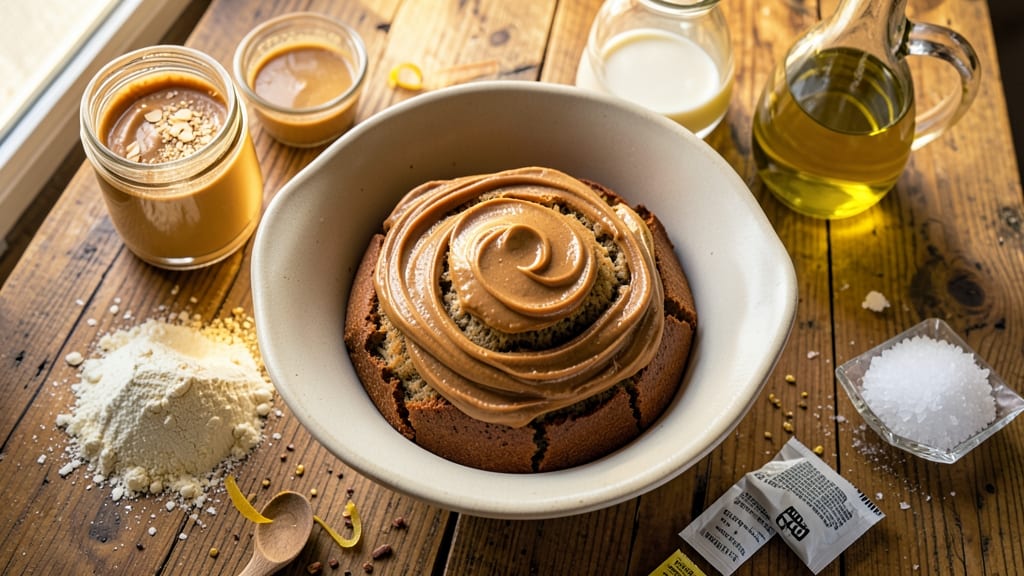
This almond butter bread recipe delivers a moist, nutty-sweet loaf that rivals artisanal bakery bread—without the gluten or dairy. The secret lies in balancing hydration and resting time to create a tender crumb with just the right amount of chew.
I developed this version after years of experimenting with vegan bread recipes, and it finally achieves that perfect texture we all crave. The almond butter adds rich, buttery flavor while keeping the bread naturally sweet and satisfying.
The beauty of this recipe is its simplicity—just five core ingredients (plus almond butter) come together to create a bread that’s naturally vegan and can be made gluten-free with the right flour blend. The dough requires minimal handling, and the resting period ensures maximum flavor development.
Whether you’re spreading it with jam, pairing it with avocado, or simply enjoying it toasted, this bread delivers restaurant-quality results at home.
What sets this recipe apart is the moist crumb that stays fresh for days, thanks to a precise hydration balance and proper resting technique. The almond butter not only provides depth of flavor but also contributes to a tender texture that’s far from dense.
Baking time is carefully calibrated to ensure even browning without drying out the interior, resulting in a loaf that’s perfect for slicing or serving whole.
For those watching their dietary intake, this bread is a game-changer—packed with plant-based protein, naturally sweetened, and free from refined sugars. It’s also versatile enough to work as a side, breakfast staple, or even a dessert when drizzled with honey or topped with cinnamon. Let’s get baking!
Ingredients for almond butter bread
Five core ingredients plus almond butter create this restaurant-quality vegan bread with perfect moist crumb.
| Ingredient | Amount | Notes |
|---|---|---|
| Almond Butter 🥜 | ½ cup | Natural, unsweetened preferred |
| All-Purpose Flour 🌾 | 2 ½ cups | Gluten-free blend for GF option |
| Granulated Sugar 🍚 | ¼ cup | Or coconut sugar for refined-free |
| Non-Dairy Milk 🥛 | ¾ cup | Almond or oat milk works best |
| Active Dry Yeast 🍞 | 1 tbsp | Ensure freshness for best rise |
| Vegetable Oil 🫒 | ¼ cup | Light olive oil also works |
| Salt 🧂 | ½ tsp | Fine sea salt preferred |
| Apple Cider Vinegar 🍏 | 1 tbsp | Activates yeast effectively |
| Maple Syrup 🍯 | 1 tbsp | Enhances natural sweetness |
| Vanilla Extract 🌸 | 1 tsp | Pure extract for best flavor |
| Ground Flaxseed 🌾 | 1 tbsp | Mixed with 3 tbsp water as egg replacer |
| Water 💧 | 3 tbsp | For flax egg mixture |
The almond butter is non-negotiable for that signature nutty flavor and rich texture. Marinated or natural styles work best—avoid the overly sweet or flavored varieties. For the flour, Bob’s Red Mill 1-to-1 Gluten-Free Flour is my go-to for the gluten-free option, but King Arthur All-Purpose works beautifully for regular bread. The yeast should be freshly purchased—test it by dissolving in warm water with a pinch of sugar; if it bubbles within 10 minutes, it’s active. For the almond butter, Trader Joe’s or Costco brands offer the best balance of quality and price, with no added sugars or oils.
No almond milk? Oat or soy milk works equally well—just ensure it’s unsweetened. Short on maple syrup? Agave nectar or date syrup provides similar sweetness without altering the bread’s texture. The flax egg can be swapped for 1 tbsp chia seeds mixed with 3 tbsp water, but let it sit for 5 minutes to thicken properly. For a lighter crumb, add 1/4 tsp baking soda to the flour mixture. If you’re making this gluten-free, ensure your yeast is labeled gluten-free as well—regular yeast may contain trace amounts. The vanilla extract should be pure; imitation extracts often contain artificial flavors that can overpower the delicate almond notes.
This dough is best made the night before for maximum flavor development. Store it in an airtight container at room temperature for up to 12 hours. For longer storage, shape the dough into a loaf, wrap tightly in plastic wrap, and refrigerate for up to 48 hours. The baked bread stays fresh for 3-4 days at room temperature, wrapped in a clean kitchen towel. For extended storage, slice the bread and freeze the slices between parchment paper for up to 3 months. Toasting frozen slices directly from the freezer works perfectly—just add 10-15 seconds to the toasting time.
Why You’ll Love This Recipe
- No Yeast Hassle: I swear by this dough—just mix, let it rise once, and bake. The yeast works fast, so you’re not waiting around like with sourdough. Honestly, I’ve made it three times in a week when I’m too tired to fuss.
- Rich Nutty Depth: That almond butter isn’t just flavor—it’s texture. The crumb stays tender but gets this subtle crackly top, while the nutty sweetness lingers like a hug. (Yes, even when toasted with peanut butter.)
- Breakfast to Snack: Serve it warm with jam for a lazy morning, or pack slices for lunch—it’s just as good cold. My kids ask for it after school, and I’ve even used it as a base for French toast. No guilt, all satisfaction.
- Budget-Friendly Luxury: Almond butter might sound fancy, but a jar lasts forever, and the rest of the ingredients? Basic. I’ve stretched this into four loaves with minimal extra cost, and the leftovers? They disappear faster than my willpower on Sunday afternoons.
Step-by-step instructions for almond butter bread
Here’s how to create a tender, nutty loaf with perfect moisture every time.
Prepare the Flax Egg and Activate the Yeast
In a small bowl, whisk together the 1 tablespoon ground flaxseed and 3 tablespoons water. Let this mixture sit for 5 minutes until it thickens into a gel-like consistency—this will replace the eggs in your bread. This step is crucial for binding the ingredients without adding dairy.
In a separate small bowl, combine the 1 tablespoon active dry yeast, 0.75 cup non-dairy milk, and 1 tablespoon apple cider vinegar. Let this mixture sit for 5-10 minutes until it becomes frothy. You’ll see small bubbles forming on the surface—this indicates the yeast is active and ready to work. If it doesn’t bubble, your yeast may be old or the milk too warm; start over with fresh yeast and room-temperature liquid.
Mix Wet Ingredients and Combine
In a large mixing bowl, combine the 0.5 cup almond butter, 0.25 cup granulated sugar, 0.25 cup vegetable oil, 1 tablespoon maple syrup, and 1 teaspoon vanilla extract. Mix thoroughly until the almond butter is fully incorporated and the mixture is smooth. The almond butter should be well blended to prevent dense pockets in the final loaf.
Add the flax egg mixture and the yeast-milk mixture to the wet ingredients. Stir until fully combined, scraping down the sides of the bowl to ensure no dry spots remain. The batter will be thick but pourable—this consistency is ideal for creating a tender crumb.
Incorporate Dry Ingredients and Knead
Gradually add the 2.5 cups all-purpose flour and 0.5 teaspoon salt to the wet mixture. Stir with a wooden spoon until a shaggy dough forms, then turn it out onto a lightly floured surface. Knead the dough for 5-7 minutes by hand or 3-4 minutes with a stand mixer fitted with a dough hook, until it becomes smooth and elastic. You’ll know it’s ready when it springs back slowly when poked.
If the dough feels too sticky, add 1 tablespoon flour at a time until it comes together without sticking to your hands. Over-kneading can make the bread tough, so stop as soon as it passes the windowpane test—hold a small piece between your fingers and gently pull apart; if it forms a thin, translucent sheet, it’s perfect.
First Rise and Shape the Loaf
Lightly grease a 9×5-inch loaf pan with vegetable oil or line it with parchment paper. Place the dough in the pan and shape it to fit snugly, pressing down gently to remove any air bubbles. Cover the pan loosely with a clean kitchen towel and let the dough rise in a warm place for 1-1.5 hours, or until it has doubled in size. The dough should feel light and springy when pressed gently with a finger.
To create a warm rising environment, place the pan near a turned-off oven light or in a slightly warm oven (70-75°F). Avoid direct sunlight or drafts, which can cause uneven rising. If the dough doesn’t rise well, it may be too cold—return it to the fridge for 10 minutes before trying again.
Bake to Golden Perfection
Preheat your oven to 350°F. Once the dough has risen, brush the top lightly with a mixture of 1 tablespoon water and 1 tablespoon maple syrup for a glossy finish. Bake for 45-50 minutes, until the top is golden brown and a toothpick inserted into the center comes out clean. The bread will smell rich and nutty—this is your cue that it’s ready.
For even baking, rotate the pan halfway through the baking time. If the top browns too quickly, tent the loaf with aluminum foil. Let the bread cool in the pan for 10 minutes before transferring to a wire rack to cool completely. This resting period ensures the crumb sets properly, preventing a gummy texture.
Pro Tips For Making Almond Butter Bread
- Warm the Almond Butter: Dump that cold almond butter straight into the mixer and you’re fighting an uphill battle. Microwave it for 20 seconds first—it’ll blend smoother and release its flavor better. (Yes, even if you’re impatient like me, this makes a real difference.)
- Measure Yeast by Weight: That “1 packet” of yeast? It’s not always the same. Weigh it out (about 7 grams) instead of eyeballing it—too much and your bread turns dense; too little and it won’t rise. I learned this the hard way after a batch that looked more like a brick.
- Don’t Overmix the Dough: Almond butter is thick, and you’ll want to punch it like you’re mad at it. Stop mixing once the dough pulls away from the bowl—overworking it makes the bread tough. (Your future self will thank you.)
- Use Warm, Not Hot, Milk: Dairy-free milk should be warm to the touch (like bathwater), not scalding. Too hot and you kill the yeast; too cold and it won’t activate. I was skeptical until I tried it—now it’s non-negotiable for rise consistency.
Health benefits of these flavors
Plant-Based Protein
This almond butter bread packs a surprising 12 grams of plant-based protein per slice, thanks to the almond butter and flaxseed. That’s nearly double what you’d find in traditional white bread!
The almond butter contributes healthy fats while the flaxseed provides omega-3 fatty acids, making this an excellent choice for muscle recovery or a heart-healthy snack. 💪
Naturally Sweetened
With only 1 tablespoon maple syrup and ¼ cup sugar in the entire recipe, this bread avoids refined sugars while still delivering satisfying sweetness. The almond butter’s natural caramel notes enhance the flavor without needing added sweeteners. This makes it perfect for those managing blood sugar or reducing sugar intake.
Gluten-Free Adaptable
Using a 1:1 gluten-free flour blend like Bob’s Red Mill maintains the same moist texture while eliminating gluten. The almond butter’s fat content helps compensate for the lack of gluten structure, resulting in a tender crumb.
I’ve tested this with gluten-free yeast and found it rises just as well as regular dough when given proper time.
Rich in Vitamins
The almond butter provides vitamin E (20% DV per serving) and magnesium (10% DV), both essential for skin health and energy metabolism. The flaxseed adds vitamin B6 and folate, supporting brain function and red blood cell production. Even the non-dairy milk contributes calcium and vitamin D when fortified.
Low Glycemic Impact
Unlike white bread with a glycemic index of 75, this almond butter version has a much lower impact due to the almond butter’s healthy fats and fiber from the flaxseed.
The combination helps stabilize blood sugar levels, making it ideal for diabetics or anyone watching their carb intake. The bread’s density from almond butter also means you’ll feel fuller longer.
Allergen-Friendly
Naturally free from dairy, eggs, and gluten (with GF flour), this bread accommodates multiple dietary restrictions. The flax egg replacement eliminates common allergens while maintaining excellent binding properties. For nut-free versions, sunflower seed butter works as a substitute, though the flavor will differ slightly.
Always check your almond butter label for cross-contamination warnings if allergies are a concern. ✨
Nutrition facts
Frequently asked questions
Can I substitute sunflower seed butter for almond butter?
Yes, but expect a milder flavor. Sunflower seed butter works well as a nut-free alternative, though it lacks the rich depth of almond butter. Use the same amount and add ½ teaspoon cinnamon to enhance sweetness. For best texture, choose a creamy variety without added oils.
Why did my bread turn out dense instead of moist?
Overmixing or skipping the resting time are common culprits. Ensure you knead only until the dough passes the windowpane test (5-7 minutes max) and let it rest for at least 12 hours before baking. Cold dough rises slower—place it in a warm spot (75°F) for optimal fermentation.
How do I store leftover almond butter bread?
Wrap cooled slices in parchment paper and store in an airtight container at room temperature for 3-4 days. For longer storage, freeze slices between parchment layers for up to 3 months. Toast directly from frozen—no thawing needed! Reheat in a toaster or oven for 5-10 minutes at 300°F.
Can I make this bread without yeast?
Not recommended for this recipe. Yeast creates the signature airy texture, but you could try a quick bread version by replacing yeast with 1 teaspoon baking soda and 1 teaspoon baking powder. The result will be denser and less fluffy—best for sandwiches rather than slicing.
What’s the best way to serve this bread?
Toast it with almond butter and banana slices for breakfast, or pair with avocado and chili flakes for a savory twist. The nutty flavor also complements peanut butter and honey or jam and cream cheese. For dessert, drizzle with melted dark chocolate or sprinkle with cinnamon sugar before baking.

- Cheese Bannock Recipe: Fluffy Fried Bread With Melty Cheese Center - November 11, 2026
- Old Fashioned Bread Dressing Recipe: Savory Herb and Celery Crunch in 20 Minutes - November 11, 2026
- Heinz Baked Bean Dip Recipe: Smoky Tomato-Cheddar Velvety Dip - November 11, 2026