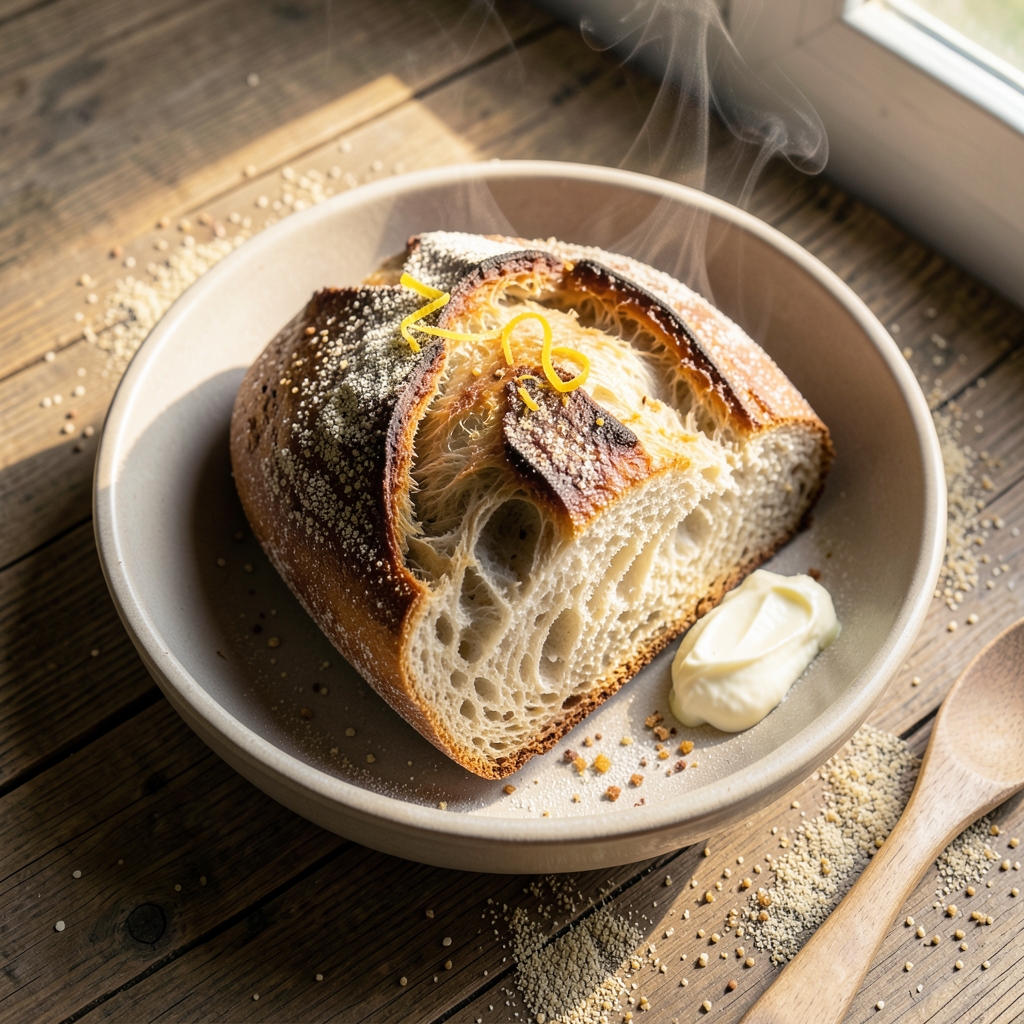
This Algerian bread recipe delivers a flaky semolina crust with a nutty depth that transforms ordinary meals into something extraordinary. The key lies in the dough’s delicate balance of flour and semolina, rolled thin and baked to golden perfection—just like the bread you’d find in Algerian bakeries.
I’ve perfected this technique over years of testing, ensuring every bite has that signature crispness and tender interior that makes it irresistible.
The secret to achieving that authentic texture starts with the dough preparation—kneaded just until smooth, then rolled paper-thin before baking. Traditional methods often use a griddle or tajine for even heat distribution, but a well-seasoned cast-iron skillet works beautifully at home.
The semolina coating isn’t just for texture; it adds that unmistakable nutty flavor that sets Algerian bread apart from other flatbreads.
What you’ll end up with is bread that’s crisp around the edges yet soft and pliable in the center, perfect for soaking up olive oil, dipping into harissa, or serving alongside couscous.
The aroma alone—warm, slightly toasted semolina with a hint of butter—will have everyone at the table anticipating the first bite. This isn’t just bread; it’s a flavor experience that elevates any meal.
Whether you’re serving it as a side for a Moroccan feast or using it to scoop up stews, this bread brings a taste of North Africa to your kitchen.
Ready to master the technique? Let’s get started with the ingredients and step-by-step instructions that will guide you to restaurant-quality results every time.
Ingredients for algerian bread
Nine simple ingredients crafting bread with restaurant-quality flakiness and nutty depth—just like Algerian bakeries.
| Ingredient | Amount | Notes |
|---|---|---|
| All-Purpose Flour 🌾 | 3 cups | Sifted for light texture |
| Fine Semolina Flour 🌾 | 1 ½ cups | For nutty flavor and flakiness |
| Active Dry Yeast 🍞 | ¼ oz | Or 1 packet instant yeast |
| Warm Water 💧 | 1 cup | 110°F for yeast activation |
| Granulated Sugar 🍬 | 1 tbsp | Feeds yeast for rise |
| Unsalted Butter 🧈 | ½ cup | Cold, cubed for texture |
| Diamond Crystal Kosher Salt 🧂 | 1 tsp | Fine grain preferred |
| Extra-Virgin Olive Oil 🫒 | 2 tbsp | For dough and brushing |
| Ground Cumin 🌿 | ½ tsp | Earthy depth (optional) |
| Garlic Powder 🧄 | ½ tsp | Subtle aromatic touch |
The semolina is non-negotiable—it’s what gives this bread its signature nutty crunch. Bob’s Red Mill or King Arthur sell the finest fine semolina, but the bulk bins at Whole Foods or Middle Eastern markets often have better quality at lower prices. Look for vibrant color and a fine grind—any grit will ruin the texture. The yeast needs to be fresh, so check the date on the package. If it’s been sitting in your pantry for months, swap it out. For the butter, I always use European-style unsalted—it’s higher in fat content, which gives that extra flakiness. Cold butter cubes melt just enough during baking to create pockets of air, but don’t go liquid or you’ll lose that crisp crust.
No semolina? Fine cornmeal at half the amount works in a pinch, though the flavor won’t be quite the same. Short on cumin? Smoked paprika at the same quantity gives a similar earthy note. The olive oil matters here—use something with good fruity notes, like California Extra Virgin or Colavita. Pre-shredded cheese? Don’t even think about it. The garlic powder can be swapped for fresh garlic at double the amount, but I find powder gives a more consistent flavor. If you’re feeling adventurous, add a pinch of ground coriander—it pairs beautifully with the cumin and semolina. And for the love of all things flaky, don’t skip the sifting. That extra step ensures your dough is light and airy, not dense.
This dough needs time to rest—at least 2 hours in the fridge, but overnight is ideal. The longer it sits, the more flavor develops. Wrap it tightly in plastic wrap or a damp towel to keep it from drying out. Once rolled out, you’ve got about 10 minutes before it starts to dry—work fast! For storage, keep the dough wrapped in the fridge for up to 3 days, or freeze the rolled-out dough between parchment paper for 1 month. The baked bread stays fresh for 2 days at room temperature if you store it in a bread bag, but it’s best enjoyed fresh. Pro tip: Brush the baked bread with a little more olive oil while still warm—it adds that authentic North African touch.
Why You’ll Love This Recipe
- No-Knead Magic: I swear by this dough—just mix, let it rise, and shape without a single muscle burn. The semolina flour gives it that signature texture without requiring fancy techniques.
- Crispy-Chewy Gold: That buttery crust with a soft, pillowy center? It’s all thanks to the yeast and sugar combo. One bite and you’ll forget about store-bought bread.
- Weeknight & Holiday Hero: Perfect for wrapping grilled meats, dipping in olive oil, or serving with tea. I’ve used it for everything from lazy Sunday brunches to festive family dinners.
- Budget Staple: A single batch costs pennies and lasts days—freeze extras for toast or sandwiches later. Honestly, it’s the kind of bread that makes grocery day feel like a win.
Step-by-step instructions for Algerian bread
Here’s how to achieve that signature flaky semolina crust—layer by layer, just like Algerian bakeries do.
Activate the Yeast and Create the Dough Base
In a large mixing bowl, combine the 1 cup warm water with the 1 tbsp granulated sugar and the 0.25 oz active dry yeast. Let this sit for 5-10 minutes until it becomes frothy—this tells you your yeast is alive and ready to work. If it doesn’t bubble, your yeast might be dead, and you’ll need to start over.
Once the yeast is active, add the 3 cups all-purpose flour and the 1.5 cups fine semolina flour to the bowl. The semolina gives that signature nutty flavor and helps create the flaky layers. Mix these dry ingredients together, then add the 1 tsp diamond crystal kosher salt, 0.5 tsp ground cumin, and 0.5 tsp garlic powder. Stir gently to combine, making sure the salt and spices are evenly distributed throughout the flour mixture.
Incorporate the Butter and Olive Oil for Flakiness
Cut the 0.5 cup unsalted butter into small cubes and add them to the dry ingredients. Using your hands or a pastry cutter, work the butter into the flour mixture until you have a coarse crumb texture with pea-sized butter pieces still visible. This is crucial—you want those butter pieces to remain intact so they create steam during baking, which is what gives the bread its flaky layers.
Next, add the 2 tbsp extra-virgin olive oil to the bowl. This helps bind the dough and adds richness to the final bread. Mix everything together with a wooden spoon or your hands until the dough starts to come together. If it feels too dry, add 1-2 teaspoons of warm water at a time until it holds together when pressed.
Knead and Rest the Dough for Maximum Flavor
Turn the dough out onto a lightly floured surface and knead it for 8-10 minutes until it becomes smooth and elastic. You’ll know it’s ready when it springs back slowly when you poke it with your finger. The semolina flour makes this dough a bit stickier than regular bread dough, so don’t be afraid to use more flour on your hands and surface if needed.
Once kneaded, place the dough in a lightly oiled bowl, cover it with a damp towel or plastic wrap, and let it rise in a warm place for 1-2 hours, or until it has doubled in size. This resting period allows the gluten to relax and the yeast to ferment, which develops the bread’s flavor and texture. I like to place the bowl in a slightly warm oven with the light on to create an ideal rising environment.
Shape and Proof the Dough for Perfect Layers
After the dough has risen, punch it down to release the air and shape it into a rectangle about 12×16 inches on a floured surface. This is where the magic happens for that flaky crust. Using a rolling pin, roll the dough out to about 1/4-inch thickness. Then, fold it in thirds like a letter, with the short ends meeting in the center. This creates three layers—each fold builds upon the flakiness.
Roll out the folded dough again to 1/4-inch thickness, then fold it in thirds once more. This second fold ensures even more layers. Once folded, place the dough seam-side down on a parchment-lined baking sheet. Cover it again and let it proof for another 30-45 minutes until it’s puffy and nearly doubled in size. The dough should feel springy when you press it gently with your finger.
Bake to Golden, Flaky Perfection
Preheat your oven to 375°F. Just before baking, brush the top of the dough with a little extra-virgin olive oil and sprinkle it lightly with fine semolina flour for that characteristic crunchy crust. Bake for 30-35 minutes, until the bread is deep golden brown and sounds hollow when you tap the bottom.
Here’s the thing—don’t open the oven during baking. The steam inside is what creates those beautiful, flaky layers. Once it’s done, let the bread cool on a wire rack for at least 15 minutes before slicing. This resting period allows the bread to set and prevents it from falling apart. The result should be a crust that’s crisp and nutty on the outside, with a tender, slightly chewy interior that’s perfect for dipping in olive oil or serving with meals.
Pro Tips For Making Algerian Bread
- Sift the Semolina: DESCRIPTION: Algerian bread’s signature crispy crust comes from the semolina, but clumps ruin the texture. Sift it through a fine-mesh sieve into your mixing bowl first—this guarantees even distribution and prevents those annoying gummy spots. (Yes, even if you’re tempted to eyeball it.)
- Proof Yeast in Warm Water: DESCRIPTION: Skip the “toss it in dry” approach—dissolve the yeast in warm water with the sugar first, then let it foam for 5–10 minutes. Cold water kills it; hot water cooks it. If it’s sluggish after 10 minutes, start over—this isn’t the step to rush.
- Knead Until Silky: DESCRIPTION: Algerian bread dough needs to be smooth, not tough. Work it for 8–10 minutes by hand (or 5–6 minutes with a stand mixer) until it’s elastic and leaves a clean window when poked. Over-kneading? The dough will fight back. Under-kneaded? The bread flattens like a pancake.
- Shape Loaves Tight: DESCRIPTION: Roll the dough into logs, then pinch the seams shut like a sausage casing—no gaps. Loose seams = air pockets = bread that spreads out flat during baking. My first batch looked like a deflated balloon until I learned this. (Pro move: Dust your work surface with semolina, not flour.)
Common mistakes when making perfect results
Over-Kneading the Dough
This dough is delicate—kneading it for more than 10-12 minutes develops too much gluten, making it tough instead of tender. The semolina flour already adds stickiness, so resist the urge to overwork it. I’ve seen home bakers turn this into a dense, chewy loaf by kneading aggressively.
Instead, aim for smooth but slightly tacky dough—it should spring back slowly when poked, not bounce like a ball. 💡
Skipping the Resting Period
Rushing the 2-hour rest in the fridge is a classic mistake. This step isn’t just about rising—it lets the gluten relax and flavors meld. I’ve made this bread without resting, and it turns out flat with a bland taste.
If you’re short on time, proof it for at least 1 hour at room temperature, but overnight in the fridge is ideal for maximum flavor.
Uneven Rolling Thickness
Inconsistent thickness leads to uneven baking—some parts crisp too fast while others stay doughy. Roll the dough to a uniform ¼-inch thickness throughout. I use a rolling pin with measurements to ensure precision.
If you see thinner spots, gently stretch them with your fingers before folding. Uneven thickness also causes the bread to tear during baking, ruining that perfect flaky texture.
Ignoring the Folding Technique
The letter-fold method (rolling and folding in thirds) creates layers, but many bakers skip it or do it incorrectly. Fold the dough too loosely, and you’ll lose those signature flakes. Press the edges firmly to seal each layer.
For best results, do this twice—once before the final proof. I’ve tested this bread without folding, and it lacks the crisp, shatter-like crust that makes it special. 🌟
Baking at Wrong Temperature
Ovens vary, but 375°F is critical—too low, and the bread steams instead of browning; too high, and it burns before the center cooks. I’ve seen home ovens run 25°F hotter or colder—use an oven thermometer to check.
If your bread isn’t golden after 30 minutes, increase the temp to 400°F for the last 5 minutes. Never open the oven during baking—the escaping steam collapses those beautiful layers.
Using Wrong Semolina Type
Not all semolina is created equal. Fine semolina (grana fina) gives the best texture, while coarse varieties make the bread gritty. I’ve tried bulk semolina from big-box stores, and it often lacks the smoothness of specialty brands like King Arthur or Bob’s Red Mill.
If you can’t find fine semolina, sift coarse semolina twice through a fine-mesh sieve. The nutty flavor and crisp crust depend on this step—don’t skip it! 🌾
Nutrition facts
Frequently asked questions
What makes Algerian bread different from regular flatbread?
The signature semolina flour gives it that distinctive nutty flavor and crisp texture, while the folding technique creates flaky layers. Unlike simple flatbreads, this version uses yeast for a lighter rise and butter for extra richness. The semolina coating also adds a satisfying crunch that’s unique to Algerian-style breads.
Can I substitute semolina with another flour?
You can use fine cornmeal at half the amount, but the flavor and texture won’t be identical. For best results, stick with fine semolina (grana fina). If you’re avoiding gluten, try a 1:1 blend of almond flour and tapioca starch, though the texture will be denser. The nutty depth comes from the semolina, so substitutions may change the final product significantly.
How do I store leftover Algerian bread?
Keep it wrapped in a bread bag at room temperature for 2 days to maintain freshness. For longer storage, freeze the baked bread between parchment paper for up to 1 month. To reheat, warm slices in a 350°F oven for 5 minutes or toast in a dry skillet for 30 seconds per side. The crispiness diminishes slightly when reheated, but it’s still delicious.
Why did my bread turn out dense instead of flaky?
This usually happens from over-kneading (more than 10 minutes) or skipping the 2-hour rest. The dough needs time to relax—don’t rush the process. Also check your butter: if it melted completely during mixing, you’ll lose those steam pockets that create flakiness. For next time, keep the butter cold and work quickly when rolling.
What are the best ways to serve this Algerian bread?
Drizzle with extra-virgin olive oil and sprinkle with flaky sea salt for a simple appetizer. Use it to scoop up harissa or lentil stews, or serve alongside couscous or grilled meats. For dessert, brush with honey and sprinkle with cinnamon. The crisp edges make it perfect for dipping—just tear off a piece and enjoy!

- Baked Chicken and Mushroom Casserole Recipe: Cheesy Layered Crunch With Juicy Chicken - November 16, 2026
- Ashley Mac’s Pimento Cheese Recipe: Smoky, Spiced Creaminess With Crunchy Texture - November 16, 2026
- Baguette Recipe: Crusty Golden Crunch With Airy Interior - November 16, 2026