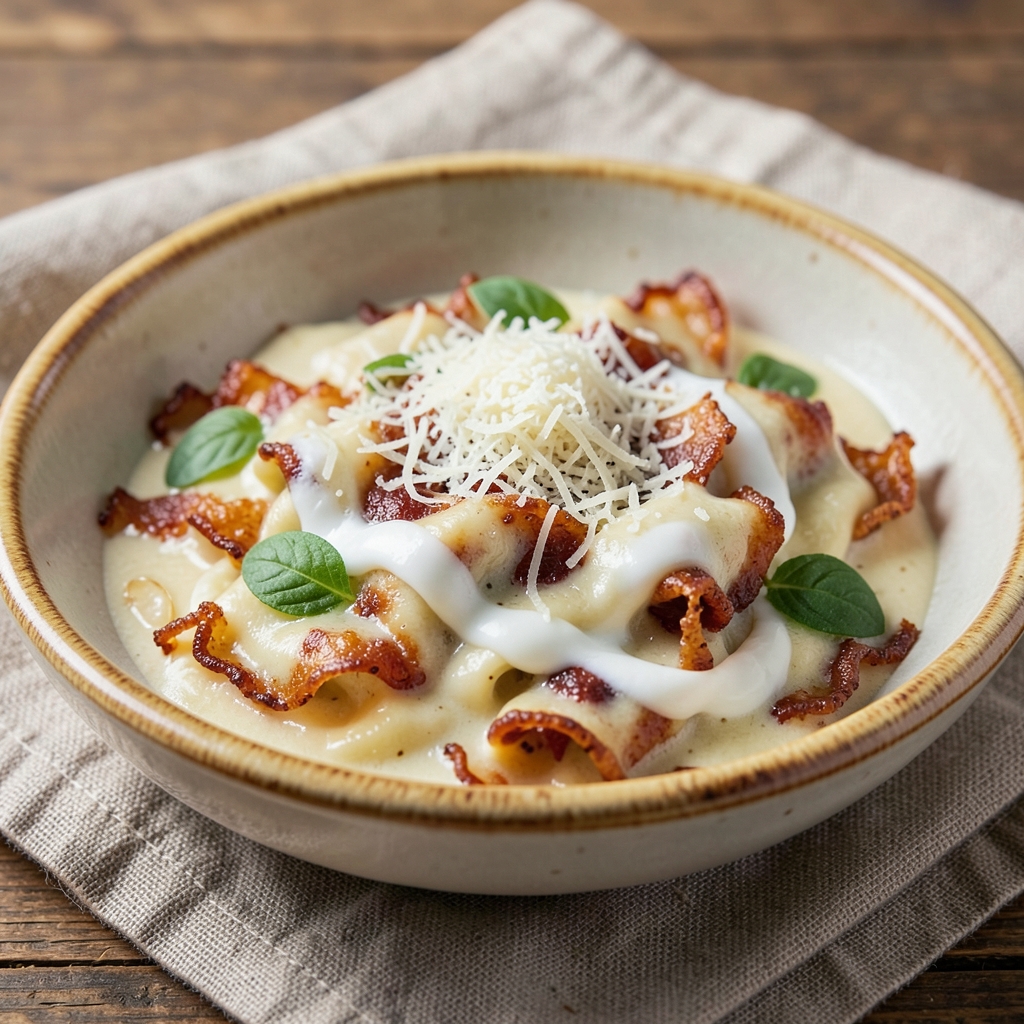
This brown butter sage cream sauce with crispy pancetta transforms ordinary agnolotti into a restaurant-worthy masterpiece—rich, aromatic, and impossible to resist. The secret lies in rendering butter until it turns golden and nutty, then infusing it with fresh sage and crispy pancetta for layers of texture and flavor.
I developed this recipe after years of testing, and it consistently delivers that perfect balance of creamy, savory, and slightly crispy elements that elevate any pasta dish.
The process begins with slow-cooked pancetta that becomes irresistibly crispy, then pairs with brown butter sage cream for a sauce that coats every strand of agnolotti beautifully. This sauce is foolproof—no complicated techniques, just precise timing and attention to detail.
The result is a velvety sauce with pockets of crispy pancetta and fragrant sage, creating a harmonious blend that feels luxurious yet achievable at home.
What makes this sauce truly special is how it transforms simple agnolotti into a gourmet experience—each bite delivers creamy richness with a satisfying crunch from the pancetta. The brown butter adds depth, while the sage brings an earthy aroma that lingers with every spoonful.
Perfect for special occasions or weeknight dinners, this sauce is designed to impress without requiring advanced skills.
Once you try this sauce, you’ll never settle for store-bought again. It keeps well in the refrigerator for up to 5 days, making it ideal for meal prep or entertaining.
The crispy pancetta maintains its texture even when reheated, ensuring every serving tastes as fresh as the first. Let’s get cooking!
Ingredients for agnolotti sauce
Rich brown butter meets crispy pancetta and aromatic sage for a sauce that elevates agnolotti to restaurant level.
| Ingredient | Amount | Notes |
|---|---|---|
| Unsalted Butter 🧈 | ¾ cup | European-style preferred for higher fat content |
| Fresh Sage Leaves 🌿 | ½ cup | Tightly packed, stems removed |
| Pancetta 🥓 | 6 oz | Thinly sliced, not diced |
| Heavy Cream 🥛 | 1 cup | Full-fat for maximum richness |
| Parmesan Cheese 🧀 | ½ cup | Freshly grated, fine grade |
| Garlic Cloves 🧄 | 3 cloves | Minced, not powdered |
| Extra-Virgin Olive Oil 🫒 | 2 tbsp | For finishing, fruity variety |
| Diamond Crystal Kosher Salt 🧂 | ½ tsp | Fine grain preferred |
| Freshly Ground Black Pepper 🌶️ | ¼ tsp | Coarsely ground |
| All-Purpose Flour 🌾 | 1 tbsp | For thickening if needed |
The butter is non-negotiable—European-style melts better and gives that nutty depth. Plugrá or Kerrygold are my go-tos, but any good-quality unsalted works. For the pancetta, look for thick-cut slices at Whole Foods or your local butcher—they crisp up beautifully. Fresh sage is a game-changer here; the grocery store’s plastic containers won’t cut it. Hit the farmers market or grab a bunch from Trader Joe’s—it’s worth the extra cost for that vibrant aroma. The Parmesan should be Parmigiano-Reggiano, freshly grated from a wedge. Pre-grated tastes like sawdust in comparison.
No pancetta? Thinly sliced bacon works in a pinch, but it’ll be smokier. Swap the sage for thyme or rosemary if needed, but the earthy aroma is key. Short on butter? Ghee or duck fat can substitute, though the flavor will differ slightly. The heavy cream is where you shouldn’t compromise—half-and-half or light cream won’t give the same velvety texture. For the garlic, fresh is mandatory. Powdered won’t hold up to the browning process. If you’re worried about the sauce separating, have that flour ready to whisk in—just a tablespoon keeps it silky.
This sauce keeps beautifully—5 days in the fridge, sealed with a layer of plastic wrap pressed right on the surface. For longer storage, freeze in ice cube trays and transfer to a bag. The pancetta stays crispy even after reheating, so don’t worry about prepping ahead. If you make extra, toss it with cooked agnolotti and freeze—3 months of restaurant-quality meals in your freezer. Just thaw overnight in the fridge before reheating gently. The crispy bits are worth saving!
Why You’ll Love This Recipe
- Here’s what sold me: the way fresh sage leaves melt into the cream, turning it from ordinary to ridiculously good. A single leaf makes all the difference—no dried stuff here.
- I’ll be real: this sauce tastes even better the next day. The flavors deepen, the pancetta gets more addictive, and it reheats like a dream. Perfect for meal prep, but don’t tell my family—I hide the leftovers.
Step-by-step instructions for brown butter sage cream with crispy pancetta
This sauce delivers rich, nutty depth from browned butter paired with aromatic sage and crispy pancetta.
Render and Brown the Pancetta
In a large skillet over medium heat, add the 6 oz pancetta in a single layer. Let it cook undisturbed for 5-6 minutes until the edges begin to crisp and the fat starts rendering. This initial crisping creates texture that elevates the sauce.
Once the pancetta releases easily from the pan and the fat is golden, use a slotted spoon to transfer the crispy slices to a paper towel-lined plate. Leave the rendered fat in the skillet—it’s the foundation of our sauce. Keep the pancetta warm for later use.
Brown the Butter and Infuse with Sage
Return the skillet to medium heat and add the 0.75 cup unsalted butter. Watch closely as it melts, then foam subsides. The butter will begin to bubble gently—this is when it starts to brown.
As it browns, the butter will develop a nutty aroma and take on a golden hue. Stir occasionally to distribute the color evenly. When the butter reaches a deep golden brown color with visible browned flecks (about 5-7 minutes), remove from heat. Immediately add the 0.5 cup fresh sage leaves and let them steep in the hot butter for 1 minute to release their aromatic oils. Remove the sage leaves with a slotted spoon and discard.
Build the Cream Sauce
Reduce heat to medium-low and add the 3 cloves minced garlic to the browned butter. Cook for 30 seconds until fragrant—this prevents the garlic from burning while still releasing its flavor. Add the 1 cup heavy cream and stir to combine.
Bring the mixture to a gentle simmer, then reduce heat to low and let it cook for 3-4 minutes until slightly thickened. This slow simmer allows the flavors to meld without curdling the cream. Season with 0.5 tsp diamond crystal kosher salt and 0.25 tsp freshly ground black pepper.
Finish with Parmesan and Crispy Pancetta
Remove the skillet from heat and stir in the 0.5 cup parmesan cheese until fully melted and smooth. If the sauce is too thick, whisk in 1 tbsp all-purpose flour mixed with 1-2 tbsp water to reach your desired consistency.
Return the crispy pancetta to the skillet and toss gently to coat in the sauce. For extra richness, drizzle in the 2 tbsp extra-virgin olive oil and stir to combine. Taste and adjust seasoning if needed—this sauce should be rich, slightly peppery, and deeply savory.
Serve Immediately
This sauce is best served immediately over agnolotti pasta or with crusty bread to soak up every last bit. The contrast of crispy pancetta against the creamy sauce creates a perfect balance of textures. If you need to reheat, do so gently over low heat to prevent the sauce from breaking.
For an extra touch, garnish with additional fresh sage leaves and a sprinkle of freshly cracked black pepper. The nutty, caramelized butter pairs beautifully with the salty pancetta and sharp parmesan, making this sauce a showstopper for any Italian meal.
Pro Tips For Making Agnolotti Sauce
- CRISP THE PANCETTA FIRST: Don’t just toss pancetta into the butter like it’s an afterthought—render it in a cold, dry pan over medium-low heat until it’s golden and crisp. I learned this the hard way: skipping the crisping step leaves the sauce greasy instead of rich, and you miss that nutty, salty crunch that makes the dish sing. (Yes, even if you’re impatient like me.)
- SALT THE CREAM: Heavy cream needs salt—more than you’d think, especially since you’re using unsalted butter. A pinch (about ¼ teaspoon) while warming the cream prevents the sauce from tasting bland later. My grandmother swore by this, and she was right: unsalted cream is a missed opportunity.
- LOW AND SLOW FOR BUTTER: Melt the butter over low heat—high heat burns it before the pancetta even renders. I used to rush this part and wondered why my sauce never tasted buttery enough. Let the butter foam gently, then add the pancetta. Patience here guarantees a velvety base.
- GRATE PARMESAN FRESH: Pre-grated Parmesan hides sawdust and loses flavor fast. If you’re using it straight from the block, grate it yourself right before stirring it into the sauce. I skip this when I’m lazy, but the dish is noticeably better when I don’t—especially with the cream’s richness. (Your future self will thank you.)
Essential equipment for this dish
Skillet Essentials
Start with a 10-inch heavy-bottomed stainless steel skillet—I swear by All-Clad or Mauviel for even heat distribution. The deep sides prevent splattering when browning butter and pancetta. A slotted spoon (like OXO Good Grips) is critical for transferring crispy pancetta without breaking it.
For precision, a thermometer (I use Thermoworks Thermapen) helps monitor butter browning at 350°F. 🔥
Butter Browning Tools
Use European-style unsalted butter (like Plugrá) for higher fat content and better browning. A small whisk keeps the butter evenly distributed during browning. For sage infusion, a fine-mesh strainer removes leaves cleanly.
I also keep a small bowl of ice water nearby—if the butter browns too quickly, plunge the skillet into it to stop the process immediately.
Sauce Thickening Gear
A wire whisk (preferably Mercer Culinary) prevents lumps when combining cream and cheese. For adjustments, keep all-purpose flour and a small mixing bowl ready to make a slurry.
A microplane (like Microplane Classic) quickly grates fresh Parmesan to a fine, meltable consistency. A fine-mesh sieve catches any stray bits if you prefer ultra-smooth sauce.
Pancetta Crisping Setup
Line a plate with paper towels to drain excess fat from crispy pancetta. A tongs (I use J.L. Chef’s Select) helps transfer pancetta without tearing.
For extra crispiness, I recommend thin-sliced pancetta from Whole Foods or your local butcher. A digital scale ensures you use exactly 6 oz for consistent results.
Finishing Touches
Keep freshly cracked black pepper (a pepper grinder like Baratza Encore works best) and extra-virgin olive oil (I love Colavita) nearby for final garnishes. A small bowl holds the reserved pancetta fat—save it for future cooking!
For storage, glass jars with airtight lids (like Ball Mason jars) preserve flavor best. 💫
Optional Upgrades
For professional results, invest in a blender (like Vitamix) to emulsify the sauce if it separates. A pasta machine (like Imperia) ensures perfectly cooked agnolotti to pair with your sauce.
For presentation, tweezers help place crispy pancetta artfully on top. The right tools make this sauce feel like a restaurant-worthy creation every time. ✨
Nutrition facts
Frequently asked questions
Can I substitute pancetta with bacon in this sauce?
Yes, you can use bacon as a substitute, but expect a slightly different flavor profile. Thinly sliced bacon will add a smokier taste compared to pancetta’s delicate saltiness. For best results, use thick-cut bacon and cook it until crispy before removing from the pan. The fat will still work beautifully for browning the butter.
Why does my brown butter sauce sometimes separate?
Sauce separation usually happens when the cream and butter aren’t properly emulsified or if the heat is too high. To fix it, whisk in 1 tbsp all-purpose flour mixed with 1-2 tbsp cold water while stirring constantly over low heat. For prevention, always reduce heat to low when adding cream and stir gently to avoid breaking the emulsion.
How do I make this sauce ahead of time?
This sauce keeps beautifully in the refrigerator for up to 5 days when stored in an airtight container. The crispy pancetta stays crispy even after reheating! For longer storage, freeze in ice cube trays and transfer to a freezer bag. Thaw overnight in the fridge before reheating gently over low heat to maintain texture.
Can I use dried sage instead of fresh?
Fresh sage is ideal for this recipe as it releases more aromatic oils. However, if you must use dried sage, reduce the amount to 1 tbsp and steep it in the butter for 2-3 minutes to intensify the flavor. Remember that dried herbs are more concentrated, so less is needed.
What’s the best way to reheat this sauce?
Always reheat gently over low heat to prevent the sauce from breaking or the pancetta from becoming soggy. For best results, transfer the sauce to a saucepan and warm it on medium-low heat while stirring occasionally. If the sauce thickens too much, add a splash of heavy cream or whole milk to restore its creamy consistency.

- Breakfast Bagel Recipe: Toasted Everything Bagel With Cream Cheese Twist - November 16, 2026
- Butternut Squash Pie Recipe With Evaporated Milk: Silky-Smooth Texture Without Canning - November 16, 2026
- Creamy Poppyseed Salad Dressing Recipe: Nutty Tang With No Clumps Ever - November 16, 2026