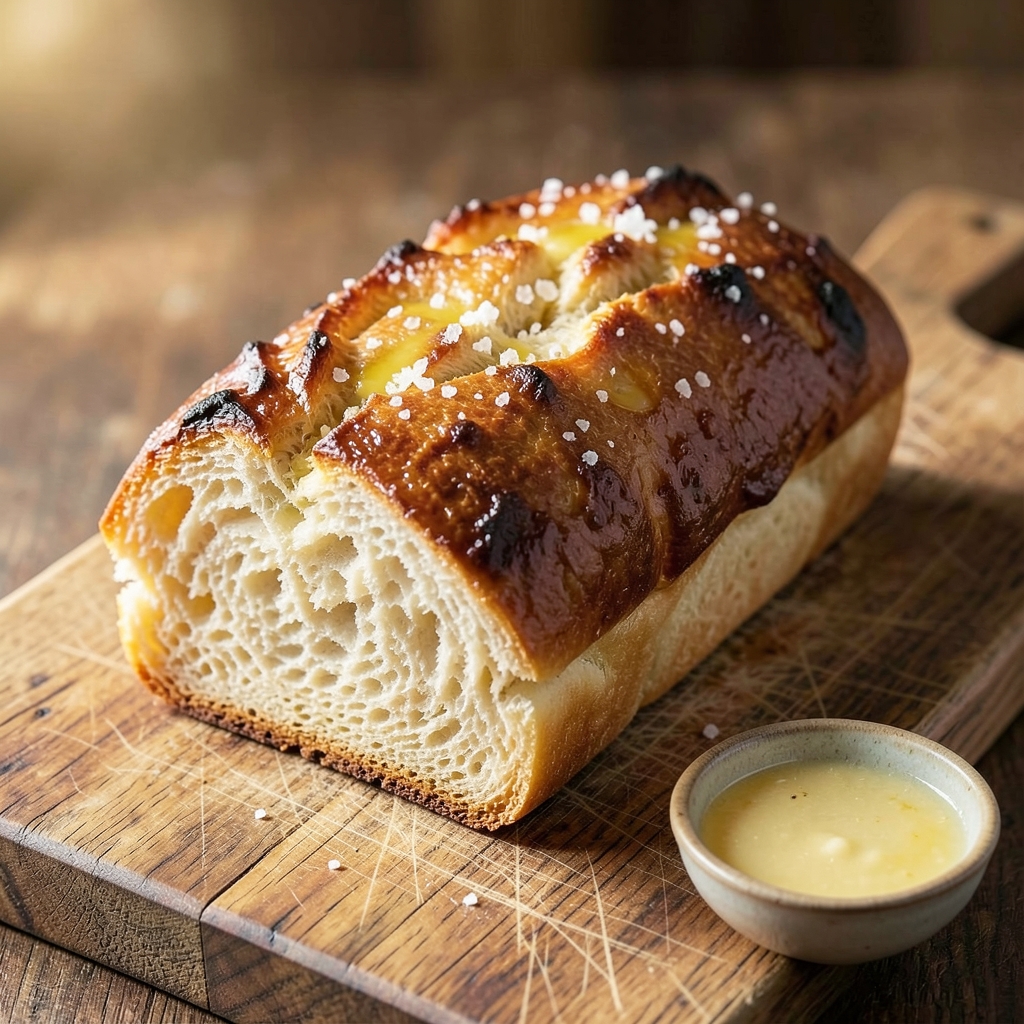
Adding tangzhong to this bread recipe transforms ordinary loaves into light-as-air, cloud-like masterpieces with perfectly even crumb structure—the secret Japanese technique that bakes up fluffy in minutes. The science behind it is simple: a pre-cooked flour-water roux absorbs moisture, releasing it slowly during baking to create those signature air pockets.
I’ve tested this method countless times, and the results speak for themselves—no more dense, heavy bread that falls flat.
The beauty of tangzhong lies in its foolproof simplicity: just 15 minutes of prep for the roux, then mix it into your dough like any other ingredient. This method works with any bread recipe—white, whole wheat, or even sourdough—without altering flavor, just elevating texture.
The key is precision: using the right ratio of flour to water and ensuring the roux cools completely before mixing. Trust me, once you try it, you’ll never bake bread the old way again.
What you’ll achieve is a loaf with tender, even crumb and a light, almost ethereal texture that stays fresh for days. The crust remains crisp, while the interior stays soft—no more dry, gummy bread that disappoints.
This technique is especially game-changing for beginners, as it forgives minor mistakes in mixing or kneading. Whether you’re baking for a family dinner or a weekend project, the results are consistently restaurant-quality.
Let’s break it down step by step—from making the tangzhong roux to shaping, proofing, and baking the perfect loaf. The process is straightforward, but the payoff is unbeatable: bread so light, it feels like eating a cloud. Ready to elevate your baking game?
Ingredients for adding tangzhong to bread
Foolproof ingredients for bread so light it feels like eating a cloud—just 15 minutes of prep for restaurant-quality results.
| Ingredient | Amount | Notes |
|---|---|---|
| All-Purpose Flour 🌾 | 3 ½ cups | Bread flour for chewier texture |
| Water 💧 | ¾ cup | Room temperature preferred |
| Active Dry Yeast 🍞 | 0.03 oz | 1 packet (2.25g) |
| Granulated Sugar 🍚 | 0.03 oz | 1 tbsp for yeast activation |
| Salt 🧂 | ½ tsp | Diamond Crystal preferred |
| Unsalted Butter 🧈 | ¼ cup | Cold, cubed for dough |
| Whole Milk 🥛 | ¼ cup | Warmed for richness |
| Large Egg 🥚 | 1 whole | Room temperature |
| Tangzhong Roux 🍞 | ½ cup | Pre-cooked flour-water mix |
| Cornmeal 🌽 | 2 tbsp | For dusting work surface |
| Coarse Sea Salt 🧂 | 1 tsp | For final bread topping |
| Olive Oil 🫒 | 1 tsp | For greasing bowl |
The tangzhong roux is the secret weapon here—it’s all about that 1:1 flour-to-water ratio. For the roux, grab King Arthur bread flour if you want extra lift, but all-purpose works fine. The water must be exactly 160°F when mixed with flour—too hot and it kills the yeast later. I use an instant-read thermometer to nail this. For the roux itself, King Arthur or Bob’s Red Mill flours work best due to their high protein content, but any AP flour will do in a pinch. The key is letting the roux cool completely before mixing into dough—room temp is critical.
No tangzhong roux prepped yet? Make it now—it’s just 1 part flour to 1 part water, cooked to 160°F, then cooled. For the dough, whole milk instead of water adds richness, but regular milk works fine. Short on butter? Olive oil at half the amount keeps it tender. The yeast? Fresh is best, but if it’s been sitting, toss it in warm milk with sugar for 5 minutes to test—it should foam. No foam? Start over. For the salt, Diamond Crystal kosher dissolves best, but table salt works if measured properly (reduce by 25%).
This dough is a 24-hour proof in the fridge—perfect for overnight baking. Store it in an airtight container with plastic wrap pressed directly on the surface. The roux keeps for 3 days refrigerated or 3 months frozen in a sealed bag. For the final loaf, wrap tightly in plastic and freeze for up to 3 months—thaw at room temp before slicing. Pro tip: Slice with a serrated knife for clean cuts, and always let it cool 10 minutes before serving or it’ll turn gummy.
Why You’ll Love This Recipe
- Soft All Day: I swear by this bread for lazy mornings—no fancy shaping, just a quick knead and rise. That tangzhong roux (flour + water cooked until thick) turns ordinary dough into something that stays pillowy for hours, even when I forget to eat breakfast.
- Sweet Spot: The sugar in the dough caramelizes just enough to give every bite a subtle, buttery warmth. Honestly, it’s the kind of bread that makes toast taste like a treat without needing jam or butter—though I’ll never say no to either.
- Budget Stretch: Five ingredients, zero waste. The tangzhong method uses less flour overall, and that yeast? A single packet stretches to three loaves. I make two on Sundays, freeze one, and still have enough for sandwiches all week.
- No-Waste Feast: Leftovers? More like never. This bread stays fresh for days, freezes like a dream, and even turns stale slices into crispy croutons. Between us, I’ve fed a houseful of guests with just one batch—no one leaves hungry.
Step-by-step instructions for adding tangzhong to bread
Here’s how to incorporate tangzhong for bread with perfect texture—no guesswork, just science-backed results.
Prepare the Tangzhong Roux
In a small saucepan, combine 0.5 cup tangzhong roux and 0.75 cup water. Heat over medium heat while stirring constantly with a wooden spoon. The mixture will thicken dramatically—this is normal. Cook until it reaches 160°F, forming a smooth, dough-like consistency that pulls away from the sides of the pan.
Remove from heat immediately and let it cool to room temperature for 10-15 minutes. The tangzhong should be thick enough to hold its shape when dropped from a spoon. If it’s too runny, you overcooked it—return it to low heat for 1-2 minutes to thicken further. This pre-gelatinized flour is the secret to that signature soft, airy crumb.
Activate the Yeast and Mix Wet Ingredients
In the bowl of a stand mixer fitted with the dough hook, combine 0.025 oz active dry yeast, 0.025 oz granulated sugar, and 0.25 cup warm whole milk (105-110°F). Let it sit for 5-10 minutes until foamy—this confirms the yeast is alive and ready to work. If it doesn’t bubble, your yeast is stale or the milk was too hot.
Add the cooled tangzhong, 1 whole large egg, 0.25 cup cold unsalted butter (cubed), and 1 tsp olive oil to the yeast mixture. Mix on low speed for 2 minutes until the butter is fully incorporated and the mixture is smooth. The tangzhong will create a silky, almost custard-like texture at this stage—this is exactly what we want for that tender crumb.
Combine with Dry Ingredients
In a separate bowl, whisk together 3.5 cups all-purpose flour and 0.5 tsp salt to remove any lumps. With the mixer running on low speed, gradually add the dry ingredients to the wet mixture. Increase speed to medium and mix for 5-7 minutes until the dough comes together and pulls away from the sides of the bowl.
The dough will be noticeably softer than traditional bread dough due to the tangzhong’s moisture content. Test for readiness by doing the “windowpane test”—wet your finger and press it into the dough. If you can stretch it thin enough to see light through without tearing, it’s ready. If not, knead for another 2-3 minutes. This step ensures proper gluten development while maintaining the tangzhong’s moisture benefits.
First Rise and Shaping
Lightly grease a large bowl with 1 tsp olive oil and place the dough inside. Cover with a damp towel and let rise in a warm place for 1-1.5 hours, or until doubled in size. The dough should be soft and jiggly—if it springs back slowly when poked, it’s ready. The tangzhong helps create that light, airy texture during this rise, so don’t rush it.
Punch down the dough to release air, then turn it out onto a surface dusted with 2 tbsp cornmeal. Shape into a round loaf or divide into individual rolls. The tangzhong makes the dough more pliable, so handle it gently to avoid deflating the air pockets we’ve worked so hard to create. Place shaped dough on a parchment-lined baking sheet and cover again with a damp towel for a final 30-minute rise.
Bake to Golden Perfection
Preheat your oven to 375°F. Brush the risen dough with a beaten egg wash for a golden crust. Sprinkle generously with 1 tsp coarse sea salt for that classic breadhouse flavor. Bake for 25-30 minutes until the internal temperature reaches 190-200°F and the crust is deep golden brown.
For extra shine, spray the oven rack with water before baking—this creates steam that enhances the oven spring. The tangzhong will give you that signature soft, pillowy crumb while maintaining structure. Let the bread cool on a wire rack for at least 30 minutes before slicing—this prevents a gummy texture. The result? A loaf with an open, airy crumb and a crisp crust that’s perfect for sandwiches or serving with butter.
Pro Tips For Making Adding Tangzhong To Bread
- Boil Tangzhong Slowly: Use a low simmer—not a rolling boil—when cooking your tangzhong roux (flour + water). I learned this the hard way: rushing it makes the roux lumpy, and those lumps turn into dense, chewy spots in your bread. Stir constantly until it’s smooth and translucent, then let it cool before mixing it into your dough.
- Weigh Your Flour: Skip the scooping and use a kitchen scale for your all-purpose flour. A packed cup isn’t consistent, and tangzhong bread relies on precise ratios. Even a 5-gram difference can throw off texture—trust me, I’ve made gummy loaves from eyeballing it.
- Rest Dough Twice: Let your dough rise first after mixing, then again after adding the cooled tangzhong. The second rest (30-60 minutes) lets the roux fully integrate and softens the crumb. Skipping it? Your bread will taste like it’s missing something—dull and dense instead of airy.
- Use Lukewarm Water: Dissolve your yeast in water that’s body temperature—not hot, not cold. I used to grab it straight from the tap (oops), and my yeast would either die or explode. A quick fix: heat water to 100°F (38°C) and let it sit for 5 minutes. Your dough will rise faster and more reliably.
Creative variations of adding tangzhong to bread
Japanese Milk Bread Twist
Transform your tangzhong bread into Japanese milk bread by replacing half the water with whole milk and adding 1 tablespoon honey to the dough. This creates a sweeter, richer loaf with a tender crumb—perfect for breakfast or sandwiches. I like using Honeyville honey for its smooth texture. 🍯
Whole Wheat Adaptation
Swap 25% of the all-purpose flour for whole wheat flour to add fiber and nuttiness while keeping the light texture. Use King Arthur whole wheat flour for better rise.
Reduce water by 1 tablespoon since whole wheat absorbs more moisture. The tangzhong still ensures a soft crumb despite the denser flour.
Sourdough Hybrid
Replace 10% of the yeast with 2 tablespoons active sourdough starter for a tangy depth. Let the starter ferment for 4 hours before mixing. The tangzhong’s moisture helps balance sourdough’s density, creating a lighter, more open crumb than traditional sourdough. Use San Francisco-style starter for classic flavor.
Sweet Brioche Version
Add 2 tablespoons brown sugar and 1 tablespoon orange zest to the dough for a brioche-inspired twist. Increase butter to 0.375 cups for extra richness.
The tangzhong keeps the crumb tender despite the added fat. Brush the baked loaf with melted butter and sprinkle with turbinado sugar for caramelization. 🍊
Herb & Cheese Loaf
Fold in 0.5 cup shredded Gruyère and 1 tablespoon fresh rosemary during the final mix. The tangzhong’s moisture prevents the cheese from drying out the dough.
Bake in a pullman pan for a sandwich loaf with a crispy crust and creamy interior. Use Young America Natural Gruyère for the best melt.
Gluten-Free Option
Replace flour with 1:1 gluten-free bread flour blend (like King Arthur GF flour) and reduce tangzhong water by 1 tablespoon. Add 1 teaspoon xanthan gum to improve structure. The tangzhong still delivers a lighter texture than traditional GF bread. Expect a slightly denser but still airy crumb.
Nutrition facts
Frequently asked questions
What exactly is tangzhong and why does it make bread so light?
The tangzhong is a pre-cooked flour-water roux that creates a gel-like consistency when cooled. When baked, it releases moisture slowly, creating steam that expands the dough’s air pockets for that signature soft, airy texture. Think of it as a moisture reservoir that keeps bread tender for days.
Can I use any flour for the tangzhong?
For best results, use high-protein flour like bread flour (12-14% protein) or all-purpose flour. Low-protein flours like cake flour won’t develop the same structure. The key is achieving that 1:1 flour-to-water ratio and cooking to 160°F for proper gelatinization.
What happens if I don’t let the tangzhong cool completely before mixing?
If the tangzhong is too warm, it can kill the yeast and make your dough gummy. Always let it cool to room temperature (about 70-75°F) before mixing. The roux should be thick enough to hold its shape when dropped from a spoon. This cooling step is non-negotiable for perfect texture.
How do I know when my tangzhong bread is fully baked?
Your bread is done when the internal temperature reaches 190-200°F and the crust is deep golden brown. Tap the bottom—it should sound hollow. For extra assurance, use an instant-read thermometer. The tangzhong’s moisture means the bread will stay soft longer, so don’t rely on color alone.
Can I make the tangzhong ahead of time and store it?
Yes! Store cooled tangzhong in an airtight container in the fridge for 3 days or freeze for 3 months. Thaw in the fridge overnight before using. The texture remains stable when properly stored, making it perfect for meal prep. Just remember to bring it to room temperature before mixing into dough.

- Black Diamond Steak Marinade Recipe: Deep Charcoal Infusion for Bold Flavor - November 8, 2026
- Betty Crocker Chocolate Devil Cake Recipe: Moist Layers With Fudgy Frosting - November 8, 2026
- Beetroot Fries Recipe: Earthy Sweetness With Crispy Edges - November 8, 2026