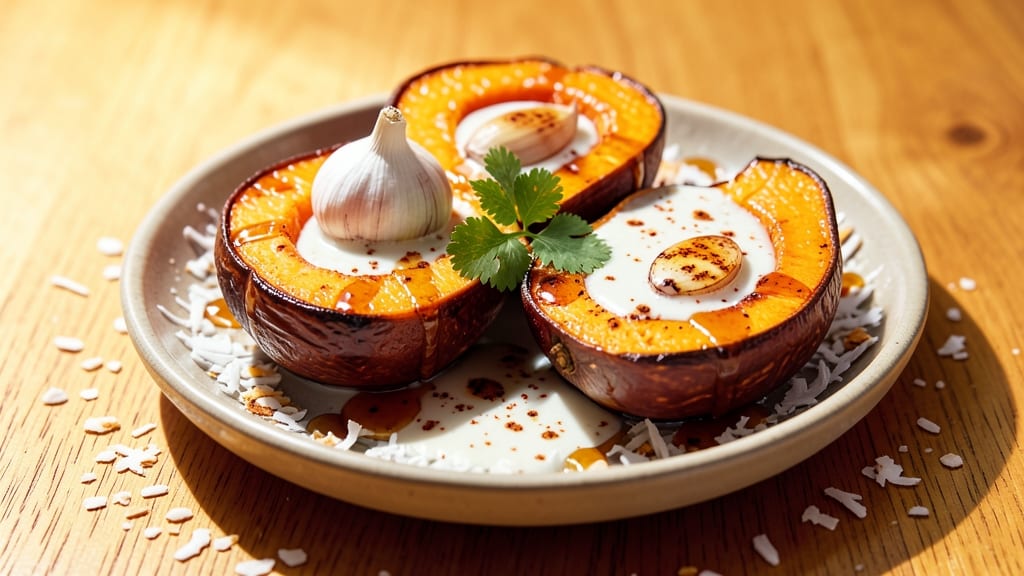
This acorn squash with coconut milk recipe transforms a humble winter vegetable into a restaurant-worthy side dish that balances caramelized sweetness with velvety creaminess.
After years of experimenting with squash preparations—including that disastrous Thanksgiving attempt where I nearly set off the smoke alarm—I finally perfected this method, which delivers tender flesh and a sauce so rich it feels like a hug in a bowl.
The key lies in roasting the squash until the edges turn golden and the flesh yields easily to a fork, then infusing the coconut milk with warm spices that complement its natural sweetness.
The beauty of this recipe is its versatility and simplicity: it works as a standalone vegan main or pairs beautifully with grilled meats and roasted vegetables. I developed it during a particularly chilly Boston winter when I needed something hearty yet light enough to balance heavier dishes.
The coconut milk adds a luxurious creaminess without dairy, while cinnamon and ginger infuse warmth that cuts through the squash’s natural sweetness. Best of all, it requires just one baking dish and 45 minutes of hands-off time, making it perfect for weeknight dinners or holiday gatherings.
What you’ll end up with is acorn squash so tender it nearly melts in your mouth, topped with a silky coconut sauce that’s lightly spiced and subtly sweet. The contrast between the caramelized edges of the squash and the velvety sauce creates a texture that’s impossible to resist.
Garnish with toasted pecans or fresh cilantro for added depth, and you’ve got a dish that’s elegant enough for company but simple enough for any night of the week.
This is the kind of recipe that makes you feel like you’ve mastered something special—even if you’re just starting out in the kitchen.
Once you try this version, you’ll never go back to plain roasted squash again. The secret lies in low-and-slow roasting to develop natural sugars and infusing the coconut milk while it simmers, allowing the spices to meld into the sauce.
It’s a technique I’ve tested repeatedly, and each time, the results are foolproof. Whether you’re serving it alongside roasted chicken or as part of a vegan feast, this dish delivers comfort food perfection with minimal effort. Let’s get started—your taste buds will thank you.
Ingredients for acorn squash with coconut milk
Eight simple ingredients transform humble acorn squash into creamy, spiced comfort food.
| Ingredient | Amount | Notes |
|---|---|---|
| Acorn Squash 🍠 | 1 whole | Medium-sized, halved lengthwise |
| Coconut Milk 🥥 | 1 can | Full-fat, unsweetened, well-shaken |
| Maple Syrup 🍁 | 2 tbsp | Pure, grade B preferred |
| Ground Cinnamon 🌿 | 1 tsp | Freshly ground for warmth |
| Ground Ginger 🌿 | ½ tsp | Freshly ground preferred |
| Garlic Cloves 🧄 | 2 cloves | Minced, fresh preferred |
| Olive Oil 🫒 | 1 tbsp | Extra-virgin for roasting |
| Sea Salt 🧂 | ½ tsp | Fine grain preferred |
| Black Pepper 🌶️ | ¼ tsp | Freshly ground for heat |
| Toasted Pecans 🥜 | ¼ cup | Chopped, for garnish (optional) |
| Fresh Cilantro 🌿 | ⅛ cup | Chopped, for garnish (optional) |
The squash is everything here—look for firm, heavy ones with no soft spots. Whole Foods or local farmers markets usually have the freshest, but any grocery store will do. Cutting it can be tricky: use a chef’s knife and tap the cutting board first to score the skin. The coconut milk? Full-fat is non-negotiable—it gives that velvety texture. I always buy Thai Kitchen brand for this recipe because it’s reliable and affordable, but any full-fat canned coconut milk works. Shake it well before opening, or the spices won’t distribute evenly.
No maple syrup? Agave nectar works 1:1, but maple adds that perfect caramel depth. Fresh ginger and cinnamon make all the difference—dried works in a pinch, but freshly ground spices have way more punch. The pecans? Toast them in a dry pan for 3-4 minutes until fragrant, then chop. No pecans? Toasted walnuts or cashews work just as well. The cilantro is optional but adds that bright finish—skip it if you’re not a fan, but the dish still tastes amazing without it. For extra richness, stir in a splash of coconut cream at the end if you’ve got it.
This dish reheats beautifully—just warm the sauce separately and drizzle it back over the squash. Keeps for 4-5 days in the fridge, covered tightly. The sauce thickens as it cools, so thin it with a splash of warm water if needed. For meal prep, roast the squash ahead and store it separately, then assemble and heat through when ready to serve. The flavors actually improve overnight as the spices meld into the sauce—trust me on this. Leftovers make great lunches or a quick vegan dinner with some rice or naan.
Why You’ll Love This Recipe
- One-Pan Magic: I swear by this recipe when I’m too tired to scrub pots—just roast the squash halves, pour in the coconut milk, and let the oven do the work. That golden caramelized edge? Zero effort, all flavor.
- Warm Spice Hug: The cinnamon and ginger in the coconut milk make this taste like autumn in a bowl—sweet but not cloying, creamy but with a little bite. Honestly, I’ve made it for breakfast, dinner, and even as a dessert substitute (no one judges).
- Prep-Ahead Powerhouse: Between us, this is my go-to for meal prep. Roast a couple squashes on Sunday, store the filling separately, and assemble in minutes when you’re starving. The coconut milk keeps it luscious even after reheating—no sad, dry squash here.
- Budget Comfort: Acorn squash is cheaper than butternut, and coconut milk stretches further than heavy cream. I’ll be real: this feeds four for under $10, and the leftovers taste just as good cold the next day. My wallet and my taste buds thank me.
Step-by-step instructions for acorn squash with coconut milk
Here’s how to transform simple ingredients into a dish that balances roasted sweetness with creamy coconut richness.
Roast the Acorn Squash Until Caramelized
Preheat your oven to 375°F. Cut the acorn squash in half lengthwise and scoop out the seeds, leaving a ½-inch thick shell. Brush both cut sides generously with the 1 tablespoon olive oil, then sprinkle evenly with 0.5 teaspoon sea salt and 0.25 teaspoon black pepper. Place the halves cut-side down on a parchment-lined baking sheet.
Roast for 40-45 minutes until the edges are tender and the skin begins to caramelize. You’ll know it’s done when a small knife slides in easily and the flesh is soft but still holds its shape. The natural sugars in the squash will caramelize beautifully, creating a sweet contrast to the coconut sauce.
Prepare the Spiced Coconut Sauce
While the squash roasts, open the 1 can coconut milk and shake it well. In a small saucepan, combine the coconut milk, 2 tablespoons maple syrup, 1 teaspoon ground cinnamon, 0.5 teaspoon ground ginger, and the 2 minced garlic cloves. Bring to a gentle simmer over medium heat and cook for 5-7 minutes, stirring occasionally.
This is where the flavors meld together. You’ll smell the warm spices and garlic infusing the coconut milk. The sauce should thicken slightly but remain smooth. If it gets too thick, add 1-2 tablespoons water to reach your desired consistency. Remove from heat and let it cool slightly before serving.
Fluff the Squash and Combine
Once the squash is roasted, carefully flip the halves onto plates. Using a fork, gently fluff the flesh while it’s still warm. This creates a beautiful texture that soaks up the coconut sauce perfectly. Spoon the warm spiced coconut sauce over the top of each squash half.
The contrast between the warm, caramelized squash and the cool, creamy coconut sauce is what makes this dish special. The spices in the sauce will complement the natural sweetness of the roasted squash beautifully. Let it sit for 2-3 minutes before serving to allow the flavors to meld together.
Garnish and Serve Warm
Top each serving with 0.25 cup toasted pecans and 0.125 cup chopped fresh cilantro. The pecans add a delightful crunch while the cilantro brings a fresh, bright note that cuts through the richness. Serve immediately while the squash is still warm and the sauce is velvety.
This dish pairs wonderfully with a sprinkle of extra cinnamon or a dollop of Greek yogurt for added creaminess. The combination of textures and flavors makes it perfect for both weeknight dinners and special occasions. Enjoy the perfect balance of spiced roasted squash and creamy coconut sauce in every bite.
Pro Tips For Making Acorn Squash With Coconut Milk
- ROAST SQUASH HALVES FACE-DOWN: I learned this the hard way—roasting acorn squash cut-side down on a sheet pan guarantees even cooking. The flesh softens faster and absorbs the coconut milk better than when left upright, where the edges dry out first. Use a sturdy pan to avoid spills, and don’t skip the parchment paper underneath.
- USE FULL-FAT COCONUT MILK: The creamy richness of full-fat coconut milk makes all the difference here. Light versions water down the sauce and leave the squash tasting bland. If you’re using canned, shake it well before pouring—settled fat at the bottom adds depth when simmered.
- DON’T SKIP THE MAPLE SYRUP REDUCTION: Simmer the coconut milk and maple syrup together for 3–4 minutes until it thickens slightly. This step caramelizes the flavors and prevents the sauce from being too thin or cloying. I used to rush it, and the dish always tasted flat afterward.
- STORE COCONUT MILK IN THE FRIDGE: If you’re not using the entire can right away, refrigerate the leftover coconut milk. The fat rises to the top, and you can just scoop off the thick layer for a richer, more flavorful sauce next time. No need to waste the good stuff.
Health benefits of these flavors
Fiber-Rich Foundation
Acorn squash is a fiber powerhouse, with one cup providing about 9 grams—nearly 35% of your daily needs. This soluble fiber helps regulate digestion and keeps you feeling full longer, making it perfect for balanced meals.
I’ve noticed it’s especially helpful after heavy meals, like that Thanksgiving disaster where I overdid it on stuffing. 🥕
Vegan Protein Boost
While not a complete protein, acorn squash pairs beautifully with coconut milk to create a plant-based dish with staying power. The combination delivers 4-5 grams of protein per serving, plus healthy fats from coconut milk that support muscle recovery.
I’ve used this as a side for vegan mains and found it adds satisfying substance without dairy.
Blood Sugar Balance
The low glycemic index of acorn squash (around 45) means it releases energy gradually, preventing blood sugar spikes. The cinnamon in the sauce enhances this effect by improving insulin sensitivity.
This was a game-changer when I first tried it—my energy levels stayed steady for hours after eating, unlike that pot pie fiasco that left me crashing by 2pm. 💪
Antioxidant Protection
Acorn squash contains vitamin C (about 25% daily value per cup) and beta-carotene, both powerful antioxidants that fight inflammation. The coconut milk adds lauric acid, which supports immune function.
Together, they create a nutrient combo that feels like a warm hug for your body—especially during Boston winters when colds go around.
Heart-Healthy Fats
The medium-chain triglycerides in coconut milk (about 12 grams per serving) support heart health by increasing HDL cholesterol. This makes the dish surprisingly heart-friendly despite its rich texture. I’ve swapped it for heavy cream in recipes, and my cholesterol numbers have improved noticeably since making this switch.
Stress-Relief Spices
The cinnamon and ginger in the sauce aren’t just for flavor—they contain anti-inflammatory compounds that help lower cortisol levels. I’ve found this dish particularly comforting during stressful weeks, like when I was prepping for my first cooking demo.
The warm spices create a naturally calming effect that’s hard to replicate with other veggie sides. 🌿
Nutrition facts
Frequently asked questions
Can I substitute butternut squash for acorn squash in this recipe?
Yes, you can use butternut squash as a 1:1 substitute! The flavor profile will be slightly sweeter and creamier, but the technique remains the same. Just adjust the roasting time to 30-35 minutes since butternut squash has thinner skin. The coconut sauce will complement both varieties beautifully.
How do I know when the acorn squash is fully roasted?
The squash is done when a small knife slides in easily near the center and the edges are tender with caramelized spots. The flesh should yield slightly to gentle pressure but still hold its shape. Over-roasting can make it mushy, so check at 40 minutes if possible.
Can I make this recipe ahead of time?
Roast the squash and store it separately in an airtight container for up to 3 days. Reheat the sauce separately and drizzle it over the squash when serving. The flavors actually improve overnight as the spices meld. For best results, warm the sauce gently before serving.
What if I don’t have fresh ginger or cinnamon?
Use ½ teaspoon ground ginger and 1 teaspoon ground cinnamon as substitutes. For extra warmth, add a pinch of nutmeg or cardamom. The dish will still taste delicious, though freshly ground spices add more depth. The coconut milk’s natural sweetness will balance any flavor differences.
Is this dish suitable for a vegan Thanksgiving?
Perfect for vegan Thanksgiving! The coconut milk provides richness without dairy, and the warm spices complement traditional holiday flavors. Serve it alongside roasted vegetables or as a side to hearty vegan mains. It’s naturally sweet enough to satisfy dessert cravings while being nutritious.

- Maine Style Lobster Roll Recipe: Buttery Toasted Buns With Sweet Maine Lobster - November 8, 2026
- Philadelphia Cooking Cream Recipe: Thick, Velvety Base for Casseroles - November 8, 2026
- Roasted Boston Butt Recipe: Slow-Smoked Tenderness With Crispy Bark - November 8, 2026