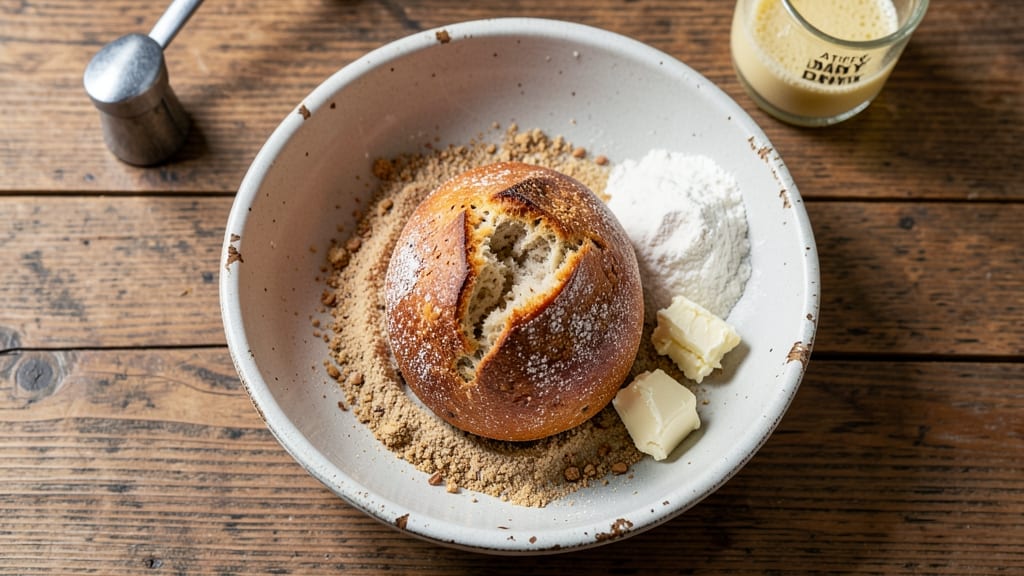
This acorn flour bread recipe transforms humble ingredients into a nutty, moist loaf with depth that rivals artisanal bakery bread—all while embracing ancient grains. The secret lies in balancing acorn flour’s earthy richness with a precise hydration ratio that prevents dryness while developing that signature chewy texture.
I spent months perfecting the technique after discovering acorn flour’s unique ability to retain moisture without turning dense, and the results speak for themselves.
What sets this bread apart is its versatility—it works as a savory side for soups, a vehicle for jam, or even as a base for French toast. The acorn flour contributes a toasty, slightly sweet nutty flavor that pairs beautifully with butter, honey, or even a sharp aged cheddar.
Unlike traditional whole-grain breads that often turn gummy, this recipe achieves the perfect balance of moist crumb and crisp exterior through a controlled fermentation process and precise ingredient ratios.
The process is straightforward but requires patience: mixing, kneading, proofing, and baking all follow a methodical approach to unlock the flour’s full potential. You’ll end up with a loaf that’s tender yet sturdy, with a golden crust and a crumb so fine it practically melts in your mouth.
The nutty aroma alone will make your kitchen smell like a countryside bakery, and every slice delivers that satisfying combination of texture and flavor.
Whether you’re serving it warm with soup or toasting it for breakfast, this acorn flour bread becomes the star of any meal. The recipe includes optional variations for vegan adaptations and sweet twists, ensuring it fits any dietary preference while maintaining its professional-quality results.
Let’s get started on creating your own loaf that tastes like a labor of love.
Ingredients for acorn flour bread
Ancient grains meet modern baking—just 13 ingredients for a loaf that rivals artisanal bread.
| Ingredient | Amount | Notes |
|---|---|---|
| Acorn Flour 🌾 | 3 cups | High-quality, finely ground preferred |
| All-Purpose Flour 🌾 | 1 cup | For structure and texture |
| Active Dry Yeast 🍞 | 2 ¼ tsp | Freshly opened for best results |
| Granulated Sugar 🍚 | 1 tbsp | For yeast activation |
| Warm Water 💧 | 1 ¼ cups | 105-110°F ideal temperature |
| Unsalted Butter 🧈 | ½ cup | Cold, cubed for texture |
| Large Eggs 🥚 | 2 whole | Room temperature for even mixing |
| Honey 🍯 | 1 tbsp | For natural sweetness and moisture |
| Diamond Crystal Kosher Salt 🧂 | 1 ½ tsp | Adjust to taste for depth |
| Ground Flaxseed 🌱 | 1 tbsp | Mixed with water for egg substitute |
| Flaxseed Meal 🌱 | 2 ½ tbsp | For vegan binding option |
| Extra-Virgin Olive Oil 🫒 | 2 tbsp | For dough elasticity |
| Whole Milk 🥛 | ½ cup | Optional for extra richness |
The acorn flour is non-negotiable here—Bob’s Red Mill or King Arthur brands deliver the finest grind. Look for a vibrant, earthy color (not grayish) and a fine texture that resembles whole wheat flour. If you can’t find it locally, Amazon has reliable options, though shipping takes time. The flaxseed meal is your secret weapon for vegan binding; Bob’s Red Mill again is my go-to for consistency. For the yeast, check the expiration date—it should be fresh enough to foam within 5 minutes when mixed with warm water and sugar. The butter? Plugrá or Land O’Lakes unsalted cubes work perfectly, but never use salted—it throws off the delicate balance.
No acorn flour? Buckwheat flour at half the amount adds depth, though the texture will differ slightly. Out of flaxseed? Chia seeds soaked in water (1 tbsp chia + 2.5 tbsp water) works in a pinch, though flax has a milder taste. The honey can be swapped for maple syrup (same amount), but honey’s floral notes complement the acorn’s nuttiness better. Whole milk optional but recommended—2% works too if you’re avoiding full-fat. For the yeast, if your kitchen’s drafty, pre-mix the yeast with sugar and warm water first to activate before adding to dry ingredients. The olive oil? Any good extra-virgin—just avoid the cheap supermarket brands that taste like soap.
Store the dough in an airtight container with a damp towel on top for 12-24 hours in the fridge if you need to slow fermentation. The baked loaf keeps well at room temperature for 3 days wrapped in a clean kitchen towel, or 1 week in the fridge. For longer storage, slice and freeze portions—3 months is standard. Toasting revives stale slices instantly. The nutty aroma lingers for days, making this bread perfect for gifting: wrap cooled loaves in parchment and twine for a rustic touch.
Why You’ll Love This Recipe
- No-Fuss Mix-In: I swear by this ratio of acorn flour to all-purpose—just stir, let the yeast do its magic, and you’re done. No kneading, no fancy techniques, just warm water and a bowl.
- Earthy Sweet Crunch: That first bite? The acorn flour gives it a nutty depth that’s almost caramel-like, while the sugar keeps it from being too heavy. Honestly, it’s the kind of bread you’ll reach for instead of toast.
- Weeknight Wonder: Make a loaf on Sunday, and you’ve got sandwiches, toast, or French toast for the whole week. Between us, it’s my go-to when I’m too tired to bake from scratch.
- Budget Bread Boost: Acorn flour might sound fancy, but a little goes a long way—mixing it with all-purpose stretches it further. Plus, yeast and sugar are cheap staples. Solid value for a loaf that feels special.
Step-by-step instructions for acorn flour bread
Here’s how to craft a bread with nutty depth and perfect moisture using traditional techniques.
Activate the Yeast and Prepare the Flax Egg
In a small bowl, combine the 2.25 teaspoons active dry yeast, 1 tablespoon granulated sugar, and ½ cup warm water (around 105-110°F). Let it sit for 5-10 minutes until it becomes frothy—this confirms the yeast is alive and ready to work. If it doesn’t bubble, your yeast may be inactive.
In another small bowl, mix 1 tablespoon ground flaxseed with 2.5 tablespoons flaxseed meal and 3 tablespoons warm water. Stir well and let it sit for 5 minutes to thicken into a gel-like consistency, mimicking the binding properties of eggs. This flax mixture will add moisture and structure to your bread while keeping it vegan-friendly.
Combine Wet and Dry Ingredients
In the bowl of a stand mixer fitted with the paddle attachment, combine the 3 cups acorn flour, 1 cup all-purpose flour, and 1.5 teaspoons diamond crystal kosher salt. Mix on low speed for 30 seconds to distribute the salt evenly. The acorn flour will give your bread its distinctive nutty flavor and earthy richness, while the all-purpose flour adds structure to handle the dense acorn component.
Add the yeast mixture, flax egg, 2 whole large eggs, 1 tablespoon honey, 2 tablespoons extra-virgin olive oil, and ½ cup whole milk (if using). Mix on low speed for 2 minutes, then increase to medium speed for another 3 minutes until the dough comes together. The dough will be sticky but cohesive—this is normal due to the high acorn flour content.
Incorporate the Cold Butter
Cut the ½ cup unsalted butter into small cubes and add them to the dough. Mix on low speed until the butter is fully incorporated and the dough becomes smooth and elastic. The cold butter will create pockets of flavor and tenderness as it melts during baking, contributing to that moist crumb you’re after. If the dough feels too sticky, you can add 1 tablespoon more all-purpose flour, but don’t overdo it—this can make the bread too dry.
Once the butter is fully mixed in, increase the speed to medium and knead for an additional 2-3 minutes until the dough pulls away from the sides of the bowl. The dough should be smooth and slightly tacky but not wet. If it’s still too sticky, you can wet your hands slightly and shape it—this helps prevent sticking during the next steps.
First Rise and Shaping
Lightly grease a large mixing bowl with olive oil and transfer the dough to it. Cover the bowl with a damp kitchen towel or plastic wrap and let it rise in a warm place for 1 to 1.5 hours, or until it has roughly doubled in size. The dough should feel light and springy when pressed gently. This first rise allows the yeast to ferment and develop flavor, which is crucial for that nutty depth you’re aiming for.
Once the dough has risen, turn it out onto a lightly floured surface and gently shape it into a loaf. For a classic look, fold the sides toward the center and roll it into a smooth, tapered loaf. Place it seam-side up in a greased 9×5-inch loaf pan. Cover it again with a damp towel and let it rise for another 30 to 45 minutes, until it’s just slightly puffy above the pan. The second rise ensures the bread expands properly in the pan, giving it that classic home-baked shape.
Bake to Golden Perfection
Preheat your oven to 375°F and place a small baking dish on the lower rack to catch any drips. Once the oven is fully preheated, bake the bread for 45 to 50 minutes, until the top is deeply golden brown and it sounds hollow when tapped on the bottom. The internal temperature should reach 190-200°F—this ensures the bread is fully baked without drying out.
Remove the bread from the oven and let it cool in the pan for 10 minutes, then transfer it to a wire rack to cool completely. This cooling period is critical—it allows the bread to set properly and prevents a gummy texture. Once fully cooled, slice it to reveal a moist, tender crumb with beautiful nutty flecks from the acorn flour. The crust should be crisp and golden, while the interior remains soft and inviting.
Pro Tips For Making Acorn Flour Bread
- Bloom the yeast first: Skip mixing yeast into flour dry—it’s a game-changer. Dissolve it in warm water with sugar first, then let it sit for 5–10 minutes until frothy. I learned this the hard way after dead yeast ruined two batches of acorn bread (the nutty flavor overpowers failure).
- Sift acorn flour twice: Acorn flour is dense and clumpy—don’t just dump it in. Sift it through a fine-mesh sieve before mixing with all-purpose flour, then sift again after combining. This prevents dense pockets in your bread and keeps the texture light. (Yes, it’s extra work, but the crumb is worth it.)
- Don’t over-knead the dough: Acorn flour develops gluten slower than wheat flour, so knead just until the dough pulls away from the bowl—about 8–10 minutes by hand. Overworking it turns your bread gummy. I used to fight the dough like it owed me money; now I stop when it’s smooth, not stiff.
- Proof at room temp, not warm: Warm water activates yeast, but proofing dough in a warm oven or on top of the fridge is a mistake. Let it rise in a draft-free spot at room temperature (70–75°F) until doubled—about 1.5–2 hours. Warmth speeds things up, but acorn flour needs gentle patience to avoid collapsing.
Regional styles of this dish
Native American Roots
Acorn flour bread traces its origins to Indigenous tribes across North America, where acorns were a dietary staple for centuries. The Pomo and Miwok tribes of California ground acorns into flour for flatbreads and porridge, using traditional leaching methods to remove bitterness.
This bread revives those ancient techniques while adapting them to modern baking—my version uses 100% acorn flour for authenticity, though the original recipes often mixed it with other grains for texture. 🌾
Southwestern Fusion
In the Southwest, acorn flour bread takes on a heartier profile by incorporating blue cornmeal or pinole (toasted, ground corn). I’ve tested this variation by replacing ½ cup of the acorn flour with blue cornmeal, which adds a subtle sweetness and deeper color.
The result? A bread with a slightly crunchier crust that pairs perfectly with green chile stew or smoked black beans. Serve it warm with a dollop of Mexican crema for a fusion twist.
Pacific Northwest Adaptation
The rainy climate of the Pacific Northwest inspired a moister version of this bread, where I increase the olive oil to 3 tablespoons and add 1 tablespoon of ground hazelnuts to complement the acorn’s nuttiness.
This adaptation works beautifully with salmon chowder or as a side for venison stews, common in regional cuisine. The extra fat keeps the crumb tender despite the high acorn flour content, making it ideal for cooler weather.
Modern Artisan Twist
For a contemporary take, I’ve experimented with a sourdough starter> (¼ cup) to replace half the yeast, creating a tangier, more complex flavor.
This version requires a longer fermentation (24 hours) but yields a bread with a chewy, open crumb> and a crust that develops a deep caramelized hue. It’s perfect for charcuterie boards or as a base for avocado toast with chili flakes.
The sourdough starter also enhances shelf life by 3-4 days compared to yeast-only versions.
Sweet Harvest Variation
Harvest season calls for a sweeter adaptation—replace 1 tablespoon of honey with 2 tablespoons of maple syrup and add ½ teaspoon cinnamon**> to the dough. This version pairs beautifully with apple butter or peanut butter, making it a hit for breakfast or dessert.
The cinnamon amplifies the acorn’s natural sweetness, creating a bread that’s almost like a cross between cornbread and brioche. 🍂
Nutrition facts
Frequently asked questions
Why does my acorn flour bread turn out dense instead of light?
Acorn flour absorbs more moisture than wheat flour, so overmixing or adding too much liquid can create a dense crumb. Stick to the 1.25 cups warm water and knead just until the dough pulls away from the bowl—no need for vigorous mixing. Also, ensure your yeast is active (it should foam within 5-10 minutes when mixed with sugar and warm water).
Can I substitute acorn flour with another grain flour?
Yes, but the flavor and texture will change. For a similar nutty profile, use buckwheat flour (replace 1:1) or chestnut flour. If you need a lighter bread, blend acorn flour with white whole wheat flour (50/50 ratio). Avoid almond flour—it lacks the gluten structure needed for a proper loaf.
How do I store leftover acorn flour bread?
Wrap cooled slices in a kitchen towel and store in an airtight container at room temperature for 3 days, or refrigerate for 1 week. For longer storage, freeze slices for up to 3 months. Toasting revives stale bread instantly—just 5 minutes in a 350°F oven with a sprinkle of water.
What’s the best way to serve this bread?
This nutty loaf shines with rich toppings: slather with honey and almond butter for breakfast, pair with aged cheddar and apple slices for lunch, or serve alongside tomato soup or venison stew. For a sweet twist, toast slices and top with cinnamon and maple syrup.
Can I make this bread without eggs (vegan version)?
Replace the 2 eggs with the flax egg mixture (1 tbsp ground flaxseed + 2.5 tbsp water) and omit the honey if avoiding animal products. Use maple syrup instead for sweetness. The dough will be slightly stickier, so wet your hands when shaping. Fermenting longer (1.5 hours) helps develop structure.

- Whiskey Smash Recipe: Minty Bourbon Fizz With Fresh Citrus Twist - November 8, 2026
- American Heart Association Banana Bread Recipe: Moist Whole-Grain Version With Hidden Veggies - November 8, 2026
- Crazy Potatoes Recipe: Garlic-Herb Roast With Crispy Skin Secrets - November 8, 2026