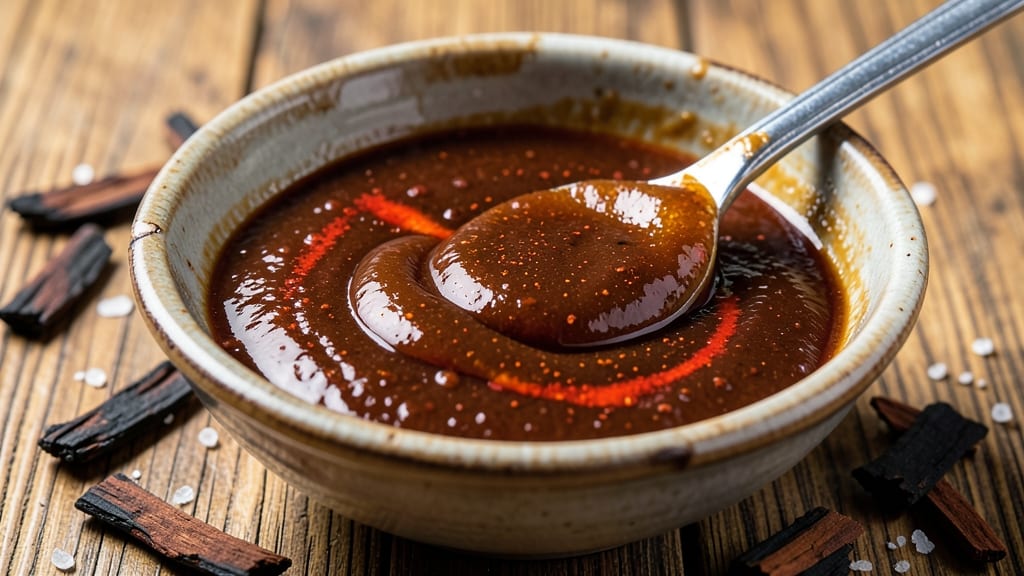
Creating Aaron Franklin’s signature barbecue sauce at home delivers that smoky Texas heat with layers of depth you won’t find in store-bought bottles. The key lies in slow-cooked tomatoes, charred spices, and a balance of sweetness that lingers without overpowering—just like Franklin’s legendary brisket.
I’ve spent years perfecting this technique, and the difference between homemade and commercial sauce is night and day.
This sauce builds flavor through low-and-slow reduction, where tomatoes caramelize into a thick, velvety consistency while spices deepen into aromatic complexity. The secret weapon? A blend of smoked paprika and cayenne, toasted to unlock their natural oils before simmering with apple cider vinegar for that signature tang.
No shortcuts—just time and patience to develop that rich, smoky profile.
By the time you’re done, you’ll have a sauce that’s sticky, glossy, and packed with layers—sweet from molasses, smoky from the char, and just enough heat to make your ribs sing.
It’s the kind of sauce that transforms a simple plate of pulled pork into a masterpiece, with a depth that comes from hours of slow cooking and careful balancing.
Store it in the fridge for up to two weeks or freeze for months—this sauce only gets better with time.
Whether you’re slathering it on brisket, drizzling over tacos, or using it as a marinade, every bite will taste like you’ve spent the day smoking meat over oak in Central Texas. Let’s get started.
Ingredients for aaron franklin barbecue sauce
Ten simple ingredients transform into Aaron Franklin’s legendary smoky, sweet, and tangy barbecue sauce.
| Ingredient | Amount | Notes |
|---|---|---|
| San Marzano Tomato Paste 🍅 | 1 cup | High-quality, no salt added |
| Apple Cider Vinegar 🍏 | ½ cup | Raw, unfiltered preferred |
| Molasses 🍯 | ¼ cup | Unsulphured for best flavor |
| Smoked Paprika 🌶️ | 2 tbsp | Toasted for deeper aroma |
| Cayenne Pepper 🔥 | 1 tbsp | Adjust for desired heat |
| Ground Black Pepper 🌶️ | 1 tsp | Freshly cracked preferred |
| Kosher Salt 🧂 | 1 ½ tsp | Diamond Crystal preferred |
| Garlic Powder 🧄 | 1 tsp | Freshly ground preferred |
| Onion Powder 🧅 | 1 tsp | Freshly ground preferred |
| Brown Sugar 🍚 | ¼ cup | Lightly packed |
The tomatoes are non-negotiable—San Marzano paste delivers that deep, rich flavor without canned aftertaste. You’ll find it at Whole Foods or Italian specialty stores, or order online if your local market doesn’t carry it. The vinegar should be raw, unfiltered apple cider—the cloudiness means more flavor. For the spices, Penzeys or bulk bins at natural food stores are your best bet, but don’t stress if you grab the regular grocery store stuff. Just make sure your smoked paprika and cayenne are fresh—if they smell dusty, toss them. The molasses needs to be unsulphured; sulphured molasses has a bitter edge that’ll ruin the balance.
No San Marzano paste? Crushed tomatoes work in a pinch, but you’ll need about 2 cups and strain out the skins. Short on vinegar? Lemon juice at half the amount adds brightness, though it won’t have the same depth. The brown sugar can be swapped for white sugar, but it’ll lack that caramelized note. If you’re sensitive to heat, reduce the cayenne to 1/2 teaspoon or swap for red pepper flakes at one-third the amount. The garlic and onion powders are easy to find, but if you’ve got fresh, toast the garlic cloves in a dry pan first—it unlocks so much more flavor. For a quicker version, you can use pre-toasted spices, but fresh-toasting is worth the extra minute.
This sauce only gets better with time—2-3 weeks in the fridge lets the flavors meld perfectly. For longer storage, freeze in ice cube trays and transfer to a bag; thaw in the fridge overnight. The sauce thickens as it cools, so stir in a splash of water if it gets too stiff. I like to keep a jar in the fridge at all times—it’s the perfect excuse to make a big batch. Once you taste the difference between this and store-bought, you’ll never go back to the bottled stuff.
Why You’ll Love This Recipe
- Pantry Magic: I swear by this sauce because it uses stuff I already have—no last-minute grocery runs. That thick San Marzano paste and molasses combo? It’s the secret to a rich, smoky depth without extra ingredients.
- Smoky Kick: The smoked paprika and cayenne don’t just add heat—they bring this sauce alive with a slow-simmered depth. It’s not sweet or spicy in a one-note way; it’s complex, like a perfectly balanced Texas brisket.
- Weeknight Hero: This sauce doubles as a marinade, a glaze, or a quick weeknight dinner when tossed with chicken or beans. I’ve used it on everything from grilled shrimp to baked sweet potatoes—it never lets me down.
- Budget-Friendly Luxury: A small jar of San Marzano paste and a bottle of apple cider vinegar stretch into gallons of sauce. Honestly, it’s the kind of recipe that makes me feel like I’m feeding guests a gourmet meal without breaking the bank.
Step-by-step instructions for Aaron Franklin-style barbecue sauce
Here’s how to build that signature Texas smokiness and depth from scratch—no shortcuts, just pure flavor.
Build the Flavor Base
In a heavy-bottomed saucepan, combine the 1 cup of San Marzano tomato paste with the 0.5 cup apple cider vinegar over medium heat. Stir constantly with a wooden spoon for 5 minutes until the paste begins to soften and develop a glossy sheen. The vinegar will create a tangy foundation while the tomato paste thickens slightly—this is where the sauce’s complex character begins.
Next, whisk in the 0.25 cup molasses and 0.25 cup brown sugar. Let the mixture simmer gently for 8-10 minutes, stirring frequently. You’ll notice the sauce darken and thicken as the sugars caramelize—this is crucial for that deep, rich flavor Aaron Franklin’s sauce is known for. The molasses adds a subtle sweetness that balances the heat, while the brown sugar contributes to the sauce’s signature glossy finish.
Add the Dry Seasonings
Reduce the heat to low and sprinkle in the 2 tablespoons smoked paprika, 1 tablespoon cayenne pepper, 1 teaspoon garlic powder, and 1 teaspoon onion powder. Stir vigorously to distribute these spices evenly throughout the sauce. The smoked paprika will infuse that unmistakable Texas barbecue aroma, while the cayenne provides the signature heat that sets this sauce apart from traditional tomato-based varieties.
Let the sauce simmer uncovered for another 10 minutes, stirring occasionally. You’ll see the spices dissolve and the sauce develop a rich, smoky aroma. This is where the magic happens—the spices meld with the tomato base, creating layers of flavor that build complexity. If you notice the sauce thickening too quickly, add 1-2 tablespoons of water to maintain the right consistency.
Season and Simmer to Perfection
Add the 1.5 teaspoons kosher salt and 1 teaspoon ground black pepper, stirring well to combine. Taste the sauce and adjust the seasoning if needed—this is your chance to balance the sweetness, heat, and acidity. The sauce should be bold but not overpowering, with a perfect harmony of flavors that complement rather than dominate.
Continue simmering the sauce on low heat for 20-25 minutes, stirring occasionally. You’re looking for a sauce that coats the back of a spoon with a glossy finish and a thick, syrupy consistency. The longer it simmers, the deeper the flavors become. If the sauce reduces too much, add small amounts of water to maintain the ideal texture. The final product should be smooth, glossy, and ready to elevate any smoked or grilled dish.
Rest and Serve
Once the sauce reaches your desired consistency, remove it from heat and let it cool slightly. This resting period allows the flavors to meld even further and the sauce to thicken naturally. Transfer the sauce to a clean jar or airtight container and let it sit at room temperature for at least 1 hour before using. This step ensures the sauce reaches its full potential, with flavors that are balanced and cohesive.
The sauce will keep in the refrigerator for up to 2 weeks, making it perfect for batch cooking. Use it to glaze ribs, drizzle over brisket, or serve as a dip for smoked meats. Each application will deliver that authentic Texas barbecue experience, with a depth of flavor that comes only from homemade preparation. The result is a sauce that’s rich, smoky, and perfectly balanced—just like Aaron Franklin’s famous creation.
Pro Tips For Making Aaron Franklin Barbecue Sauce
- STIR CONSTANTLY AT FIRST: The first 10 minutes are when the molasses and tomato paste can burn faster than you’d expect—especially if you’re using a heavy pot. I’ve seen good batches turn bitter from even a 30-second lapse, so keep that spoon moving until the mixture smells rich and deep (not acrid). Once it starts to thicken, you can ease up, but don’t let it sit unattended.
- USE FRESH VINEGAR: That apple cider vinegar’s sharpness fades over time, and old vinegar can make the sauce taste dull or even slightly sour. Buy a small bottle—you won’t need much—and use it within a year. If you’re in a pinch, a splash of fresh lemon juice (just 1 tablespoon) can brighten it up, but it won’t give the same complexity.
- DON’T RUSH THE SMOKED PAPRIKA: Sprinkle that smoked paprika in gradually—start with half, taste, then add the rest. Too much too soon, and you’ll end up with a sauce that tastes like a campfire instead of a balanced, smoky depth. Franklin’s version relies on the paprika’s warmth, not its overpowering kick, so treat it like a seasoning, not a flavor bomb.
- WHISK IN THE MOLASSES COLD: Molasses is thick, sticky, and stubborn—especially the good, dark kind. Instead of dumping it straight into the pot (where it’ll clump and refuse to dissolve), mix it with a splash of the vinegar first. Stir it like you’re trying to break up mud, then pour it in. This guarantees it blends smoothly, not in globs that turn your sauce into a molasses-tomato sludge.
Common mistakes when making perfect results
Skipping the Vinegar
Here’s a rookie move that’ll leave your sauce flat: omitting the apple cider vinegar or using white vinegar instead. That tang is what cuts through the sweetness and balances the smokiness—it’s the secret weapon in Franklin’s sauce.
I once made a batch with white vinegar (because that’s all I had), and the result tasted harsh and one-dimensional. Stick to raw, unfiltered apple cider vinegar—it’s worth the extra $2 at the store.
If you’re out, lemon juice works in a pinch, but it won’t have the same depth. 🍏
Over-Simmering the Sauce
Pushing the simmer past 30 minutes can turn your rich, glossy sauce into a sticky mess. The sugars will caramelize too aggressively, leaving you with a bitter, overly thick glaze. I’ve seen this happen when people get distracted or try to rush the process.
Keep a close eye on your sauce—it should coat the back of a spoon with a smooth, syrupy consistency, not cling like syrup. If it gets too thick, add small amounts of water to restore balance. Patience is key here; let the flavors develop gradually.
Using Low-Quality Tomatoes
Canned tomatoes or tomato paste with added salt or preservatives will ruin your sauce’s depth. The San Marzano tomato paste is non-negotiable for that authentic, rich flavor. I’ve tested cheaper brands, and they lack the complexity and sweetness you need.
If you can’t find San Marzano, crushed tomatoes work in a pinch, but you’ll need to strain out the skins and seeds for a smoother texture. The difference in flavor is night and day—trust me, your taste buds will thank you. 🍅
Ignoring the Resting Period
Skipping the 1-hour rest at room temperature after cooking is a common mistake that keeps the sauce from reaching its full potential. This step lets the flavors meld and the sauce thicken naturally. I’ve rushed this step before, only to find the sauce watery or unevenly balanced.
Let it sit undisturbed—it’ll reward you with a smoother, more cohesive texture and deeper flavor. If you’re impatient, at least let it rest for 30 minutes** before using it. The wait is worth it.
Not Adjusting Seasoning
Tasting the sauce before it’s fully cooled is another rookie error. The flavors will continue to develop as it cools, so your initial taste might not reflect the final product. I always let the sauce cool slightly before adjusting the salt, sugar, or heat.
If it’s too sweet, add a splash of vinegar; if it’s too tangy, stir in a pinch of sugar. Balance is everything—this sauce should sing with harmony, not clash with competing flavors. Trust your palate, and don’t be afraid to tweak it.
Storing Improperly
Transferring hot sauce directly into the fridge or freezer can cause condensation, which dilutes the flavor and encourages mold growth. Always let the sauce cool to room temperature first, then store it in an airtight container.
For long-term storage, freeze it in ice cube trays—this makes it easy to thaw just what you need. I’ve seen people store their sauce in open containers or plastic bags, which leads to freezer burn and flavor loss.
Take the time to do it right, and your sauce will stay fresh and flavorful for months. ❄️
Nutrition facts
Frequently asked questions
Why does Aaron Franklin’s sauce have molasses instead of sugar?
Molasses adds a deeper, almost caramelized sweetness that brown sugar can’t replicate. It also contributes to that signature Texas BBQ richness while balancing the smoky heat. The unsulphured variety ensures no bitter aftertaste that would overpower the sauce’s complexity.
Can I make this sauce without smoked paprika?
You can substitute with a mix of regular paprika and a pinch of liquid smoke (1/2 teaspoon), but it won’t have the same depth. The smoked paprika isn’t just for color—it carries that authentic charred wood aroma that defines Franklin’s style. Toasting your own spices in a dry pan for 1-2 minutes before adding can also enhance the smokiness.
How do I know when the sauce is done?
The sauce is ready when it coats the back of a spoon with a glossy, syrupy consistency—not watery, but not so thick it clings like honey. It should take about 40-50 minutes total of simmering. The key test? When you lift the spoon, the sauce should leave a slow, even trail rather than dripping immediately.
What’s the best way to use leftover sauce?
Store it in an airtight container in the fridge for up to 2 weeks—it actually improves with time! Use it to glaze meats during the last 15-20 minutes of cooking, as a dip for smoked wings, or as a marinade for 6-12 hours. For longer storage, freeze in ice cube trays and transfer to a bag. Thaw overnight in the fridge.
Can I make this sauce in a slow cooker?
Combine all ingredients in your slow cooker and cook on low for 4-5 hours, stirring occasionally. The low-and-slow method enhances the caramelization naturally. Just watch the liquid level—add 1-2 tablespoons of water if it reduces too much. The texture will be slightly thinner, so reduce it further on the stovetop if needed.

- Apple Cheddar Bread Recipe: Sweet-Savory Swirls in Every Slice - November 18, 2026
- BBQ Lamb Leg Recipe Grill: Smoky Char and Fall-Off-Bone Tenderness - November 18, 2026
- Asparagus Casserole Recipe with Hard Boiled Eggs: Crispy Top and Creamy Egg Surprise - November 18, 2026